
CREDO for transport: Value propositions for holistic systems resilience
File type: pdf
File size: 34.13Mb

We’re delighted to partner with the UK’s Real Estate Investment and Infrastructure Forum (UKREiiF) in Leeds, a forum dedicated to unlocking investment and driving regeneration and development across the UK to accelerate economic growth.
This year’s event promises to attract over 16,000 delegates, over 2,500 fringe event attendees, 1,250 speakers and 150 exhibitors from the built environment representing every core UK city and region.
Connected Places Catapult will have its own Pavilion – a dedicated platform for partners and stakeholders from UK cities, regions and freeports to network, collaborate and discuss pressing challenges and solutions in the built environment, transport, data and digital, and international partnerships.


Meet us in Pavilion Square to collaborate, discuss and extend your network.

To find out how to arrange a business meeting with us, join the discussion in the pavilion or collaborate on projects contact us at events@cp.catapult.org.uk
Last year we attracted over 1,300 visitors and 50 speakers. View 2026 pavilion’s programme:
Kick-start your visit to the Forum by learning how we help grow the UK economy by driving the commercialisation of emerging innovations and next technologies in transport and the built environment in our towns and cities.
Hear about how UK cities and place leaders understand the role of innovation – and high-quality, purposeful innovation spaces – in driving economic growth, attracting talent, and supporting sustainable development across different regional contexts.
As UK places look to the exploitation of urban challenges as drivers for local growth and innovation, carefully crafted international partnerships have the potential to derive greater impact in response to common ambitions. The Innovation Twins programme participants, Birmingham and Swansea Bay, will share their insights from different points in their collaboration journey.
Join us for a panel discussion on how innovation in the public realm can drive economic growth, improve community health and well-being, and support sustainability in real estate development.
This session will look at the growing use of digital twins in regeneration to drive economic growth in the West Midlands.
This session will explore how Innovation Districts are reshaping urban economies and driving sustainable inclusive growth through strategic clustering of research institutions, enterprise, startups, and talent. Our expert panelists will examine successful Innovation District models, how to measure their impact on local economies, and the essential elements for driving the innovation economy.
Despite the public sector spending over £400Bn on procurement in the public sector, we still have significant challenges in the built environment around affordable housing, Net Zero, creating liveable places, economic growth and much more. This panel will discuss the opportunities, challenges and recommendations on how public and private collaboration can help create new value.
Hear how the UK Freeports are leading the charge on Place Based Growth, by attracting investment into parts of the country that have historically missed out. Freeports are becoming hotbeds of innovation and building new clusters in sectors of the future, creating thousands of long-term, high quality jobs for local people, join the conversation.
Local Authorities in the UK have set ambitious Net Zero targets that require sector-wide collaboration to achieve. However, there’s still a conflict between the demand for Net Zero funding into the public sector and private investors’ risk appetite. This session explores the perspective of investors on the appeal of place-based investing, the risks it can carry and how financial institutions can overcome these risks to enable Net Zero funding at scale.
This session will explore the approaches taken by Belfast and Liverpool to drive growth through innovation and will also consider two city regions roles as major places within the Irish Sea Rim with its rich assets and talent pool.
Explore how trusted standards support credible, consistent net zero strategies in infrastructure—enabling whole-life carbon management, aligning global efforts, and empowering collaboration across the value chain to drive meaningful climate action.u003cbru003eu003cbru003eAttend this session to gain practical insights into using trusted standards like PAS 2080 and the ISO Net Zero Guidelines to embed decarbonisation across infrastructure projects, align with climate targets, and future-proof your strategy.

Join us to hear from leading voices from organisations at the forefront of shaping the next chapter of digital planning in the UK. Our speakers will reflect on the successes and lessons learned from nearly a decade of digital transformation in the UK planning system, and look ahead to explore the emerging challenges and innovation opportunities in spatial planning.
We are delighted to partner with Historic England and Buttress Architects. Join the launch of Historic England’s first Heritage Investment Prospectus at UKREiiF 2025 in Leeds. Hear first-hand a curated collection of historic sites and buildings across England, many with planning permission or agreed development briefs with local authorities, which actively seeking partners or investors to help write their next chapter.


Meet place senior decision makers from investors, developers, occupiers and operators within commercial property. This is a closed event organised in our pavilion together with the UKREiiF team, express your interest to attend by contacting Kevin Smith at u003ca href=u0022kevin.smith@ukreiif.comu0022u003ekevin.smith@ukreiif.comu003c/au003e.
We know it’s the third day of UKREiiF and you may well be exhausted so we have got you! Join us light breakfast and connect with other members and those within the wider ecosystem. It will be informal but will give you the chance to catch up with all those working within or alongside Innovation Districts.u003cbru003eu003cbru003ePlease feel free to extend to colleagues, but please do get in touch with us at u003ca href=u0022events@cp.catapult.org.uku0022u003eevents@cp.catapult.org.uk u003c/au003eso we know the number.

Following the launch of our recent The Art of the Possible report, this session explores why community-based finance matters, what the research reveals, and what needs to happen next to unlock local investment and drive economic growth.

Join City Science to explore the need to act quickly and efficiently to progress your net zero plans. With the need for meaningful outcomes with current budget constraints, how do we get to net zero at pace? How do we fast track local plans, economic strategies and infrastructure and create better communities? Join us to hear more.


Crucially, transport is deeply interdependent with other sectors like energy, telecoms, and water. Disruptions in these networks don’t stop there – they trigger systemic failures across rail, road and local transport.
Current siloed resilience planning is no longer enough. We must move beyond high-level assumptions to a coordinated, data-led approach. To safeguard the transport system, we must move beyond high-level assumptions towards a coordinated, data-led approach. This is where the Climate Resilience Decision Optimiser (CReDO) comes into play.
CReDO is a pioneering digital twin platform that models infrastructure interdependencies to uncover hidden vulnerabilities under extreme climate scenarios, enabling smarter, system-wide resilience planning.
Download the whitepaper to gain insights into:
Download the full whitepaper.

CREDO for transport: Value propositions for holistic systems resilience
File type: pdf
File size: 34.13Mb

London International Shipping Week is one of the biggest global maritime events in the calendar.
Connected Places Catapult is delighted to be an active partner of the event, celebrating our contribution to accelerating innovation in the UK’s Maritime sector.
Find out more below on the events we’re taking part in, plus some of our recent reports on coastal shipping, future fuels and more.
Meeting in London on 16 September, this gathering will bring together industry leaders, experts, and innovators to discuss the importance of resilience in the maritime sector.
We’ll be discussing key topics, including the impact of GNSS interference on maritime operations, and how robust global data standards form the backbone of safe, sustainable and resilient maritime operations, as well as delving into challenges related to autonomous vessels.
Richard Holland, Head of Maritime at Connected Places Catapult, will be presenting as Maritime Forum vice-chair.
We’ll hear also hear from Royal Institute of Navigation, ITS Norway, Peel Ports, and Zulu Associates, with more to be confirmed soon.
Maritime Innovation Day 2025 is an Innovate UK flagship event to showcase the Department for Transport’s pioneering environmental work in the maritime sector.
This year, Connected Places Catapult’s Head of Maritime Mark Wray will be speaking on the Maritime Investment panel.
We are also delighted to be exhibiting at the event, so please do stop by our stand to discuss the future of maritime innovation with us.

Connected Places Catapult has created an interactive blueprint which aims to accelerate the transition to future fuel adoption by producing a pathway to 2050 for UK ports and harbours.

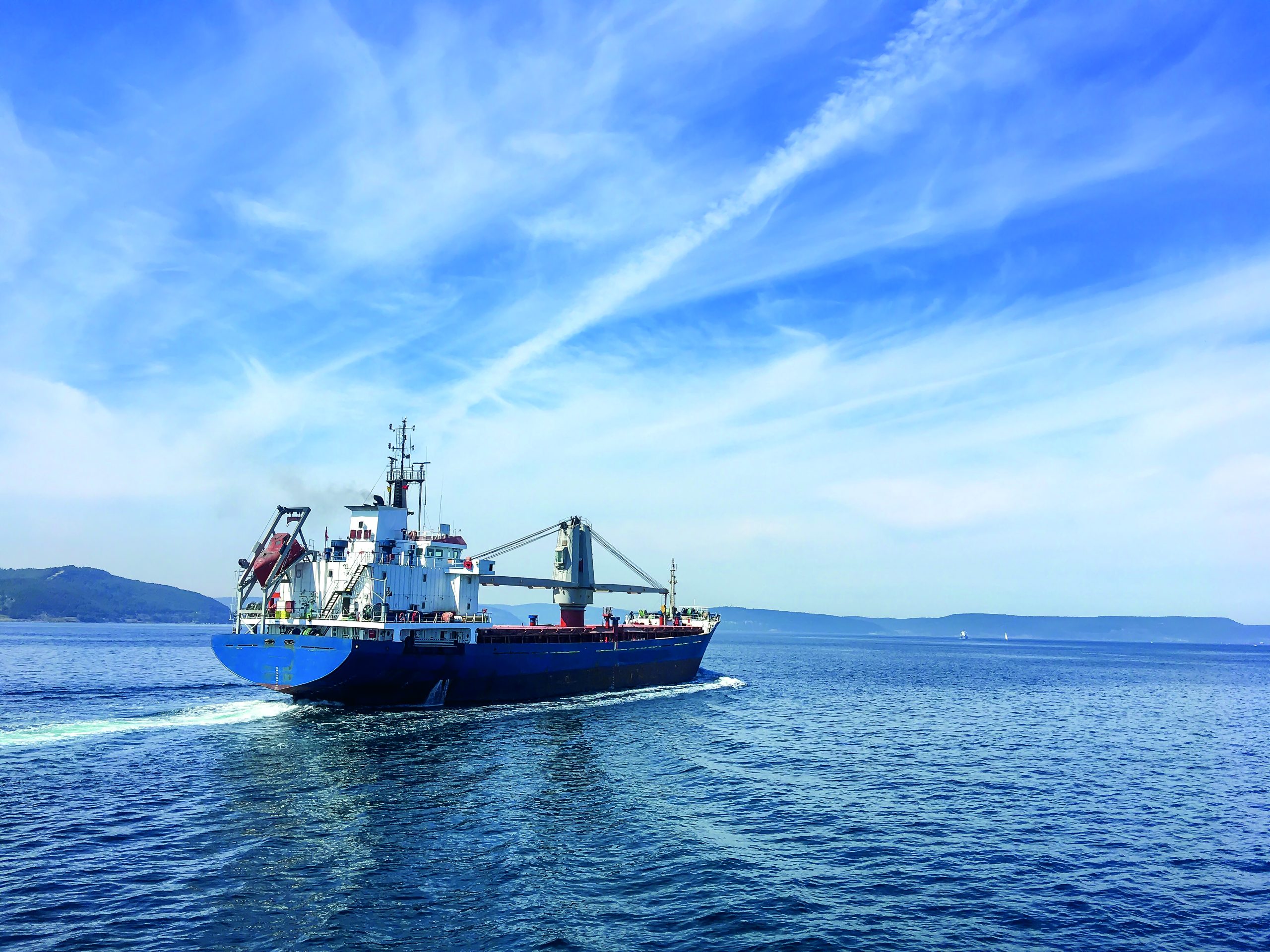
This report explores how shifting more goods to coastal shipping can relieve pressure on road networks, reduce emissions, and support regional economic growth.

The UK Government made a pledge in the Clydebank Declaration at COP26 to establish six green shipping corridors by 2026. This report describes in detail a pathway to deliver, what could be the first in the UK, between Liverpool and Belfast.
The National Shipbuilding Office’s Centres of Excellence Task and Finish Group has launched a Centres of Excellence (CoE) Playbook, developed in collaboration with Connected Places Catapult.

Britain’s e-commerce boom shows no signs of slowing; but as the volume of deliveries continues to rise, so too are the number of journeys completed by vans – adding to air pollution and increasing road danger.
One way of making city deliveries greener and safer is through the greater use of sustainable last mile mobility, such as electric cargo bicycles that carry goods in a platform up front, or quadracycles or trikes with freight carried in a larger box at the back.
Among the champions of these emerging forms of transport logistics is Kale AI, a start-up firm supported by Connected Places Catapult. It received £30,000 through the Transport Research & Innovation Grants (TRIG) programme’s Future of Freight challenge in 2021, and is now part of a growing community of logistics firms gathered in the Freight Innovation Cluster. It has also recently raised around £250,000 of pre-seed investment with a private capital firm.
“Our mission is to accelerate the transition to sustainable logistics in cities through a switch from vans to cargo bikes, and the impact of doing so cannot be emphasised enough,” says the company’s co-founder Nicolas Collignon.
Research conducted during his time at cargo bike delivery company Pedal Me – in collaboration with academic researchers from Westminster University – found that light electric vehicles, such as cargo bikes, can be up to 60% more efficient than vans for deliveries in cities.
This efficiency gain is attributed to three main factors. “The first is that cycles are affected much less by congestion: the average car speed in London is less than 10mph, whereas on a bicycle you can go faster,” he says.
“Secondly, finding a parking space can be very difficult for motor vehicles in cities: delivery staff can spend half their day walking to complete a delivery, whereas cargo cycles can pull up right next to a door.” Nicolas also says that sustainable last mile vehicles have access to a wide range of infrastructure such as bike lanes and low traffic neighbourhoods, so their journeys can be up to a third shorter.
“Put all of that together, and you can see a significant advantage to using cargo cycles.”

After completing his PhD in computational cognitive science and AI, Nicolas joined Pedal Me, a cargo-bike delivery company, as a data scientist. There, he worked on improving delivery efficiency while also making deliveries himself in London using cargo bikes. This experience proved valuable when he started Kale AI with his two co-founders.
“It was just as the pandemic began, and I was keen to apply my knowledge from AI research into an area with climate impact, such as cities, and see how the science worked on the ground,” he explains.
He used data to monitor the performance and efficiency that cargo bike deliveries were having, and explored the potential of the sector as he saw it. “One thing that was obvious was the tools could be improved to make deliveries more efficient.” He started building technology along with two former student friends, and the trio formed Kale AI.
In 2021, they won a smart mobility innovation grant from the London Mayor alongside the Better Bankside business improvement district and King’s College to develop an app to help businesses make smarter use of delivery vehicles, and encourage a switch to electric cargo bikes and electric vans.
The following year, the company applied to Connected Places Catapult for the TRIG competition’s Future of Freight call. It developed technology that predicted where light electric vehicles would be more efficient when planning last mile delivery routes.
One issue the team looked to address was how to help speed up deliveries in cities to meet customers’ growing expectations.
“Urban logistics used to involve a depot outside of cities: you loaded your van at the beginning of the day, and did your deliveries throughout the day.
“But the new trend among urban operators is to have micro-hubs in the middle of cities, and demand is more dynamic. Customers expect faster turnarounds, but operators have so many different kinds of customer: businesses, consumers and those who want next day deliveries, same day, even same hour deliveries.”
Because of this complexity, operators don’t always have the correct business insights, or even know if the choices they are taking are making or losing them money, Nicolas adds. “This means they are being guided by their intuitions, which becomes very difficult if you want to scale, and especially when margins are tight.
“So the software we are developing captures data and brings insights to the surface which operators need, such as which routes are profitable, how to make optimum use of deliveries, and anticipate when uncertain levels of demand may come.”
Longer term, the insights generated may allow operators to better understand what their delivery fleet should look like: how large their cycles should be and the number of wheels they should have, or which sized electric vans are most suitable.
Sustainable last mile transport is growing in popularity, but still has a long way to go. “Eighteen months ago, the UK hosted a cargo bike logistics summit and I remember people kept repeating that ‘We are not a niche market’. But to me, if you are saying it, there’s still an issue.
“But now it feels we are at the start of something; when you cycle in London, you notice just how many more cargo bikes there are today compared to a few years ago.
“What is critical is how you can reach a tipping point, and continue this momentum,” Nicolas adds. “There are strong signs this could happen; with companies like Amazon focusing on transitioning to using cargo bikes and setting ambitious targets.”
Kale’s focus now is on creating a version of its software product that can be sold to the market, growing the team, and raising further funding at the end of the year.
“Securing our TRIG grant in 2022 allowed us to test out an idea and build our network, and we have attended several Freight Innovation Cluster meetings which have helped us to understand funding options and the world of transport. I’m excited to be part of the Cluster and seeing what may come of it.”
The firm has also been supported in joining Innovate UK’s ‘Bridge AI’ initiative which aims to close the gap between technology innovation and implementation.
Nicolas is optimistic for the future of last mile deliveries, and says his firm’s software can help operators to make better informed decisions. “Operators are currently struggling to be profitable, and are suffering from a lack of data-driven business insights. Our AI driven software is fully focused on their pain points, and could radically help their businesses.
“It might even persuade more delivery companies who had previously not considered them to try out cargo bikes.”
Apply to attend our upcoming TRIG Showcase and Networking event in Birmingham (23 October).
Find out more about the Transport Research & Innovation Grants programme, and sign up to join the Freight Innovation Cluster.
Watch a short film about cargo bikes featuring Nicolas Collignon Bullitt Cargo Bikes vs Vans – the Last Mile Delivery Study – YouTube

We are delighted to once again participate in Innovation Zero, and we’re contributing to a number of sessions, including:
Andrew Chadwick, Ecosystem Director, Air Mobility & Airports, joining the Fuelling Flight: Hydrogen session on 1 May at 11:45.
Alison Young, Head of Global Investment, joining the session on Funding the Automotive Transformation, on 1 May at 12:25 in the Transport & Mobility Forum.

We are hosting a Digital Twin Hub session on Day 1, 22 April at 2pm, titled ‘Digital twins driving innovation in the North – Explore innovative projects that look to catapult the North of the UK into a bright digital future’. Join Nury Moreira, Community Manager of Digital Twin Hub, and other speakers for an inspiring conversation.

This year, we are proud to host our own Pavilion, a place designed to showcase real innovation, and provide opportunities to connect with thought leaders, and UK and global peers.
To review our full Agenda of sessions and activities taking place over the three days and plan your visit, please head to the UKREiiF website > Programme tab > Download Programme or > Click on the Connected Places Catapult Pavilion dot to browse online.
Make sure to visit our Pavilion in Pavilion Square, we look forward to connecting with you in Leeds!

Paul Wilson, our Chief Business Officer, is participating in the keynote panel titled ‘Transport as the key to people-centric, accessible, and sustainable urban spaces’ on 27 Feb, from 13:10 on the Keynote Stage.
Justin Anderson, Director of Digital Twin Hub, is delivering a presentation on connected digital twins as part of Interchange partner event Transforming Infrastructure Performance (TIP) Live, also on 27 Feb.
Come find us on the show floor and connect!
Register using code CPC24.

We’re delighted to participate in the Open & Agile Smart Cities Conference. Make sure to visit our Connected Places Catapult stand on the show floor and to join the sessions our experts are participating in over the course of the two days.

