A network of collaborative partnerships between Connected Places Catapult and UK airports funded by Innovate UK, through which UK-based SMEs can test and demonstrate their late-stage innovative solution in a live airport environment.
Airports struggle to implement innovative solutions because testing and validation can be complex, difficult, expensive, and risky:
Testing new technology airside is a difficult live environment with operational and safety risks
It’s difficult to discover and engage with new technologies or products
New solutions can have weak business models and investment use cases
Unproven ROI impacts buyer confidence and internal sign off
Inside Glasgow Airport’s innovation journey
The Catapult has successfully run four cohorts of the Connected Airports Living Lab programme at Glasgow Airport and will soon be opening up the opportunity for new partners.
To be the first to hear about this opportunity when it goes live, sign up to our upcoming webinar where we will be joined by the Managing Director of Glasgow Airport, who will reflect on how the programme has supported them to enhance their operations with new, de-risked, innovative solutions.
Funded by Innovate UK, the Connected Airport Living Labs enables collaborative partnerships between Connected Places Catapult and UK airports, through which UK-based SMEs can test and demonstrate their late-stage innovative solution in a live airport environment.
Case study: Hello Lamp Post
Hello Lamp Post, which develops AI-enabled passenger assistance technology, was selected in both phases of our multi-phase programme across 23/24 and 25/26, which looked at how innovative technology could improve airport accessibility for deaf and neurodivergent travellers at Glasgow Airport.
. During the trial, use of the digital assistant led to:
a 50% reduction in queries received by customer service staff
an 86% satisfaction rate with the service among users
More than 12,300 customers supported each year
This year, the product was developed further as a digital assistant for all passengers and staff, and has landed a multi-year contract with Aberdeen, Glasgow and Southampton airports.
“Establishing this service enabled access for all to a single source of truth, readily accessible to both customers and staff, ensuring accurate airport and airline information is delivered consistently to the right person at the right time”
Jamie Loudon – Group Head of Operational Solutions, AGS Airports
This project brought together a diverse group of collaborators, technologies, and methodologies to evaluate the impact that next-generation pavement monitoring solutions can create in a live airport environment.
Hello Lamp Post – an SME supported on four Connected Places Catapult programmes – has successfully expanded its focus from cities to railways and now aviation, by landing a multi-year contract with a trio of airports (Aberdeen, Glasgow and Southampton) owned and operated by AGS Airports.
Several innovators to have developed passenger assistance systems with the support of Connected Places Catapult have gone on to secure further trials or commercial success; among them Hello Lamp Post and Jnction.
Contact
Interested in implementing a Living Lab at your airport to validate and de-risk innovative technologies and solutions?
The Freight Innovation Fund is a multi-faceted programme funded by the Department for Transport, focussed on accelerating the adoption of commercial ready solutions to address challenges in the UK’s freight and logistics sector.
The objective of the Freight Innovation Fund is to support SMEs to trial, validate and scale technologies that address some of the most pressing challenges in the freight and logistics sector, ranging from decarbonisation and wastage to efficiency and upskilling of staff, while convening industry, government and innovators around shared challenges.
The Department for Transport (DfT) has dedicated £10m to the programme to support SMEs through the Accelerator Programme and Freight Innovation Cluster from 2023-2026.
“We know how crucial the freight industry is to keep Britain moving, and how important it is that transport is equipped to face modern-day challenges.
“Our funding will allow businesses to start trialling their revolutionary technology on our roads, ports and railways, meaning they can make an immediate difference and help grow the economy.”
Aviation, Maritime and Decarbonisation Minister, Keir Mather
Freight Innovation Fund Accelerator
More than 44 SMEs supported to deliver trial plans
39 SMEs supported to deliver 44 real-world trials
Across 4 cohorts from 2023 to 2026
The Accelerator supports late-stage SMEs (around TRL 5–6) for 6 months, where they can access between £100,000-£150,000 in funding to trial their solutions in live freight environments with selected industry innovation partners.
Technologies trialled include lightweight trailers inspired by the aerodynamics of racing cars, sensors designed to improve the well-being of staff working at ports, and environmentally-friendly electric trailers, which can be pulled along by bikes.
The programme has strengthened industry understanding of how emerging technologies address real operational challenges in the transportation of goods and management of the supply chain. SMEs have reported clearer routes to market, commercial traction and follow‑on funding opportunities linked to accelerator trials.
Find out more about what to expect from the Accelerator programme through our previous open calls for cohort 3 and cohort 4.
Freight Innovation Fund Accelerator cohort four brochure
“The Freight Innovation Fund enabled us to work side by side with the teams at Associated British Ports and The Bristol Port Company to refine Athena with real feedback from the people running day-to-day operations.
“That experience helped us build a flexible workforce management platform that genuinely supports accurate planning, safe staffing and operational confidence for ports. Both partners have since moved to commercial contracts, and the platform’s success has already resulted in new partnerships with further UK operators and with major global operators overseas.”
Cato Davies, Co-founder and CEO of Ensemble Analytics – a previous beneficiary of the Accelerator
Meet the innovators
Find out more about how the Freight Innovation Fund Accelerator is helping innovators transform the freight and logistics sector.
Previous Accelerator Partners
Freight and Logistics Innovation Network (formerly Freight Innovation Cluster)
The Freight and Logistics Innovation Network (FLIN) brings the sector together to enable and accelerate innovation, tackling fragmentation and helping new solutions move faster from idea to adoption across modes in freight and logistics.
Through FLIN, organisations connect through targeted matchmaking, structured mentoring, shared insights, and practical routes to funding, pilots, and commercial partnerships that turn collaboration into delivery.
FLIN is open to SMEs, larger operators, technology providers, academia, investors, and public sector bodies who want to collaborate, shape the future of freight, and scale innovation with the right partners.
Collaboration and new thinking encouraged by i3P – the Infrastructure Industry Innovation Partnership – are helping major project clients improve productivity.
The Freight Innovation Fund: Venture Growth Programme is designed for ambitious innovators with commercially ready solutions, helping them strengthen their commercial proposition, prepare for scale and unlock new growth opportunities.
Marine technology specialist RAD Propulsion – a participant of two Catapult-led programmes – recently secured £4.4 million of investment, and is looking to achieve £25 million annual revenue within the next three years.
Data management specialist Zizo expects to make £1 million from its AI platform in the next year; created with help from the Freight Innovation Fund accelerator.
i3P: Driving collaborative innovation for infrastructure
Join the i3P community to drive the future transformation of the infrastructure and construction industry.
i3P: Annual Review
In 2025/26, i3P delivered tangible, programme‑level impact through joint work with major clients, Tier 1 contractors, leading suppliers and technology innovators.
Read how i3P have delivered real value in our annual review.
i3P: Annual Review
How UK infrastructure solved big problems together.
We help the infrastructure industry to transform ideas into opportunities and practical solutions.
Established in 2016, the Infrastructure Industry Innovation Partnership (i3P) facilitates collaboration between infrastructure owner operators, their supply chain partners and the ecosystem of built environment innovators to address major challenges and accelerate innovation.
Our role is to help the industry increase productivity, improve safety and reduce carbon by accelerating the adoption of proven innovations, reducing duplication and sharing costs.
Join our Community
Curious – then start here! There are many options to get involved with i3P. Register as a member today for free and let your i3P journey begin!
By becoming a member of our community, you can collaborate with the infrastructure industry by sharing past successes and challenges, hear about current and upcoming projects and learn about potential co-investment opportunities.
01
Knowledge sharing
Our community offers the opportunity to share with your peers and learn from others what works and what to avoid throughout the lifecycle of a project.
02
Communities of practice
Community members can join any of our specialist groups which focus on our core themes of carbon, safety and productivity. Connect with industry experts and get involved in the exciting opportunities they offer.
03
Networking opportunities
Via our annual forum, themed workshops, virtual learning lunches and in person roadshows, we convene the infrastructure industry and offer you the chance to build relationships and connect with your peers.
Four shared priorities where members can shape action and scale solutions
Health, Safety and Wellbeing
Led by
Reduce high-risk work at scale
by scaling proven approaches to risk reduction, competence and wellbeing.
Carbon
Led by
Make low-carbon delivery easier to adopt
by aligning demand around materials, methods and specifications that already work.
Productivity
Led by
Deliver more infrastructure for the same spend
by scaling methods that reduce rework, improve certainty and increase output.
Monitoring and Maintenance
Led by
Improve asset resilience and reduce disruption
by scaling data-led approaches across common asset types.
Meet our Theme and Community of Practice Leads
Our four Theme Leads, supported by our Community of Practice groups from across the infrastructure sector, help shape i3P’s collaborative agenda and drive action on the challenges that matter most. Together, they bring industry expertise, practical insight and a shared commitment to accelerating innovation at scale. Explore their profiles to learn more about their focus areas, the key challenges facing the sector, and the opportunities for members to get involved and make an impact.
Ben Wagenaar, i3P Theme Lead for Productivity
Productivity is about more than doing things faster. Hear how PAS 4010 provides a common framework for evaluating and scaling proven approaches that reduce waste, increase efficiency and improve project outcomes.
i3P Talks With is a bi-monthly series of conversations with leaders and innovators from across the infrastructure sector. Each session explores practical insights, lessons learned and fresh thinking on how collaboration and innovation can help tackle the industry’s biggest challenges.
i3P Talks With Rob Munro – Without adoption there is no innovation
Explore the practical steps needed to move innovation beyond pilots and create the conditions for adoption, scaling and measurable value.
The Q&A for this i3P talks with is available for members only, sign up here.
i3P talks with Network Rail on Smarter Infrastructure Decisions
In this session, Martin introduced Insight—a single-interface decision support system designed to bring together data, standards, and technology across infrastructure projects.
i3P Talks With Costain: How production thinking is improving infrastructure productivity
Listen to James Neve, Production Thinking Lead at Costain, demonstrate how they have embedded production thinking into BAU to tackle the UK infrastructure sector’s productivity challenge.
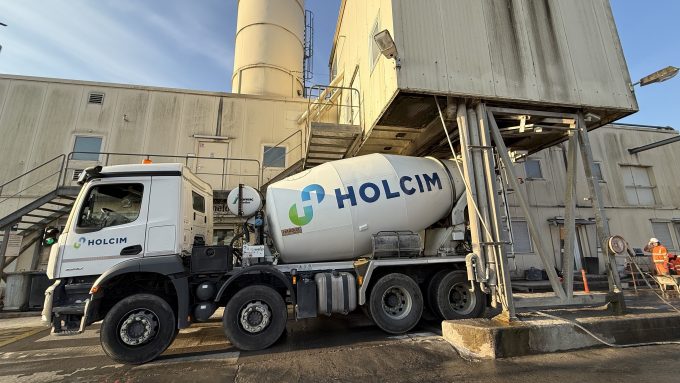
i3P Talks with HS2: Accelerating low carbon concrete adoption for the UK
Hear from Charlotte Hills and Jon Knights from HS2 for an expert discussion on how the UK can unlock this opportunity at pace, from industrial investment and supply-chain alignment to standards, testing, and cross-sector collaboration.
The latest i3P Talks With session brought together industry professionals to explore the future of urban infrastructure, with a focus on sustainable growth, climate solutions, and inclusive approaches to business.
We speak to the experts leading the Infrastructure Industry Innovation Partnership’s (i3P) focus on the adoption of low carbon technologies and circular economy principles.
Leveraging even a fraction of Britain’s £725bn infrastructure pipeline in support of innovative new approaches will deliver significant benefits for UK businesses and the economy.
Construction clients are embracing digital systems to monitor the condition of concrete arriving on site. One technology firm offering tools to keep concrete in spec is Cloud Cycle, which took part in the HS2 Innovation Accelerator.
Digital processes are overhauling the traditional means of testing concrete performance on major infrastructure projects, thanks to new systems championed by i3P.
The Infrastructure Industry Innovation Partnership (i3P) recently brought together client organisations and supply chain members to shape the future direction of its three Community of Practices (CoP): Low carbon technology, Safety and Circular economy.
project
Digital Construction Exports Group (DCEG)
Championing UK digital construction expertise for global infrastructure success
The UK offer
The UK is renowned for its leadership in digital technology and innovation across its export offer: from fintech to the creative industries, from smart cities to cybersecurity the UK leads the way.
The UK’s export offer of construction professional services for delivering the world’s infrastructure is no different: digital innovation is core to the UK’s infrastructure and construction brand. This leadership is underpinned by its strong research institutions, government support, a thriving startup ecosystem and a skilled workforce.
Working with government to promote the UK offer
The Digital Construction Exports Group (DCEG) was formed to promote the UK’s excellence in digital construction to maximise the UK’s export opportunity, estimated to be worth £11.5bn, to the infrastructure sector by leveraging its digital leadership. Supported by the Department for Business and Trade, DCEG is a UK construction industry group formed by leading exporters and hosted at the Connected Places Catapult.
Increased awareness of and demand for, the UK’s digital offer internationally provides an opportunity for this unrivalled capability to support governments and public clients in the introduction of BIM and digital construction techniques.
Maximising the UK’s digital construction export opportunity
DCEG is establishing a joined-up approach across the UK’s export capability, bringing together construction services providers and export enabling actors across industry and Government to better connect services to international market demand. This is done by DCEG acting as a:
01
Convener
Acting as a bridge across the digital construction exports ecosystem, including but not limited to UK suppliers, Government and sector enablers to maximise the UK’s competitive advantage in the global construction market.
02
Opportunity connector
Raising awareness and providing intelligence on existing and emerging markets, flagging opportunities for the UK’s digital construction offer by connecting with foreign demand stakeholders and export enablers in key markets.
03
Knowledge provider
Inform suppliers and export enablers by developing knowledge products, tools, methodologies to support growth of exports.
Resources
Empower UK SMEs in Digital Construction Exports
Read our report about driving innovation and global competitiveness through strategic collaboration and support.
“Our partnership with the Digital Construction Exports Group has been highly advantageous. The connections we have forged, the knowledge we have acquired, and the opportunities we have identified have all been invaluable. We look forward to continuing this productive relationship and exploring new horizons together.”
Juan Rossi, Mott Macdonald
Our pitch
“An integrated Team UK will work alongside and guide you to implementing the world-leading digital construction methodology to deliver greater value from capital investment, improving collaboration for faster and more consistent delivery and enhanced social and environmental outcomes.”
Contact
Register via the form below to stay up to date. If you have any questions, please contact DCEG@cp.catapult.org.uk
Partners
project
Digital Construction International Programme (DCIP)
Accelerating global infrastructure through Digital Construction.
The Digital Construction International Programme (DCIP) advances global infrastructure through the adoption of digital construction techniques such as Building Information Modelling (BIM) aligned with international standards.
The programme helps governments and infrastructure owners respond effectively to local and global challenges including rebuilding critical infrastructure, addressing climate resilience, supporting the drive towards net zero and closing the infrastructure gap. BIM helps secure better value for public money enabling infrastructure investment to go further.
DCIP also connects the UK export ecosystem to overseas market opportunities and supports international collaboration, innovation, and trade growth.
Objectives
01
Grow international public sector demand for digital construction methodologies
02
Increase public sector capacity for introducing, procuring, and using digital construction, aligned with international standards
03
Connecting UK agencies, bodies, and exporters of digital construction-related solutions to opportunities overseas
45+ partner countries
across four geographic regions
2200+ public officials trained
27 SMEs, 11 UK consultancies, 5 industry bodies
engaged in DCEG events in 2025
Benefits
Economic outcomes
Digital construction methodologies, such as BIM, have resulted in[1]:
A reduction in unbudgeted change by up to 40%.
Contract value savings of up to 10% through improved construction coordination;
A 7% reduction in overall project delivery time.
In addition, a UK study found that information management for infrastructure owners can secure between £6.90 and £7.40 in direct cost savings for every £1 invested[2]: a seven-fold return on investment.
Environmentaloutcomes
Digital construction is a key enabler to reaching net-zero targets, e.g., for methods to calculate embodied carbon, the energy efficiency of assets and whole-life carbon footprints.
Social outcomes
An important social outcome of digital construction is its power to build digital skills and knowledge, creating jobs and reskilling workers to participate in the digital economy.
Building Information Modelling (BIM)
At the heart of digital construction is the adoption of Building Information Modelling (BIM) aligned with international standards. BIM is information management for the construction and operation of the built environment.
It is a technique to enable better decision-making for the delivery and operation of the world’s infrastructure. As a coordinated set of processes, supported by technology and standardization, BIM adds value through the creation, management, use and sharing of digital information about an asset throughout its whole lifecycle.
“The Catapult has helped us to connect Cape Town’s BIM programme to our infrastructure development plans, supporting our goal to become a more resilient city, and a leader in digital transformation in South Africa and across the African continent.”
Rob Laubscher, Head of Engineering Innovation Unit, City of Cape Town
What we offer
Policy and strategy guidance for local outcomes realisation
DCIP’s UK Digital Construction methodology enables governments and infrastructure owners to implement digital transformation in response to their own local challenges including climate resilience, transparency, and closing the infrastructure gap through efficient use of public infrastructure investment.
Advisory and guidance for BIM implementation and compliance
Strategic advisory and technical assistance to transformation teams, public clients, infrastructure owners/operators, and project teams on BIM implementation and information management aligned to international standards: ISO 19650.
Knowledge transfer and provision of knowledge products
Host knowledge transfer sessions and supports building coalitions in country, regionally and globally. Best practice BIM guidance and templates are also shared with countries.
Capability and capacity development of the public and private sector
DCIP offers digital construction skills development at all levels of organisations from senior leadership teams understanding of concepts to delivery teams requiring detailed knowledge of implementation.
Digital Construction Exports Group (DCEG)
The Digital Construction Exports Group (DCEG) works with UK enterprises and SMEs interested in exporting to international markets. For more information about how DCIP connects exporters of digital construction-related solutions to opportunities overseas, visit our Digital Construction Exports Group.
Access the Public sector Construction Digital Transformation Playbook for information, ideas and inspiration on each step of your digital transformation journey Playbook – Global BIM Network