
articles
Quiet operation propels sales of electric motors for boats
Marine technology specialist RAD Propulsion – a participant of two Catapult-led programmes – recently secured £4.4 million of investment, and is looking to achieve £25 million annual revenue within the next three years.
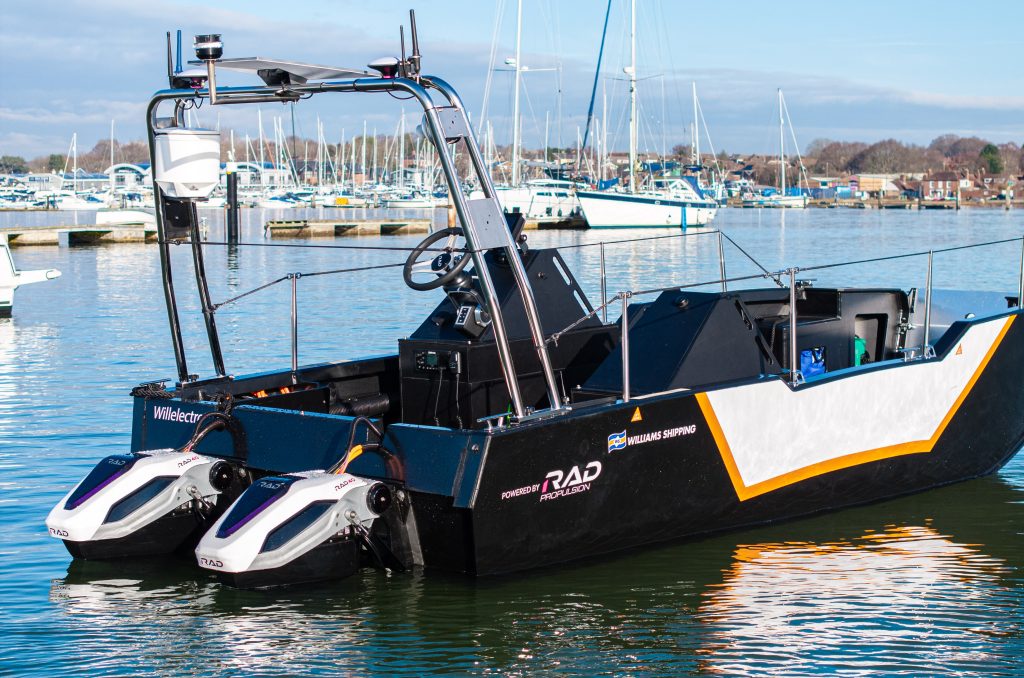
Decarbonising aquatic movement was the driver for developing electric outboard motors by Solent based scale-up firm RAD Propulsion. But now the motors’ additional benefits of lower noise and vibration are proving a bigger hit with clients.
Recent customers include African eco-tourist firm Pangolin Photo Safaris, which uses the near-silent motors on its houseboat to get closer to wildlife on the Chobe River in Botswana.
RAD Propulsion also supplies drive systems for scientific research boats operated by HX Expeditions in the Arctic and Antarctic, to minimise disturbance for whales and dolphins.
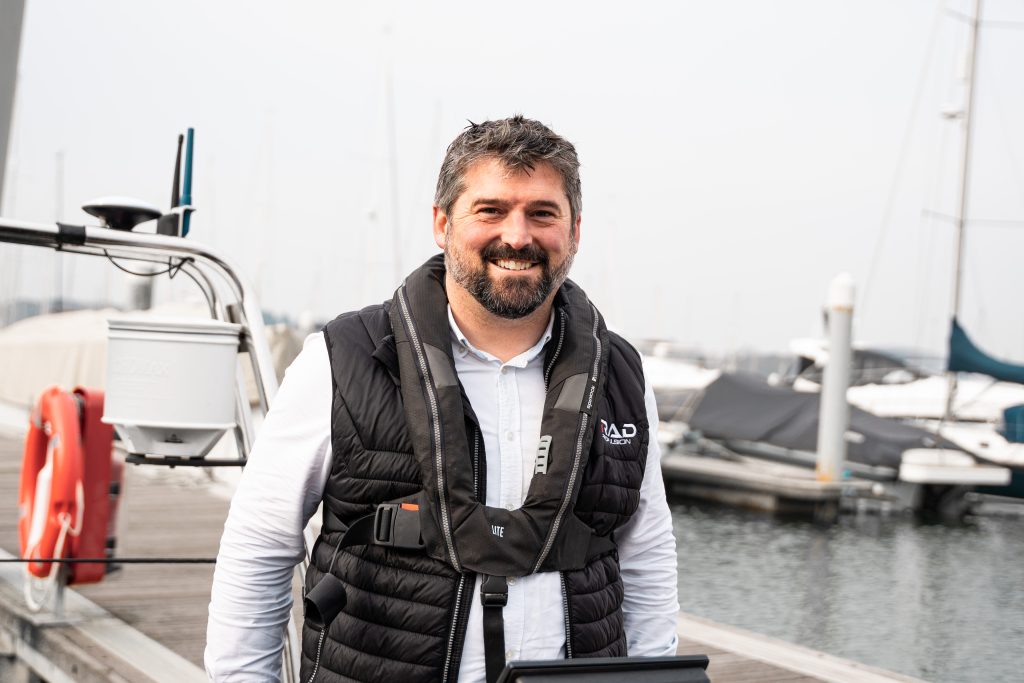
“Low frequency noise from engines can travel a long way underwater and upset marine wildlife, so we have put a lot of effort into selecting the right type of motor and mechanics to minimise that,” explains Dan Hook, a Co-founder of RAD Propulsion.
He adds that a study by University College London found one of its electric propulsion system to be 43 decibels quieter than an equivalent sized internal combustion engines (a difference roughly equivalent to a spoken conversation versus standing in a nightclub).
Two years ago, the marine technology specialist took part in the Freight Innovation Fund accelerator delivered by Connected Places Catapult on behalf of the Department for Transport to develop and commercialise its technology.
Earlier this year, it secured £4.4 million of investment led by Mercia Ventures to help the business to grow, develop new products, open a US office and expand into the defence sector.
“Until recently we were focused on developing and proving our products, but now we are looking at scaling as a business and growing internationally,” says Dan.
“We grew from £3 million revenue in 2024 to £8 million last year, and want to get to £25 million within three years. The sectors we are in are huge, and we are definitely ambitious.”Dan Hook, a Co-founder of RAD Propulsion
Powering ahead at full throttle
RAD only started selling its electric propulsion systems two years ago for boats used predominantly by water taxi operators and harbour patrols. Its offer includes a suite of software and connected systems called AXON, covering the tracking and control of boats, plus autonomous operation.
In 2024, the company took part in the Transport Research & Innovation Grants (TRIG) programme – delivered by Connected Places Catapult on behalf of the Department for Transport – to develop its electric propulsion system for autonomous vessels, with the aim of using vessels to deliver small parcels on waterways.
“The TRIG programme was a great help and definitely encouraged us to move faster with developing our technology. We built a fantastic demonstrator boat, which we have shown to four or five hundred people.”
He adds that around a dozen sales followed the boat demonstration, and its electric propulsion system has been supplied to clients in eight countries including France, Norway and Finland.
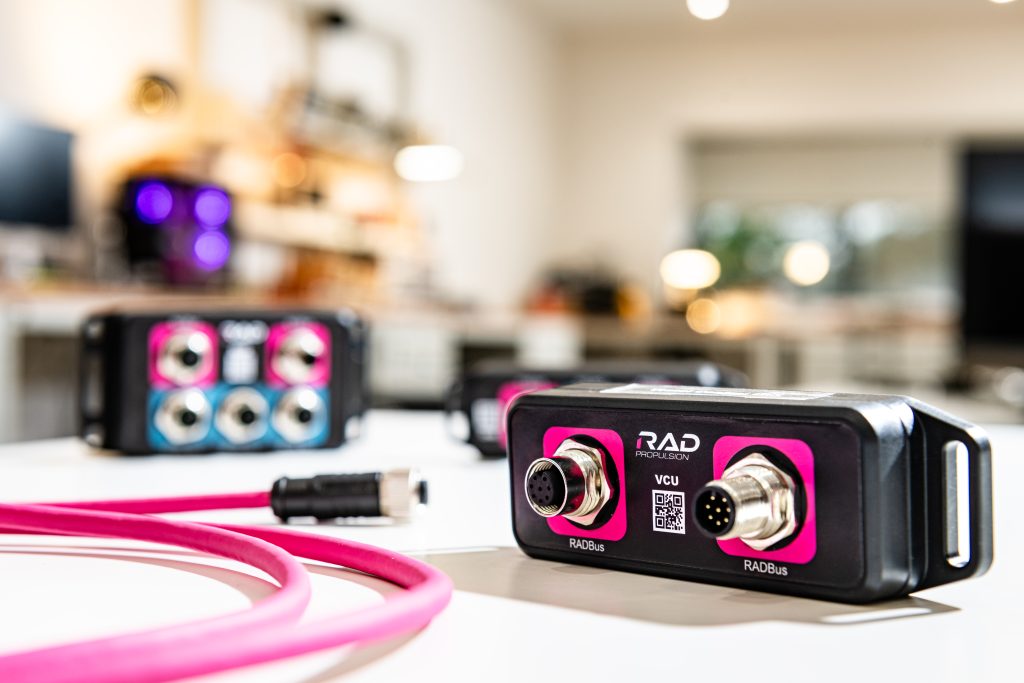
Six months after TRIG, the company took part in the Freight Innovation Fund accelerator to further develop the system and demonstrate it on a boat built with Williams Shipping, in a six week trial operating in a busy waterway with Associated British Ports at Southampton.
“TRIG got us to develop a propulsion system for a boat tried out on a calm river, and the Freight Innovation Fund accelerator put us into a dock with a third party user; liaising with a harbour master and operating in bad weather.”
The programme increased the propulsion system’s Technology Readiness Level score from a five (basic validation of technology) to an eight (technology qualified by testing).
Dan says Connected Places Catapult helped to provide “a structure, funding and a timeline for product development”, alongside marketing advice and investment support. “We met nine or ten people for different sessions through the latest programme, allowing us to fully understand the commercial requirements and explore potential opportunities for the technology.
“We have kept in touch with two or three other consortium members. It has provided real impact and helped us grow commercially.”
A sector embracing change
“The marine sector is undergoing a big transition, but is quite a traditional, conservative industry,” explains Dan.
“There are several million boats on the planet, tens of thousands of operators and thousands of boat builders who are being asked to decarbonise; while starting to look at the impact of technologies like AI and robotics, as well as big data and connectivity.
“Much like the car industry, the marine sector is now going on a journey with the addition of advanced control systems which we can supply,” he adds.
“Decarbonisation definitely started our journey. But as we've developed our technology and worked more with customers, other benefits like the low noise and vibration, lower running costs and less maintenance of the units have started to dominate the discussion. We entered the sector at just the right time.”
Find out more about the Freight Innovation Fund accelerator and the Transport Research & Innovation Grants programme.