
articles
Cracking the productivity challenge in infrastructure
Collaboration and new thinking encouraged by i3P – the Infrastructure Industry Innovation Partnership – are helping major project clients improve productivity.
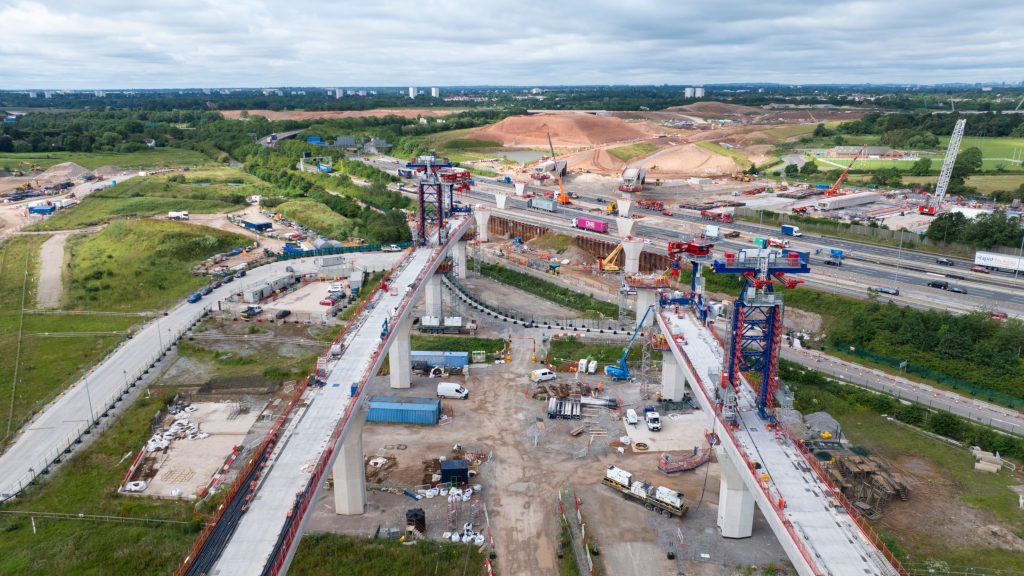
Pressure to improve productivity remains a sizeable challenge for the construction sector as it strives to reduce project costs and cut delays. But there continues to be a lack of a consistent approach among clients and suppliers to make projects more productive.
To help sharpen the sector’s response to addressing the productivity challenge, members of i3P are getting behind new British Standard PAS 4010 – due to launch this autumn – which looks to set a common standard for managing the efficiency and effectiveness of work carried out on major infrastructure projects.
“We're going to get ahead of the game, run a study into PAS 4010 to see how companies perform against it and publish the results, to help raise standards in construction.”Ben Wagenaar, i3P Theme Lead for Productivity

Ben is one of four i3P Theme Leads; each sponsored by a client member. The other three leads are Katya Stokes of Sizewell C, looking after safety; Andy Powell of the Environment Agency, responsible for carbon; and Mustafa Mangal of National Grid, overseeing monitoring and maintenance.
Ben explains that while the new British Standard sets a framework for productivity improvement, i3P can help infrastructure client organisations interpret it, share practical experience and work through implementation together.
“Clients want to be able to work faster to verify and validate the quality of assets being handed over to us. Major projects have an incredible number of assets which all have to be checked, to ensure they are exactly what was asked for in the design and meet the applicable standards,” he says.
“If we can get costs under control and save the amount of rework needed on projects, it could potentially save billions of pounds from major infrastructure schemes.”
Group shares common challenges
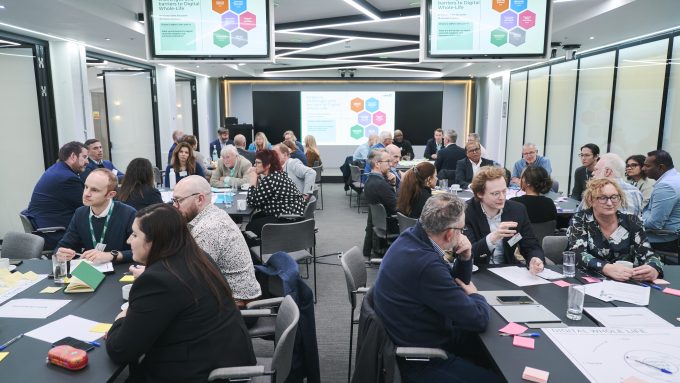
Members of i3P gain earlier industry insights about ways to reduce duplicated effort, the chance to learn from each other, and an opportunity to help shape how PAS 4010 is applied in practice.
Areas of shared interest across the productivity theme – and currently being considered by i3P – include project optimisation, site management, and making use of new or emerging materials such as calcined clay.
Ben adds that an ‘i3P Passport’ is being explored to “stamp off solutions that have been trialled, along with the evidence that goes with it”. This means products proven on one scheme don’t have to go back to square one to get accepted onto another.
This kind of intelligence sharing is what makes i3P so valuable, “just listening to people who have the same challenges as part of an industry group is really refreshing and helpful”.
Ben notes that construction is one of the slowest sectors to adopt technology, which can affect infrastructure delivery, but that positive change is happening.
He says new ideas around delivery are making schemes run more smoothly – and stakeholders who support one another through groups like i3P are helping to maximise impact across the industry.
Ben adds that productivity issues “will not be solved in isolation”. Instead, he says, “convening people through i3P and having their minds work together represents a massive leap forward”.
Sharing best practice widely
Ben started leading the i3P productivity theme last summer, having been involved via his previous employer Heathrow Airport in i3P between 2019 and 2021, and his current employer HS2 – where he is a Senior Innovation Manager – since 2023.
He began his career as a software developer, pivoting towards the championing of innovation and technology used in the aviation and legal sectors 13 years ago.
Ben is currently encouraging members of i3P to log best performing innovations, expertise and programme experiences in shared databases and value management programmes for all members to access.
He says that sharing learnings in this way can also help best practice scale to other projects when employees move on.
“There is a lot of common ground across the infrastructure sectors represented by i3P members, as each has a civil engineering function to it. Learnings should transfer easily between projects, or be something that people can work collaboratively on.”
Using AI to get it right first time
Ben says that more stakeholders on large projects are now tackling poor productivity by using AI to schedule workflows, and software to help site workers reduce wasted effort.
Examples of AI to optimise workflows used on HS2 include tools called nPlan and Nodes & Links that consider a project plan, sequence work and highlight risks with a schedule.
Another from ALICE Technologies was used to optimise the build sequence of the roof and conventional railway platforms at Old Oak Common station. Taken together, the three programmes have generated several million pounds of value for the project.
Another strategy being championed is called the Get it Right Initiative, which helps to reduce wasted effort on site. “It says that between 10 and 25% of all civil engineering costs are down to having to do jobs again, either because the specification was incorrect or due to damage or waste on site,” says Ben.
In addition, i3P is considering how technology can be used to reduce project lead times.
Affecting change together
Contractors, consultants and clients are invited to join i3P to find out how coming together with like-minded stakeholders can help address common challenges, such as improving productivity.
For SMEs with proven productivity solutions, they can apply now to the Infrastructure Productivity Scale-Up Programme (closing 14 September 2026), which is focused on helping proven solutions overcome adoption barriers and scale across UK infrastructure.
The programme has been shaped with Ben and other i3P contributors working on this theme; bringing influential organisations together to help turn shared priorities into practical opportunities.
Find out more about the work of i3P and its productivity group