articles
Breaking the deadlock on low carbon concrete
Construction material specifiers are being urged to consider calcined clay, a cement replacement used in concrete to reduce carbon and minimise waste, and championed by i3P – the Infrastructure Industry Innovation Partnership.
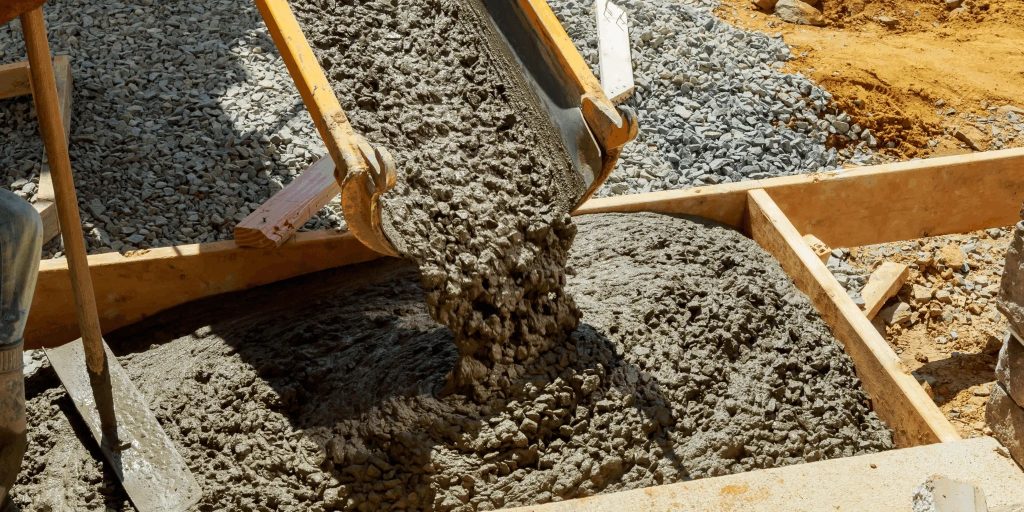
Innovating doesn’t always mean trying something brand new: sometimes it involves reviving a technique that has fallen out of favour. Take calcined clay – a low carbon cement substitute used to create concrete.
It was used by Egyptian builders to build the Aswan Dam over 125 years ago, but worldwide the construction industry moved to the use of Portland cement.
More recently however, a handful of recent development schemes such as a residential project at Brent Cross and the rejuvenation of Broadgate Tower and Smithfield Market in London, have started to consider calcined clay as a practical alternative.
But a deadlock remains around wider adoption: infrastructure clients are reluctant to specify calcined clay without confidence in supply, while suppliers are reluctant to invest without confidence in demand.
Now, key members of the UK construction supply chain including clients, contractors and consultants are being brought together by i3P to explore ways of breaking the deadlock and encourage greater use of calcined clay on infrastructure schemes.
This summer, an engagement event promoting the material’s wider adoption was led by a project team featuring key members of i3P and hosted by PA Consulting.
“Targeted intervention is needed to support the country’s 2050 decarbonisation target.
“Clients don't specify calcined clay because they are unfamiliar with it, and suppliers don't invest in production facilities because there's uncertain demand.”Nick Sumption, i3P Delivery Lead and Catapult Consultant
He adds that calcined clay generates around 80% less carbon than Portland cement. It is processed in kilns at much lower temperatures than cement, so will cost less to make if it is adopted by the industry at scale, and meets current British standards for concrete.
“But there are currently no large kilns to process calcined clay in the UK, so it is usually imported from elsewhere in Europe. We need to demonstrate there is a business case for a kiln in the UK, through generating interest and momentum underpinned by securing future commitments from clients to use the material.”
Developing a market for calcined clay could also provide a boost to UK industry by increasing domestic production and supply chain resilience, and giving suppliers more confidence to invest.
Nick explains that concrete is responsible for a quarter of the embodied carbon associated with the UK construction sector, and that Portland cement accounts for about 1.5% of the UK's carbon emissions.
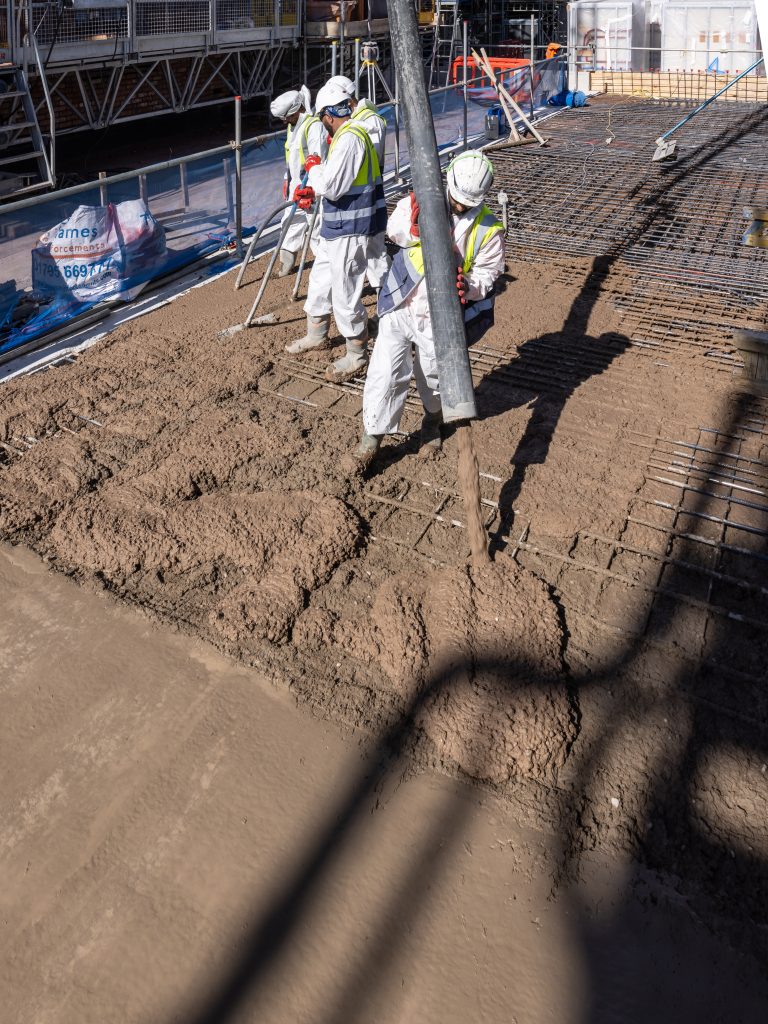
“The country’s decarbonisation plans and the construction sector’s net zero aspirations will fall short if low carbon substitutes for cement are not widely adopted,” he says.
“There is growing interest for lower carbon constituents to be used in place of cement, but stockpiles of alternatives such as blast furnace slag are declining due to the closure of blast furnaces, so it is not a long-term sustainable resource. Clay is a natural resource widely available across the UK, so is an obvious low carbon substitute to cement.”
Making better use of material from site
Calcined clay is formed from heating clay that has been excavated from the ground, or by recycling old bricks, to create a cement-like substitute.
i3P decided to support the adoption of calcined clay across the industry three years ago after HS2, one of its client members, identified a need to make better use of excavated material from 105km of tunnels dug between Birmingham and London.
i3P is encouraging its members to support adoption of the material, and a calcined clay working group has been set up by the Transport Research and Innovation Board, which brings together organisations including Connected Places Catapult, HS2, National Highways and the Department for Transport.
“Stakeholders are starting to engage with this, and i3P has received letters of support from both contractor and client members who say they would be very happy to use calcined clay,” adds Nick.
Stakeholders give their views
This summer’s calcined clay engagement event featured presentations from HS2’s Head of Innovation, Charlotte Hills and its Lead Materials Engineer, Jon Knights.
“Calcined clay is a proven material with clear benefits. HS2 has excavated five million tonnes of clay, but there is nowhere in the UK to process it for use as a low carbon concrete.
“The material can help the country reach its decarbonisation targets, but first we need a production facility in the UK. We are trying to resolve that and generate enough interest so that the material can start to be supplied.”Charlotte Hills, Head of Innovation, HS2
Jon Knights added: “Calcined clay is one solution as part of a portfolio of lower carbon materials, but we still have a way to go. There is reticence from cement companies to ‘wait until they are ready’ so to accelerate this technology, we need disruptors to make it happen. But things are starting to move, and we want to keep up the momentum.”
One supplier making efforts to bring calcined clay to these shores is Swedish minerals company LKAB. Its Managing Director, Steve Handscomb said: “The pressure to reduce carbon and achieve net zero is huge, and the UK needs to look at what it does closer to home to use modern robust materials.
“Having specifiers actually specify the product is absolutely key,” he added. “Clients often say they want durability and strength, but leave it to the concrete suppliers to choose a material. The key thing is performance, not the materials that go in it.”
Steve said that damaged brick from manufacturing can be put to far better use than simply being discarded or used in low-value applications. It can be processed into a cementitious powder and used as a key ingredient as a calcined clay in concrete mixes to improve durability and significantly reduce carbon.
“The sector needs to get together, create demand and make this commercially viable. No-one is going to invest millions of pounds in a new production capacity if there is no certainty that the market will use it. We are proud of our work in this area.”
He added: “The opportunity is much bigger than simply reducing carbon. It is about creating a more resilient supply chain, supporting investment in new low-carbon technologies and giving the construction industry practical solutions that deliver the performance clients need.”

Read more about the work of i3P - the Infrastructure Industry Innovation Partnership.
Images courtesy of LKAB