
articles
Infrastructure clients can drive productivity by scaling green solutions
We speak to the experts leading the Infrastructure Industry Innovation Partnership’s (i3P) focus on the adoption of low carbon technologies and circular economy principles.
Urgent intervention is needed within infrastructure to turn sustainability ambitions into positive action, according to two engineering specialists working with i3P.
Many construction professionals support the need to reduce carbon and increase recycling and reuse, but too few companies are taking forward initiatives – beyond commissioning pilots or demonstrators – that could make a meaningful difference at scale.
Procurement of more sustainable solutions can be challenging, and some clients are reluctant to engage.

Adoption of new techniques can also be an issue, with repeated trials taking place when evidence of their value already exists elsewhere.
Ian Small from consultant Expedition Engineering leads the i3P Low Carbon Technology Accelerator community of practice; and Robert Kleinjan from Jacobs heads up the i3P Circular Economy community of practice.
Ian and Rob are challenging the current status quo, not just to raise awareness of the need to change conventional practice, but to avoid defaulting to further trials and to encourage delivery at scale.
Incentives needed to reduce carbon
"The sector is losing momentum to prioritise low carbon. Companies are not going to decarbonise because it's the right thing to do, or for the sake of it. They need some other incentives.”Ian Small, lead of the i3P Low Carbon Technology Accelerator community of practice
Low carbon solutions often offer both cost and efficiency benefits, he explains, and the group he leads is looking to drive awareness of the productivity gains of more sustainable approaches.
But most commercial organisations will want to see financial return from sustainable actions too, he adds. “Articulating the benefits of low carbon construction in terms of improved productivity – and not just a carbon improvement – is where we should start.
“It’s so much better to dig a smaller hole and pour less concrete, than simply to switch from a high carbon concrete to a low carbon concrete,” Ian points out. “Doing less is often the right answer.”
More effort demanded on circularity
Robert agrees with Ian that little progress has been made on sustainability in construction recently, especially around his area of interest: promoting the circular economy.
“As a sector, we are going backwards as we are seeing a reduction in the reuse of materials and resources,” he says. “Five or six years ago, re-use of materials accounted for nearly 10% of materials used on site; now it is down to about 7.8%.
“We are seeing some progress in terms of recycling policy, but it is very slow. What we need to do is encourage adoption at scale in the market.”
Robert explains that his community of practice brings together professionals who are supportive of change, willing to share best practice and incorporate circularity into their respective organisations. “But now we must try and help to change the system, and move from pilots to adoption. That remains a big challenge.
“We still find that problems with procuring the re-use of construction materials come down to cost, the perceived quality of materials, and trust in those materials,” he adds.
Moving away from repeated trials
Ian points out that the infrastructure sector needs to overcome a mindset of repeated trials to prove that a technology is fit for purpose. “Two contractors can sometimes be doing similar pilots, and they often don’t talk to each other,” says Ian. “We are trying to bring those people together to understand that they don’t need to keep repeating trials.”
He adds that many construction organisations associate innovation with conducting pilots rather than adoption, and that successfully introducing new approaches on projects may require talking more with individuals working at the sharp end on site, rather than the heads of innovation. “A maturity shift is needed towards innovation across the whole sector,” he says.
Robert adds that no single organisation can be responsible for pushing forward with innovation on behalf of the sector.
“Systematic change is required, and that takes time, but collaborating more can help. Our members want to see change, and there is a willingness to share.”Robert Kleinjan, lead of the i3P Circular Economy community of practice
Efforts are also being explored to see whether a new innovation readiness level model could be used alongside productivity specification PAS 4010 to understand whether new approaches need more testing, or whether there is enough evidence to move them towards wider adoption.
Initiatives being taken forward
Areas of focus and solutions identified by the Low Carbon Technology Accelerator include promoting low carbon concrete (including calcined clay), more sustainable steel (such as recycled sheet piles) and diesel-free sites (for example, hydrogen-powered plant).
Use of autonomous machines for earthworks is also encouraged to make fuel savings and remove operatives from challenging environments to improve safety.
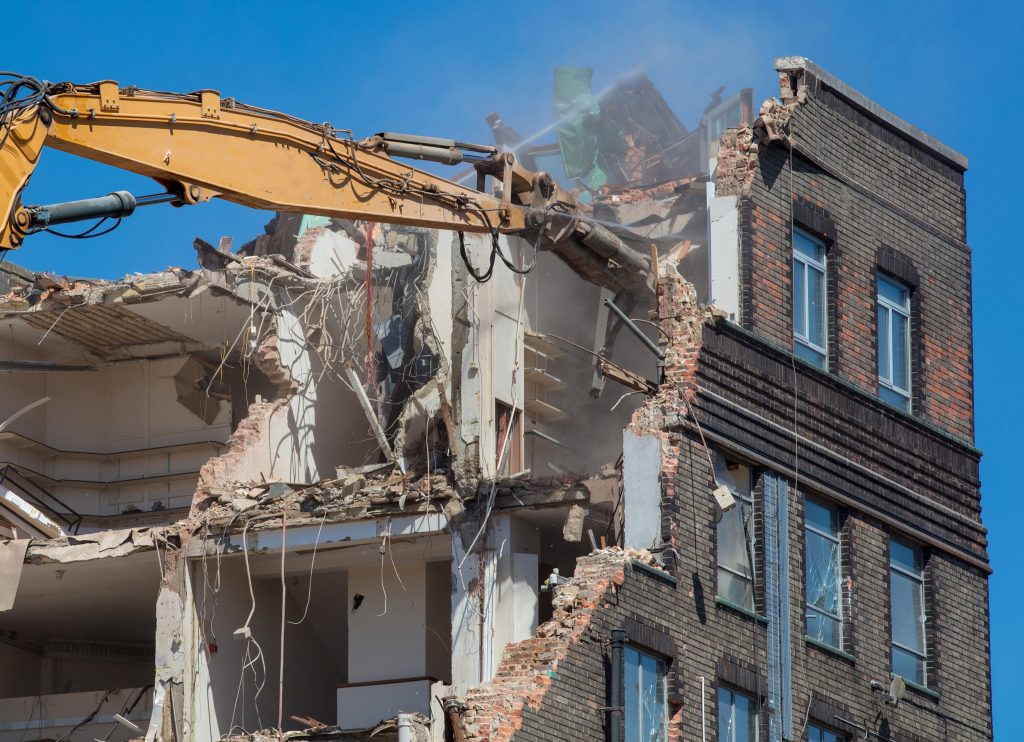
i3P’s Circular Economy community of practice recently developed a pre-demolition audit guidance document, which is soon to be published, to consider the value of existing structures, and what can be salvaged if they are dismantled.
Another piece of work being taken forward will look at how infrastructure clients can procure projects in a way that better considers the cost and carbon associated with an asset across the whole project lifecycle. This will allow longer term cost and carbon savings to be factored into decision making.
Seeking greater input
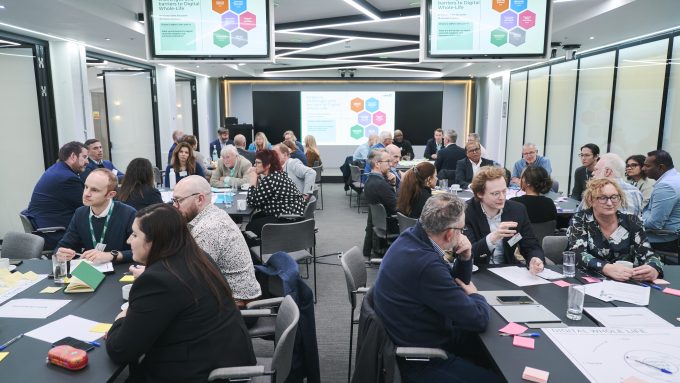
Both the Low Carbon Technology Accelerator and the Circular Economy community of practice are currently seeking to engage further with infrastructure client organisations and contractors, to scale new approaches and create impact; by bringing the right people together around specific problems and helping to turn them into practical activity.
“This is about solving common challenges facing major infrastructure client organisations at scale,” Robert says. “There’s lots of learning to share.”
Ian sums up the communities’ power of collective action. “If you want to go fast, go alone. If you want to go further, go together.”
Find out more about the work of i3P and its Communities of Practice here.