Using procurement to unlock faster, greener, more cost-effective public services
The Innovation Procurement Empowerment Centre (IPEC) helps public sector organisations and high-potential businesses use procurement to solve challenges, improve services, and support economic growth. It’s the UK’s competency centre for the procurement of innovation.
We provide practical support, expert guidance, and shared learning to help organisations achieve better, cheaper, and faster results by adopting innovative solutions and unlocking the opportunities of the Procurement Act 2023.
We also help innovative SMEs access public sector markets, creating new opportunities for businesses to grow, while delivering better outcomes for communities across the UK at local and regional levels, as well as supporting central government. Working with leading experts, we provide evidence-based guidance to shape current and future policy for the procurement of innovation.
Find out more in our FAQs, or get in touch at contact@ipec.org.uk.
The Innovation Procurement Empowerment Centre (IPEC) helps councils and local authorities use procurement as a tool to unlock better, faster, greener and more cost-effective outcomes.


Empowering the public sector to drive better outcomes through innovation in procurement.
Through our support programmes, research, and stakeholder engagement, we help organisations overcome barriers to innovation and create lasting impact.
Public procurement is one of the UK’s most powerful, and underused – tools for growth. Each year, the UK public sector spends over £400 billion on procurement, making it one of the largest drivers of economic activity in the country. Yet too often, this spend is focused on buying existing solutions rather than shaping markets or enabling innovation.
At the same time, innovative businesses struggle to access early customers and secure the contracts they need to scale.
IPEC bridges that gap, turning procurement into a strategic lever for growth.
We focus on sectors where progress is hardest, including transport, construction and data infrastructure and markets shaped by complexity, regulation and risk.
IPEC helps public sector organisations adopt innovation with confidence by:
For high-potential businesses, the journey from innovation to growth is often unclear and fragmented. IPEC provides a structured pathway to help SMEs:
By reshaping procurement and helping public bodies make better use of existing powers, evidence and proven practice, IPEC drives growth at every level.
Our ambition is to deepen understanding of the effectiveness of innovation procurement in driving innovation for better public services while boosting economic growth. Working with regional and local authorities we can disseminate best practice and empower local decision makers.





Stay updated
Register via the form below to stay up to date with our latest updates.
Connect with us
Follow us on LinkedIn, and join our IPEC community group to share insights with like minded professionals.
Find out more
Find out more in our FAQs, or get in touch at contact@ipec.org.uk.

High-quality public spaces drive economic growth, improve wellbeing and strengthen climate resilience. They attract investment, increase property values and deliver social benefits. Yet their full potential remains untapped. Preliminary research by the Catapult identified three main challenges for public realm schemes:
These barriers create investment uncertainty and hinder successful public realm development.
The Public Realm Innovation Lab bridges the gap between innovation and implementation, acting as an:
The Lab is a ‘do tank’, turning ideas into action. Using a test-and-learn approach, we run pilots with continuous feedback loops to turn theory into practice, generate real-world evidence and connect insights to broader systems – ensuring innovations are practical, scalable and deliver lasting impact.
Implement specific, purposeful innovations focused on a theme (e.g. health and wellbeing) to show how the strategic design, management and use of public spaces can deliver measurable outcomes.
Shape each theme around systemic, policy-linked opportunities, combining top-down and bottom-up perspectives to tackle complex public realm problems.
We know we can’t do this alone. Working with partners allows us to test and learn on local challenges – exploring how tackling local issues can help solve the national challenges.
Our test and learn approach allows organisations and end-users to trial innovative solutions in real-world settings. This enables stakeholders to explore, refine and validate new ideas before wider implementation, making sure they are practical and scalable.
Embed innovative SMEs within places to activate spaces, attract tenants and stimulate local activity, delivering value for developers and local authorities while giving SMEs pathways to grow and scale.
Develop solutions that address multiple needs across government, delivery teams and communities, combining strategic impact with practical implementation to deliver positive outcomes for people, planet and prosperity.
By combining on-the-ground experimentation with strategic alignment, the Lab creates the strongest pathway to grow innovative markets rooted in place.
Connected Places Catapult is partnering with the River Roding Health Corridor Consortium – including Arup, Be First, Care City, Makower Architects and NHS North East London.
The consortium has identified the River Roding as one of London’s most undervalued natural corridors, with significant potential to support community health, yet largely invisible and inaccessible to local residents. The consortium brings together expertise in NHS health data, spatial design, regeneration and community engagement, putting people at the heart of the project.
Building on their work, Connected Places Catapult has defined a focused innovation challenge to improve health and wellbeing in local public spaces:
Helping children and young people achieve a healthy weight by making public spaces more inclusive, inviting, and connected.
The next step is co-designing and piloting targeted interventions with communities and partners.
To support the development of the initiative, the Catapult has commissioned research to explore how innovation in urban real estate can enhance public spaces, focusing on areas including technology integration, flexible use models, inclusivity, and climate resilience. The aim is to inform strategies that address current urban challenges and improve social, environmental, and economic outcomes for all.
Pathways to an outcomes-based public realm
This report, developed by Connected Places Catapult and Dark Matter Labs, explores how to embed public space outcomes across every stage of the commercial real estate process. It highlights gaps in current practice and calls for new tools, models and partnerships to better value, fund and manage public space as essential urban infrastructure.
View the report online – Pathways to an outcomes-based public realm

Pathways to an Outcomes-based Public Realm
File type: pdf
File size: 29.39Mb
Public Realm Innovation Initiative – Market Research Summary
This research aims to identify market failures that act as a barrier to developing public realm spaces that drive health and wellbeing outcomes.
Research will inform the design and development of a value proposition, which will be used as an offer to the market.

Public Realm Innovation Initiative Market Research Summary
File type: pdf
File size: 26.59Mb





The DIATOMIC Programme is led by Connected Places Catapult in partnership with Birmingham and Wolverhampton City Councils, Aston University, Birmingham City University, and the University of Birmingham. Now in its third year, the programme is designed to increase innovation capacity in the West Midlands, support economic growth, and strengthen the region’s research and development ecosystem.
Through four connected workstreams, DIATOMIC supports SMEs, builds global partnerships, and leverages the West Midlands’ strengths in advanced digital technologies.
At its core is the development of a Digital Twin platform, enabling SMEs to test and demonstrate new digital models in secure environments. These models are helping to unlock smart investment zones in Birmingham’s Knowledge Quarter and Wolverhampton’s Green Innovation Corridor. This digital infrastructure connects local authorities and academic partners with SMEs, allowing real-world challenges to be addressed through innovative solutions. It supports the translation of research into commercial applications, leading to more effective, data-led decision-making.
Internationally, the programme continues to raise the region’s profile through partnerships with countries like South Korea and India. These collaborations help attract inward investment, create skilled jobs, and position the West Midlands as a leader in digital innovation.
Aligned with regional priorities, DIATOMIC is helping to close funding gaps, reduce economic disparities, and strengthen local supply chains. So far, it has supported 36 SMEs, generated £3.8m in co-investment, and accelerated the development of key technologies.
In its third year, DIATOMIC will support 10 more SMEs, deliver five new Digital Twin use cases, and generate an additional £10 million in co-investment. With a strong focus on the Black Country, the programme continues to create an innovation-led, resilient economy for the West Midlands.
Connected Places Catapult is working with industry and academic partners to deliver two programmes, DIATOMIC and Clean Futures, as part of the wider West Midlands Innovation Accelerator. The region has strong potential to create jobs and boost economic growth through innovation.
As set out in the West Midlands Plan for Growth, it is a centre for advanced manufacturing and a key player in the ‘Green Industrial Revolution’. DIATOMIC and Clean Futures build on this foundation by supporting local innovators and strengthening the region’s ability to drive commercial growth and attract investment.

The DIATOMIC and Clean Futures programmes harness the West Midlands’ strengths in advanced manufacturing and the Green Industrial Revolution by encouraging strategic partnerships between industry, academia, and local government. This approach accelerates innovation, drives economic growth, and enhances the region’s capability to attract investment and create jobs, delivering value to businesses, universities, and local communities.



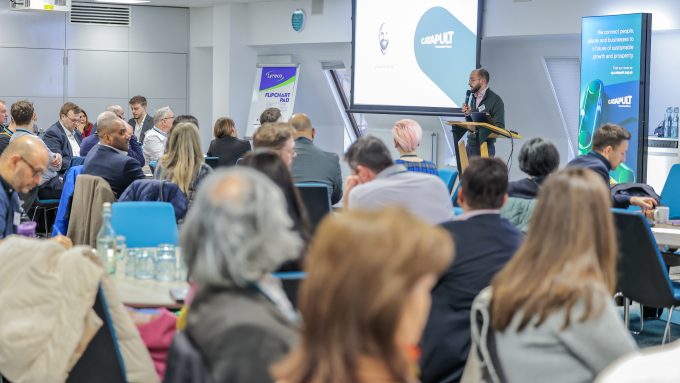

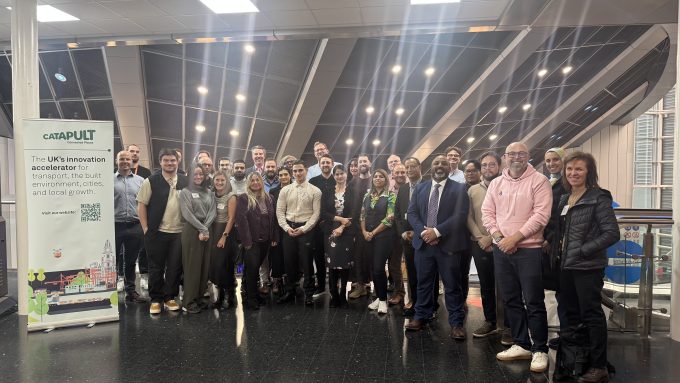
For any enquiries about the DIATOMIC programme, please contact Iain Mansell, Head of Regional Engagement.
About the West Midlands Innovation Accelerator
Led by Innovate UK on behalf of UK Research and Innovation, the pilot Innovation Accelerators programme invested £100m in 26 transformative R&D projects between 2022-25 to accelerate the growth of three high-potential innovation ecosystems – Glasgow City Region, Greater Manchester and West Midlands. The programme was boosted by an additional £30m of public funding for 2025/26 spread equally across the regions. Innovation Accelerators is piloting a new model of R&D decision making that empowers local partnerships to harness innovation to drive regional economic growth, attract private investment, and develop future technologies.

Year one and two of Clean Futures was led by Connected Places Catapult in partnership with the BCIMO, Coventry University, and CU Services Limited. So far, 39 SMEs have been supported through a six-month, challenge-led accelerator, each receiving up to £50K to trial solutions.
The accelerator has focused on challenges related to very light rail, automotive manufacturing, and their associated supply chains. Participating SMEs benefit from bespoke technical and commercial support, along with networking and showcasing events that connect them with industry and financial partners.
The programme has attracted high-growth SMEs from within and beyond existing supply chains, helping them develop clean transport technologies and demonstrate value to Tier 1 vendors and OEMs (Original Equipment Manufacturers).
Year three of the programme is led by Connected Places Catapult in partnership with Coventry University building on the success and achievements of two previous cohorts. SMEs will have the opportunity to accelerate the validation and commercialisation of their clean technologies.
Connected Places Catapult is working with industry and academic partners to deliver two programmes, DIATOMIC and Clean Futures, as part of the wider West Midlands Innovation Accelerator. The region has strong potential to create jobs and boost economic growth through innovation.
As set out in the West Midlands Plan for Growth, it is a centre for advanced manufacturing and a key player in the ‘Green Industrial Revolution’. DIATOMIC and Clean Futures build on this foundation by supporting local innovators and strengthening the region’s ability to drive commercial growth and attract investment.
The DIATOMIC and Clean Futures programmes harness the West Midlands’ strengths in advanced manufacturing and the Green Industrial Revolution by encouraging strategic partnerships between industry, academia, and local government. This approach accelerates innovation, drives economic growth, and enhances the region’s capability to attract investment and create jobs, delivering value to businesses, universities, and local communities.


For any enquiries about the Clean Futures programme, please contact
Harriet Muscroft, Consultant, Enterprise Support (Built Environment).
About the West Midlands Innovation Accelerator
Led by Innovate UK on behalf of UK Research and Innovation, the pilot Innovation Accelerators programme invested £100m in 26 transformative R&D projects between 2022-25 to accelerate the growth of three high-potential innovation ecosystems – Glasgow City Region, Greater Manchester and West Midlands. The programme was boosted by an additional £30m of public funding for 2025/26 spread equally across the regions. Innovation Accelerators is piloting a new model of R&D decision making that empowers local partnerships to harness innovation to drive regional economic growth, attract private investment, and develop future technologies.