
articles
SMEs aim high to progress from pilots to full commercialisation
Stakeholders and small companies gathered in Birmingham to chart the ongoing impact of Diatomic, the West Midlands based digital accelerator.
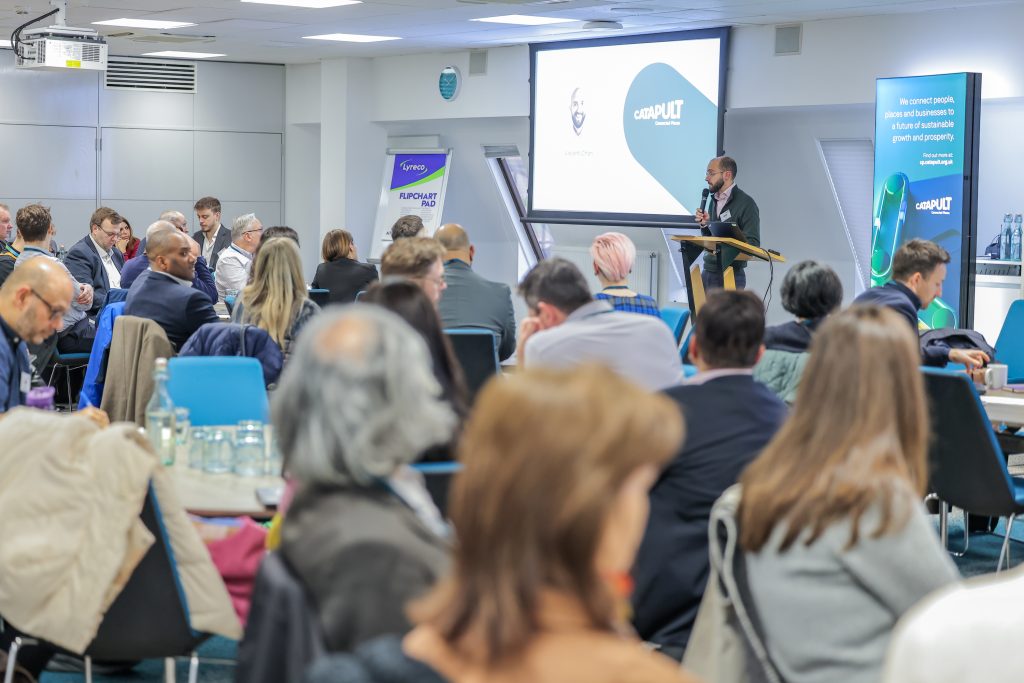
Repeatable, connected testbed programmes such as Diatomic work because they don’t just trial new technology – they lead to long-term, scalable applications providing a pathway to real national impact, an event in Birmingham heard.
“Diatomic is all about creating value, and making that scalable so that SMEs don’t just land in a pilot; but their work can be scaled for the UK economy,” said Joanna Birch, the Managing Director of GrowThinnk Associates, which advises local businesses involved in innovation.
“Over the next 12 months, I’d like to see a better understanding from a public service perspective of how we create the procurement and data conditions so that these amazing discoveries can drive growth.”
Joanna was speaking during a panel session around driving regional growth through local transformation, hosted by Ali Nicholl, the Data and Digital Strategy Engagement Director at Connected Places Catapult.
Ali pointed out that Diatomic mirrors the wider ambitions of the West Midlands Artificial Intelligence Missions, which aim for the region to become a nationally recognised AI testbed, with consistent validation and scaling.
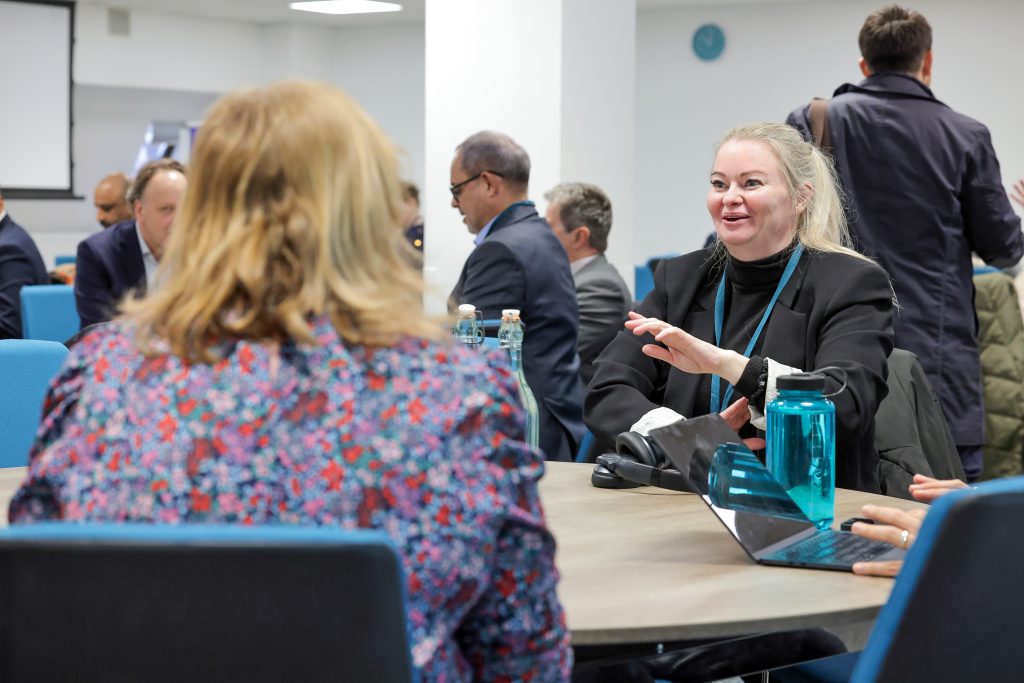
David Hope, a Business Development Manager with Coventry City Council said: “Programmes such as Diatomic are about helping businesses work with local authorities and universities looking to address real life challenges that are impacting on our places, with real projects that have potential to be rolled out more widely,” he said.
“We now need to enable more of our businesses to work with our region’s universities, using cutting edge facilities and expertise, and advancing new products and services that are exportable and can generate jobs and growth for our economy.”
Chris Lawes, the Sector Lead for Business, Professional and Financial Services at the West Midlands Growth Company was asked where he saw the benefits of Diatomic.
“It’s a really good collaboration between public and private sectors, providing confidence to businesses and showcasing what can be done,” he said.
“We hear that it can be a challenge to sell into the public sector, so having this programme as a testbed can prove concepts and allow organisations to say to customers that they have a case study, show what they have learnt and explain what their next steps are.”
Find out more about IPEC
Katharine Fuller, the Chief Operating Officer of Tech West Midlands spoke of the benefits of the programme to SME founders in being able to map out pathways for growth.
“Programmes like Diatomic help to stop the same learning happening multiple times and also increases confidence and trust in businesses and tightens the whole ecosystem of innovation”.Katharine Fuller, Chief Operating Officer of Tech West Midlands
Creating an impact
Dr Kiran Gulia of University of Wolverhampton told a second panel session convened by Justin Anderson, the Managing Director for Data and Digital at the Catapult that Diatomic helps to create impact and “make lives better”.
She added that some other accelerator programmes might complete, and for progress to stop “because a milestone has been achieved”. But with Diatomic, the hope is that the wheel “isn’t reinvented the next year”.
Lloyd Broad, the Head of European and International Affairs at Birmingham City Council remarked: “I love these types of programmes; I see them as a practical testbed to drive innovative solutions to public sector challenges,” but added the biggest challenge he has with introducing new solutions provided by SMEs is how to whet the appetite of internal colleagues who have little capacity to deviate away from delivering their business as usual.
Julian Moore from the University of Wolverhampton, and Programme Manager for the Wolverhampton Green Innovation Corridor – one of two place partners for the Diatomic programme – spoke of the need for embracing digital innovation to drive advances in green technologies. Julian introduced the £27m national innovation district “that will provide businesses and the local community with access to specialist research, education, skills, and training opportunities.
“This is all about co-creation: designing together and collaborating efficiently,” he said. “Digital technology is an area of keen aspiration. We will be collaborating with companies, small and large, to inspire greater commitment towards sustainability and positive transformation.”
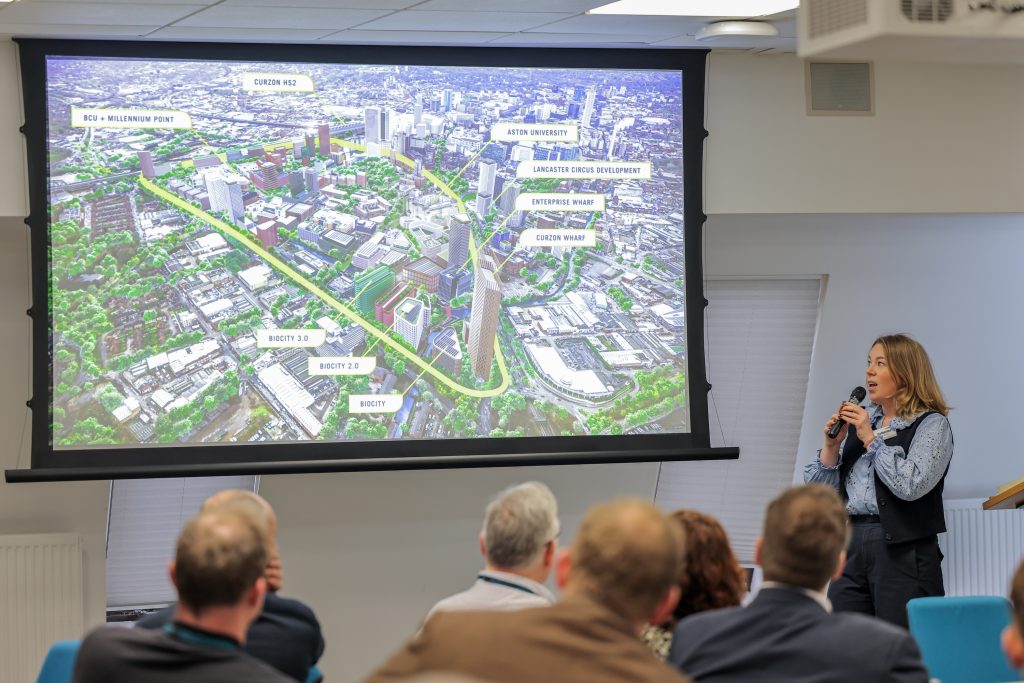
Catherine Hadfield from Birmingham Knowledge Quarter – the other place partner – outlined the vision for the area and said it is “one of the most exciting regeneration projects in the West Midlands, if not the whole country”.
“This is your playground,” she told Diatomic participants. “Fantastic stuff is happening, and this is part of a broader ambition to truly deliver innovation in the built environment, energy, and in transport.”
But an innovation district like the Knowledge Quarter is not just about improving the built environment, she added, but enhancing the public realm between the buildings and showcasing the innovation and connections happening within these buildings too, “ensuring that everyone can take part in and benefit from our innovation ecosystem”.
Big benefit for cohort firms
Eight SMEs involved in the current round of the Diatomic Digital Accelerator presented their innovations to the audience of 80 guests, and spoke of their ambitions; with two alumni – Novoville and Osmium Group – reflecting on the success they have achieved since taking part in the programme in previous years, demonstrating how place-based AI and data innovation can be safely tested, adopted and scaled.
Graham Hygate of Osmium said that Diatomic had provided his company with “an opportunity to get into a new area” of energy monitoring in high rise buildings. “It was transformative for us, and opened up a whole new market.”
The company set out primarily to evaluate the cost effectiveness of building retrofits. While participating in the testbed, it worked with partners to extend the scope of the impact and start identifying properties at risk of developing mould by combining energy consumption data with temperature and humidity data.
Louis Daillencourt of Novoville, which provides a technology solution to facilitate retrofit programmes, said that success with an accelerator like Diatomic “isn’t in showing up with the perfect demonstration; it’s about the connections you are going to make along the way”.
Novoville co-built a service with Birmingham City Council called Shared Works that was designed to automate manual tasks and improve engagement with residents. Participation in the programme led to a pilot and the client procuring a six-figure contract with the council and the wider West Midlands Combined Authority last summer.
Earlier in the session, Connected Places Catapult’s Regional and Local Growth Director, Vasant Chari said that “innovation thrives best when it is embedded in the realities, challenges and ambitions of cities like Birmingham and Wolverhampton” and that Diatomic is a “practical expression of that mission”.
“The West Midlands is already one of the country’s most significant innovation ecosystems. From renewable energy to advanced manufacturing, from mobility to digital twins, this region holds the capabilities, partnerships and ambition needed to lead the UK’s transition to a more productive, low‑carbon, technologically enabled economy.”Vasant Chari, Regional and Local Growth Director, Connected Places Catapult
“Together, we can create the right conditions for firms to flourish locally, and help to unlock the economic growth the country needs.”
Read more about the work of the Diatomic programme.
Find out about the work of the Innovation Procurement Empowerment Centre
Meet companies involved in the Diatomic accelerator at the Connected Places Summit on 18 and 19 March.