
articles
Industrialised Construction: component specialist cuts production time from 30 minutes to 40 seconds
Product manufacturer Magrenko is scaling its operations with the support of Connected Places Catapult.
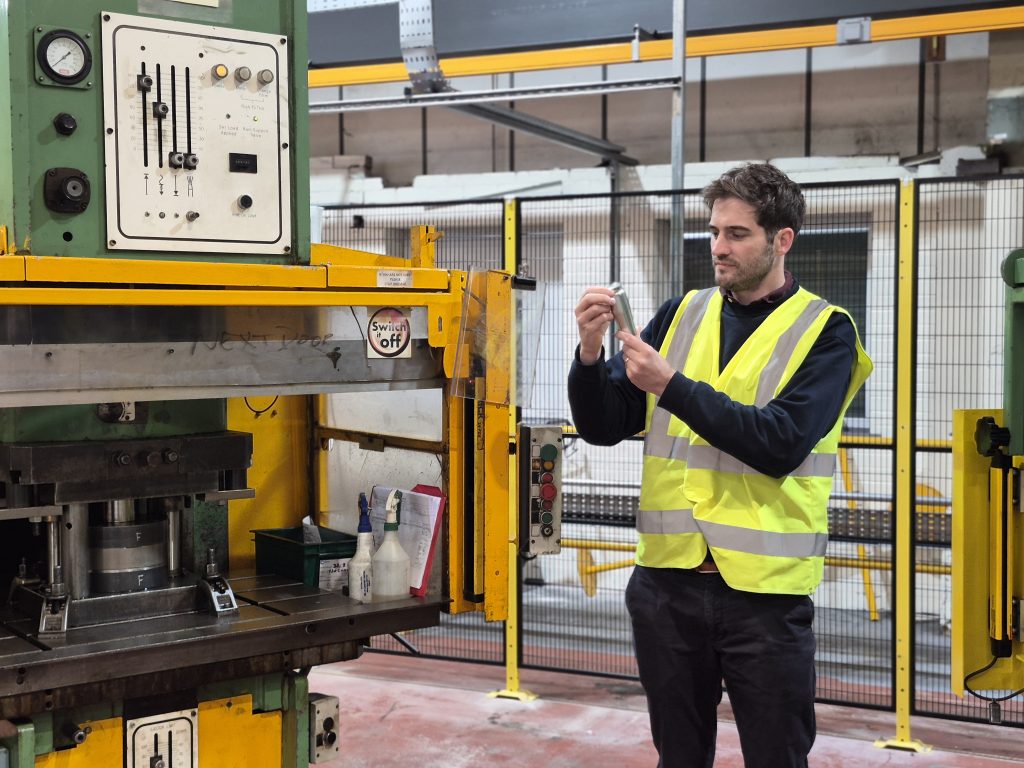
“If we don’t automate, we’ll lose out to China,” says Sam Carver, the Managing Director of industrial parts manufacturer Magrenko, which is introducing new processes to speed the production of a specialist component used in ground engineering.
Earlier this year, Magrenko took part in the Clean Futures accelerator, delivered by Connected Places Catapult, to streamline the production of collet joints.
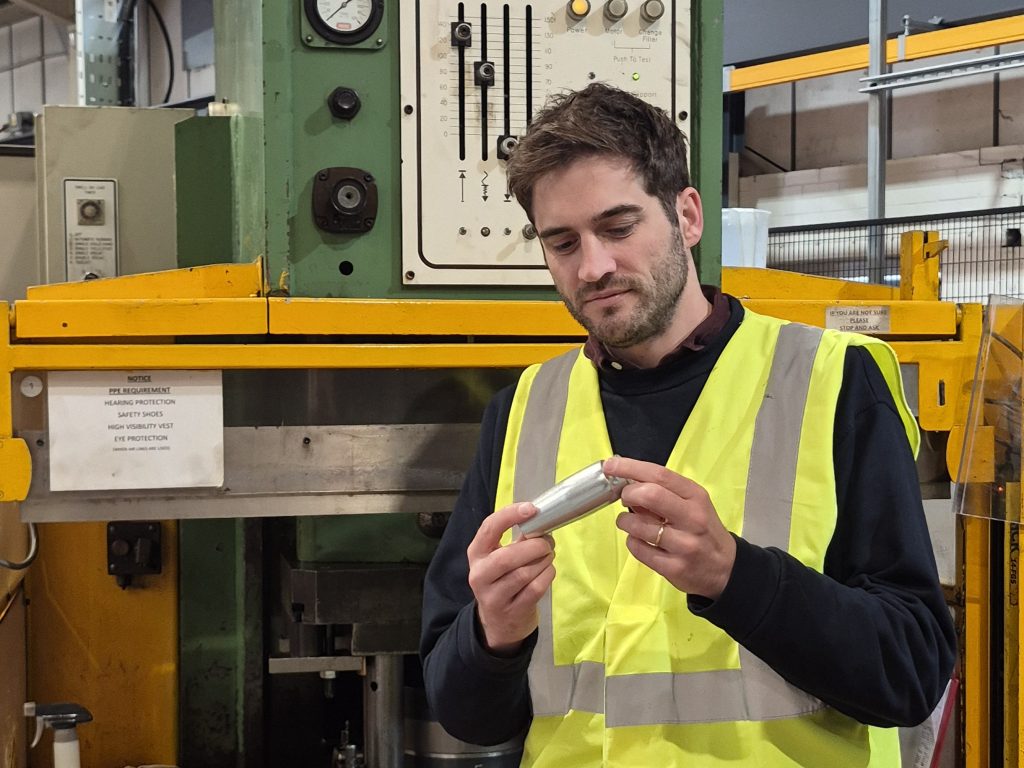
These metal parts are used to connect together two sections of precast concrete foundation pile that support a range of new developments; from houses built on soft ground to large buildings including hospitals and prisons.
The Wolverhampton-based company used £50,000 funding from the Clean Futures programme to invest in an automated manufacturing process and robotic equipment to speed up manufacturing and reduce costs by a third.
Its new production line is set to go live in May, and will allow operations to continue throughout the night without human supervision during peaks in customer demand.
“Our system will allow us to make one of our collet joints in 40 seconds, rather than 30 minutes compared to machining. This means we can become cost competitive with China, and provide just-in-time manufacturing.Sam Carver, Managing Director, Magrenko
“For a prison currently being built in Scotland, with 60,000m of foundations, that could mean 20,000 sections of precast concrete pile that have to be joined together.”
Promoting a new product version
Clean Futures also helped Magrenko with the marketing strategy for a new design of collet joint to potential customers in the UK, Europe and America. The updated version uses friction and a unique coupling mechanism to join two sections of metal tube together, rather than using chemical additives.
“Adhesive is traditionally used to make sure the traditional joints stay in place, but our new design provides a much better engineered joint to resist ground heave and sideways forces,” says Sam. “Doing away with adhesive also reduces the carbon footprint and environmental impact of construction.”
Using the new collet joint also allows two sections of concrete foundation to be connected together immediately on site, rather than having to wait 24 hours for the chemical adhesive to dry and reach full strength.
“Even though the product is slightly more expensive, it saves contractors time on site.”
Sam adds that the new version of the collet joint is proving popular; accounting for six times as many sales compared to its traditional collet joints.
Clean Futures support
Magrenko is part of a Midlands based engineering group which currently generates around £18 million of revenue a year, a three-fold increase on six years ago.
Sam says the support of Clean Futures is helping the Black Country firm to identify new buyers. “There's not very many new customers we can go after. But when we do win a contract, it’s likely to be for hundreds of thousands of pounds rather than tens of thousands.
“We’ve found a particular niche in the construction of joints sold to precast concrete manufacturers, and are now looking to target builders’ merchants too for construction related joints.”
Magrenko is also looking to extend its automated manufacturing processes to a range of other metal components it produces, such as safety harnesses for operatives working at height and parts used to build cars, helicopters and fighter aircraft.
“Clean Futures has been fantastic, especially the collaborations with Connected Places Catapult and Coventry University,” adds Sam. “Because we're an established company with a product, we were looking more for support and sector knowledge.
“Building up connections with the Clean Futures cohort and other local business leaders has led us to think about further opportunities. It’s always good to get out there, see things, meet people and find new ideas to do things better.”
Sam adds that the £50,000 funding from Clean Futures supported a larger investment in its automated processes of around £150,000; of which a large proportion has been spent on suppliers, subcontractors and tradespeople based in the West Midlands.
Find out more about the Clean Futures accelerator, and read about the success of several SMEs involved in the programme.