
articles
Meet the innovator scaling a business to make roads and sites safer
Concern with zebra crossing safety led one entrepreneur to take his technology idea from Powerpoint to product in under a year, with support from Connected Places Catapult.
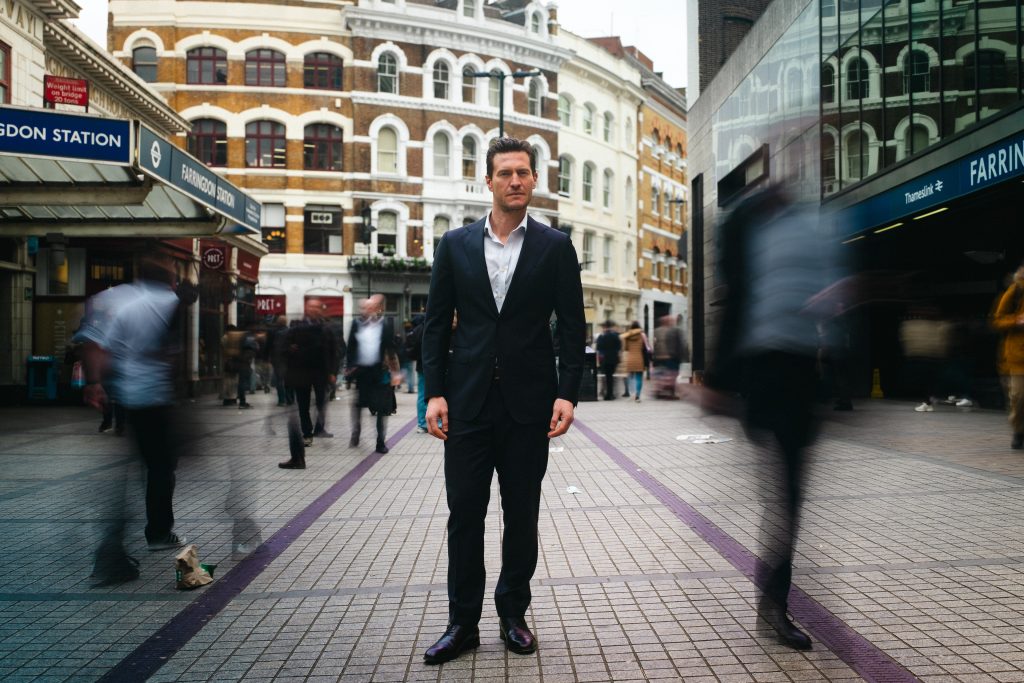
Dorian Isaacson was so sure his road safety idea was a winner that he resigned from his job as a management consultant before having a product to launch.
The gamble paid off: the very next day, his fledgling company Streetwise Technology secured a place on the Transport Research and Innovation Grants programme – delivered by Connected Places Catapult on behalf of the Department for Transport.
Dorian set about developing his offer: a driver alert system that warns motorists of pedestrians about to use a zebra crossing. Within a year, it was installed in Southend-on-Sea and Coventry; and a trial began at a manufacturing site in York for confectionary producer Nestle.
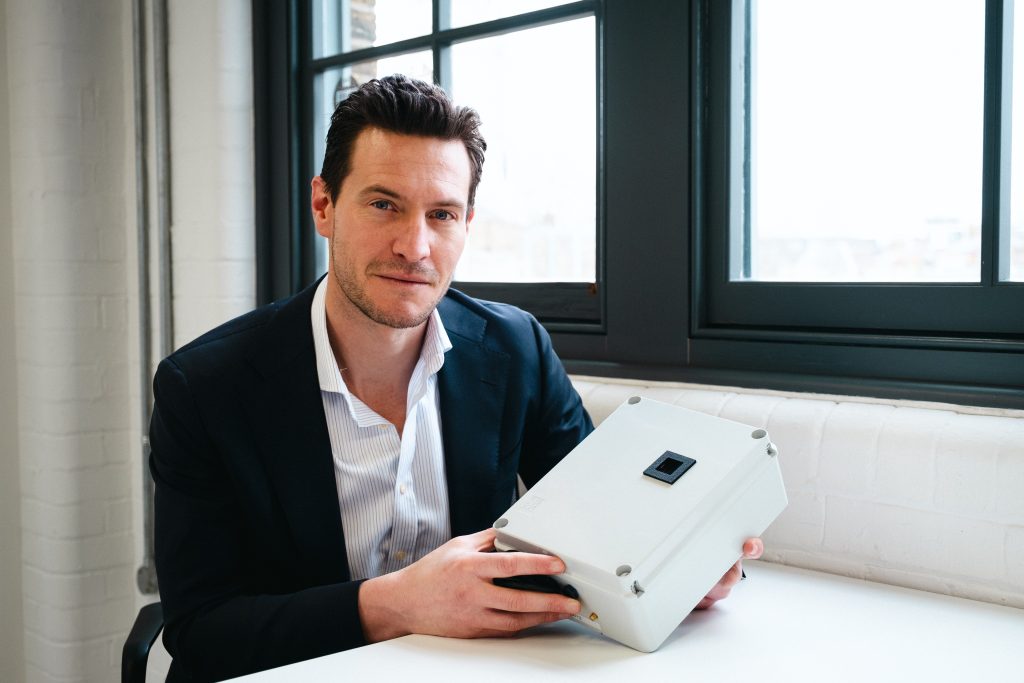
Last year, the company – now called Rhevia – was welcomed onto the Freight Innovation Fund accelerator, also delivered by the Catapult, to trial a new version of the system at Portsmouth International Port.
Rhevia (derived from ‘Rhe’ meaning ‘flow’ in Greek, and ‘Via’ which means ‘path’ in Latin) now employs seven staff, and last year received financial backing from Bethnal Green Ventures.
Now the technology firm is looking to raise £600,000 of additional venture capital to launch the business into new markets, explore opportunities in Germany and America, and become a £100m business within seven years.
“We had no turnover a year ago, but are now receiving commercial orders and spending a lot of money on research and developing our products. Connected Places Catapult has been absolutely fantastic: TRIG provided great connections to industry including policy makers involved in zebra crossings.”Dorian Isaacson, CEO, Rhevia
“Then the Freight Innovation Fund introduced me to industry partners such as Nestle, Portsmouth International Port and DFDS which allowed us to mould our product into something that works for their needs.”
Zebra crossing frustration
Dorian’s decision to develop road safety technology was shaped while walking his two young daughters through their village.
“We had to use three zebra crossings, and every now and again a motorist drove straight across while we were on the crossing,” he says. “I became very frustrated about being put in danger.”
Dorian initially thought selfish motorists were the problem. But he changed his mind a few weeks later when behind the wheel and his wife, sat beside, shook his arm as he failed to notice a pedestrian waiting to use a crossing.
“I didn’t spot them, and realised that drivers are not always malicious if they don’t stop; pedestrians are sometimes ‘invisible’ to them.” Dorian set about developing a system to identify the movement of people about to cross a road, and alert motorists who are not slowing down.
He created an intelligent Belisha beacon called the Lodestar; considered and rejected various technologies to detect pedestrians including cameras (too intrusive) and Lidar (too expensive) before settling on Radar. AI was used to predict the interaction between vehicles and pedestrians, and trigger the beacon to flash if a driver failed to stop.

From product to data service
Dorian set out his idea in a Powerpoint deck, approached Connected Places Catapult, and was advised to apply to the TRIG programme. He says the Catapult helped “validate” his idea with the needs of road safety professionals, plus gave him “confidence to pursue this in earnest, and venture capital firms confidence to invest in the business”.
While many stakeholders said the intelligent Belisha beacon was a good idea, others were more interested in the data collected to better understand pedestrian movements.
The concept evolved during the Freight Innovation Fund trial at Portsmouth where a digital map was created to show traffic flows and identify safety concerns on site.
Rhevia is still focused on highway applications, but no longer manufactures the Lodestar. Instead, it is further developing its data platform to provide insights about near misses between vehicles and pedestrians; helping councils make targeted investment decisions at zebra crossings and beside sections of road perceived to be dangerous.
“We identify the root cause of danger, so local authorities can take the right action; which could be a flashing speed sign, awareness poster or road layout change,” Dorian says.
“This is about shifting the focus from ‘trailing’ to ‘leading’ indicators. At the moment, we rely on the number of people killed and seriously injured before changing road networks. But if we can predict risk, changes could be made before anyone is killed.”

Starting out selling ladders
Dorian was born in Johannesburg, and the family moved around South Africa before settling in Port Elizabeth where he trained with the national swimming team and flew light aircraft.
His father ran a business manufacturing and installing aluminium windows and doors, and Dorian remembers his dad telling him to always look for opportunities in the market. Shortly after leaving school, Dorian went travelling to Germany and remembers “seeing ladders everywhere” so started researching the ladders market in South Africa.
“There were two major companies that had dominated for a long time, but I couldn’t see any fresh energy, so thought I could offer a better service.”
He initially imported six ladders from Malaysia, selling them to a hardware store. Three years later, he started manufacturing ladders and the company eventually had 120 staff. Dorian sold Isaacson Ladders after eight years, and was approached by a private equity firm to set up a company manufacturing components for wind turbines. After 18 months, he came to London to work for a venture helping UK businesses connect with South Africa.
He later joined a management consultant, which provided “a fantastic education” in how senior management views suppliers and motivates staff. “I learned the language that consultancies speak, and how they deliver messages succinctly and clearly. I gained an understanding of the nuances of business, and it put me in contact with a broad range of industries.”
Dorian’s ambition is to help reduce death and serious injury among pedestrians, both in working environments and on public roads. “If we can help councils to change the design of roads based on predictive risk, that will be transformational.”
His advice to the next generation of innovators is to have “tenacity to knock on every door” and don't feel ashamed to do it. “Ask the people who are experienced in the industry what you should be doing, and what they want. And then make sure you find a buyer who will use it, and tailor your solution to their problem.”
Read more about how Rhevia was supported by the Catapult to trial its technology.
From the archive: Read about Dorian’s firm securing investment from Bethnal Green Ventures.
Find out more about the Transport Research and Innovation Grants programme, and the Freight Innovation Fund accelerator.