
articles
Digital construction firm eyes US expansion after latest investment
Geospatial AI company Sensat has just announced a £3m investment raise to further develop its product and grow the business in new markets, after participating in Connected Places Catapult-led programmes.
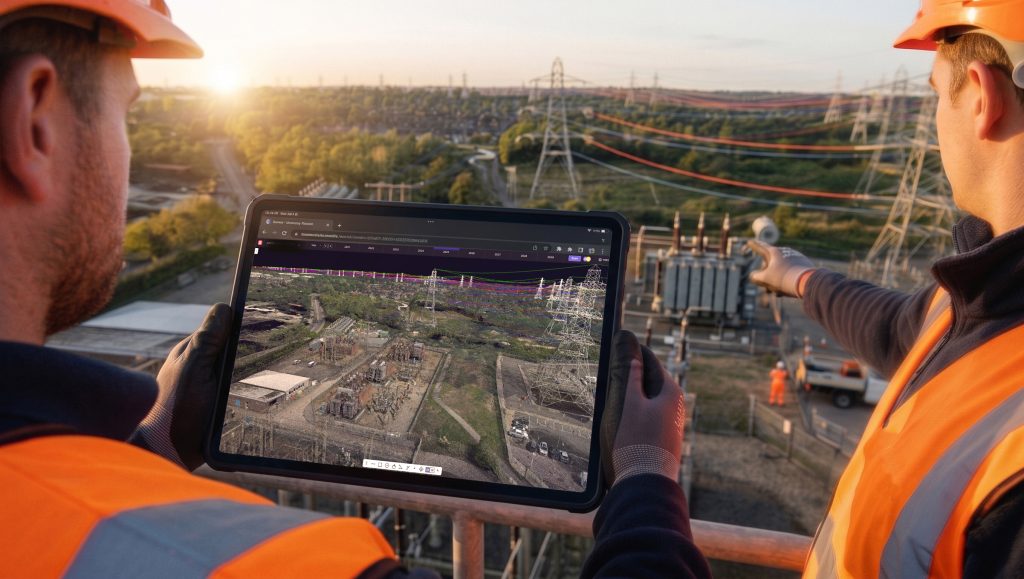
Commercial success in America is a primary aim this year for Sensat, a UK-based geospatial AI firm which already counts several major UK transport and utilities clients as customers.
The company – which provides digital twins for asset owners and contractors – has helped teams from Network Rail, Connect Plus and HS2 work together more closely to make project decisions quicker. Infrastructure contractor BAM, energy transmission client National Grid and water company Severn Trent are among other key customers.
Sensat is now looking to expand into the American infrastructure market and further refine its commercial offer, following completion of a £3m investment led by Mercia Ventures.
“We hope to have six customers in the US and employ a couple of people in America by the end of 2026,” says Sensat co-founder Harry Atkinson. “Our annual recurring revenue is doubling year-on-year, supported by customers like National Grid. Business optimism is definitely increasing within the sectors we operate.”
Software supplied by the firm is supporting projects worth an estimated $250bn in the UK, Europe and North America, and the company employs 35 staff.
Sensat took part in a Drone Pathfinder Catalyst in 2019 and the HS2 Innovation Accelerator in 2021; both delivered by Connected Places Catapult. Harry says these two programmes offered his firm a “badge of credibility” among potential customers. They also provided Sensat with “a push towards organisations we might not have otherwise been able to access”.
Benefits from two Catapult programmes
The Drone Pathfinder Catalyst project helped Sensat to develop its beyond visual line-of-sight capabilities when operating unmanned aircraft to collect survey data, and led to drones being used to survey the A14 highway upgrade project in Cambridgeshire prior to its completion in 2020.
For the HS2 Innovation Accelerator, Sensat was teamed up with the LM joint venture of Laing O’Rourke and Murphy to trial its visualisation software. The platform has since been used by other contractors on the rail scheme including Mace Dragados, operating at Euston station to track activity including utility diversions.
Sensat’s software has also been deployed by Network Rail to oversee electrical safety planning on the West Coast Mainline, and was used by Connect Plus to create a digital twin of the whole of the M25 plus the Dartford Crossing and adjoining highways. A full 3D model of the London Orbital with an accuracy of 25 millimetres allows Connect Plus to assess condition detail of the asset to be analysed remotely.
In both the rail and road use cases, the aim of using the software was to reduce the number of ‘boots on ballast or blacktop’ and avoiding closures to carry out in-person surveys.

Pivoting from drones to software
Sensat began as a drone surveying company in 2015 and has been a pure Software as a Service provider since last year, with the aim of helping to accelerate projects through the better visualisation of data through 3D models and digital twins. The platform allows environmental risks to be spotted, clashes to be resolved (with utilities, for example) and questions to be asked of others (such as if permission to create site access has been granted).
Multiple stakeholders can work together in a virtual setting on infrastructure design, maintenance plans, project scheduling and environmental mitigations.
“The problem we're solving is where decisions on major processes run separately and in silos,” adds Harry, who explains that stakeholders such as a design consultant and project manager might otherwise be working from different platforms that don’t align, leading to delay or confusion. “We bring digital systems such as CAD, BIM and GIS together, and give everyone access to the information they need.
“We decided to move out of the drone market because it had matured to the point where there were a number of different suppliers available for us to use, and it was a low margin product – even a loss leader in some cases.”
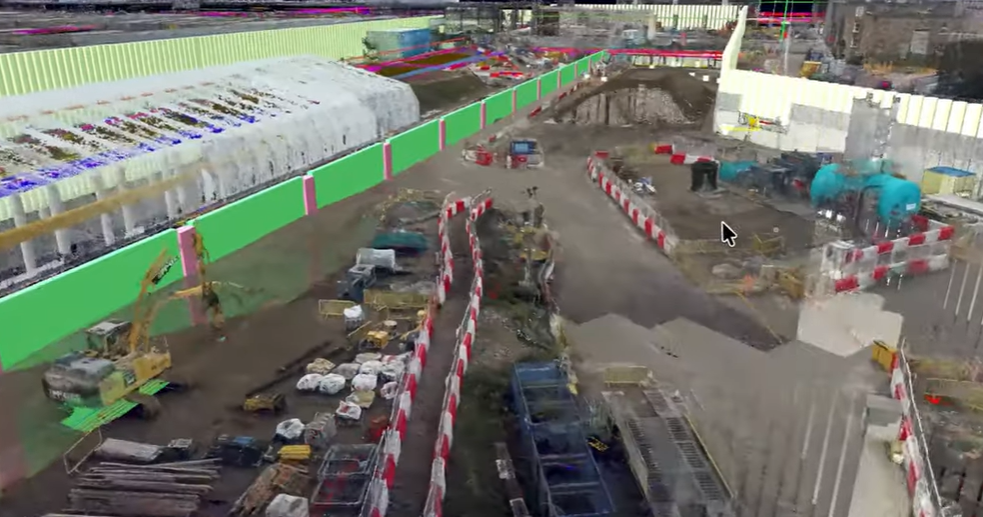
The company realised that development of a software platform was needed after one project manager on a highway scheme asked what he was meant to do with all the data that Sensat had collected.
“The best thing about working in this sector is you get to stand on the assets you're dealing with,” Harry adds. “I was driving up to Newcastle last year and passed over the A19 Testos roundabout, which we were involved with back in 2019. We also started working extensively on energy transmission a couple of years ago, and now I'm obsessed with pylons.
“If you're an early stage company with a product for civil infrastructure or the built environment with a niche product but haven’t found your ideal customer profile or product market fit quite yet, you are likely to benefit from working with Connected Places Catapult.”
Read more about the HS2 Accelerator