
articles
Better Connected: why businesses should pay attention to the new integrated transport strategy
Better Connected sets out a more joined-up vision for transport and signals where new opportunities may emerge for UK businesses.
In this article, Sameer Savani, Managing Director for Transport at Connected Places Catapult, shares his thoughts on what that means in practice.
In this article, Sameer Savani, Managing Director for Transport at Connected Places Catapult, shares his thoughts on what that means in practice.

What feels particularly different in this strategy is how strongly it is framed around the passenger experience. Better Connected is clear that integrated transport is not just about infrastructure and operations, but about whether people can move through the network safely, confidently and accessibly. That opens up opportunities for businesses working on accessibility, inclusive design, passenger information and services that make journeys simpler and more usable for a wider range of people.
It is also a market signal for businesses building the next generation of mobility, logistics, digital and place-based solutions. Its vision of a more joined-up, digitally enabled transport system aims to create opportunities for some of the UK’s most innovative businesses to scale and grow.
In plain terms, Better Connected sets out where demand is likely to grow: simpler journeys, improved integration, greater use of data, and new technologies across the transport system.
This matters to us at Connected Places Catapult because our work focusses on supporting high-potential businesses scale and succeed in transport by growing their capabilities, increasing confidence in their solutions, and creating the conditions for sustainable commercial growth.
Three opportunities for businesses to watch:
1) Better routes to market
One of the clearest opportunities is procurement. For many innovative firms, the biggest challenge is not proving that a solution works, but rather finding a public-sector customer that is ready and confident enough to buy it. Better Connected tackles that point directly through the Transport Innovation Procurement Pathway, which aims to help local and strategic transport authorities procure innovative technologies and services more confidently.
This is also a key priority for us at the Catapult. Through the Innovation Procurement Empowerment Centre (IPEC), we are helping public bodies at the local and national level to turn procurement from being a barrier to innovation to an enabler for better, faster, greener and more cost-effective outcomes. This is about creating practical routes to market for businesses to move from pilot to contract, by removing slow, risk-averse buying processes so that public authorities can buy innovative solutions with more confidence.
2) Boosting demand for data and digital tools
The strategy is clear that transport data is still too fragmented. At the same time it sets out a clear commitment to better end-to-end journeys through simpler payments, better information, enhanced safety, and more accessible services. This creates new opportunities for improving customer experience and transport operations more broadly.
It is also notable that the strategy talks about the wider impacts of transport improvement, including health outcomes. That matters because it points to a more systems-based view of transport: one that connects mobility with public health, place and quality of life, rather than treating transport as a standalone network. For businesses, this creates opportunities for solutions that can demonstrate value across multiple outcomes, not just movement alone.
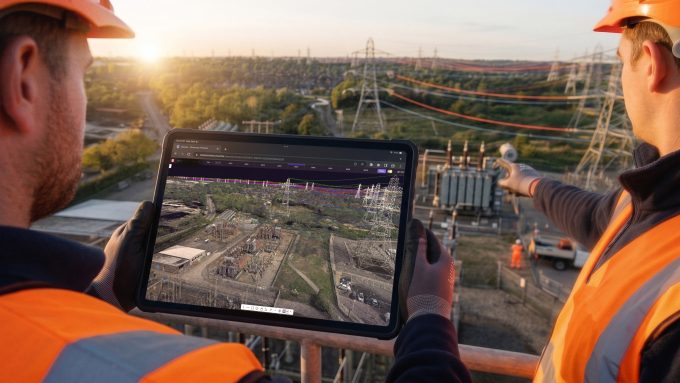
Better Connected aims to address this opportunity through the creation of a Transport Data Marketplace, investment in Integrated Transport Digital Twins, and wider use of open, interoperable and accessible data. This will create obvious opportunities for businesses working on data platforms, APIs, journey planning, optimisation, digital twins and user-facing tools.
The strategy also supports Project Coral, a national technology solution to facilitate multi-operator ticketing on buses and trams, focusing on ‘tap and go’ with contactless bank card payments and daily fares capping. This underpins the work we have done through our Integrated Ticketing Spotlight helping to create open standards, shared datasets and procurement reform as the practical enablers of a more seamless, customer-focused system.
The passenger-centric nature of the strategy also aligns with the work we are doing to make accessibility more visible in transport innovation. That includes our work with the National Centre for Accessible Transport (NCAT), which reflects the same principle running through Better Connected: that the transport network has to work for the people using it, including those whose needs have too often been treated as secondary.
We have also supported the Department of Transport on digital twins by helping shape the Transport Digital Twin Vision and Roadmap to 2035. Through the Digital Twin Hub, we have helped build a community of over 7,000 individuals and over 2,300 organisations from nearly 100 countries, bringing together industry and government to build the use cases, standards and adoption pathways needed for implementation.
3) More real-world trial opportunities
Better Connected recognises something businesses know too well: innovation does not scale on its own. New products and services need routes into live environments where they can be tested, refined and trusted. The creation of an Integration Innovation Fund will aim to create more scope for transport authorities to trial digital integration technologies in practice.
This goes to the heart of the work that we do at the Catapult to support businesses test and trial new solutions in the real world. For example, the Station Innovation Zone which we are running at Bristol Temple Meads has supported more than 30 SMEs, awarded more than £480,000 in funding and generated more than 300 engagements with Network Rail and the wider industry. And through the Transport Research & Innovation Grants (TRIG) 474 projects have been funded through 18 accelerator cycles, with £17.4 million awarded.
This support and investment matters for businesses and also demonstrates what is needed when it comes to creating tangible commercial opportunities: trial access, usable evidence, and a credible pathway from test to adoption.
An opportunity to unlock economic growth
Finally, it is also encouraging to see that Better Connected has a golden thread of economic growth running through it. The strategy explicitly talks about empowering local leaders, reflecting the important role devolved and place-based decision-making will play in shaping how integrated transport is delivered. For innovation-led businesses, that matters because many of the opportunities created by Better Connected will emerge through local priorities, particularly where transport intersects with housing, logistics and wider infrastructure investment.
Our Local Growth work is about helping businesses and regional organisations unlock inclusive economic prosperity. You can see that in the Freeport Innovation Network, which connects UK Freeports with government, investors and industry, and in the West Midlands, where programmes including Clean Futures and DIATOMIC have helped turn place-based innovation into real economic value. Our West Midlands impact case study reports £22 million in economic and social value generated in the region since 2023, alongside £103 million in R&D commercial contract revenue secured by SMEs participating in Clean Futures.
Ultimately, Better Connected is a clear indication to businesses of where the market is moving: towards a transport system that will need better data sharing, better customer interfaces, stronger integration between modes, and better ways for public authorities to procure innovation. Bold as the vision is, there is much work to be done to tackle existing barriers, creating new partnerships and platforms for testing new solutions, and support UK businesses to commercialise and scale.
We look forward to building on the work we are doing with the Department for Transport and high-potential businesses across the UK, to support the ambitions set out in Better Connected to create a better, more connected transport system and support businesses with the products and solutions to make that happen.