

news
Funding available to develop airport security technologies
Innovators can apply now for a share of up to £500k to develop and test solutions that have the potential to further improve airport security.
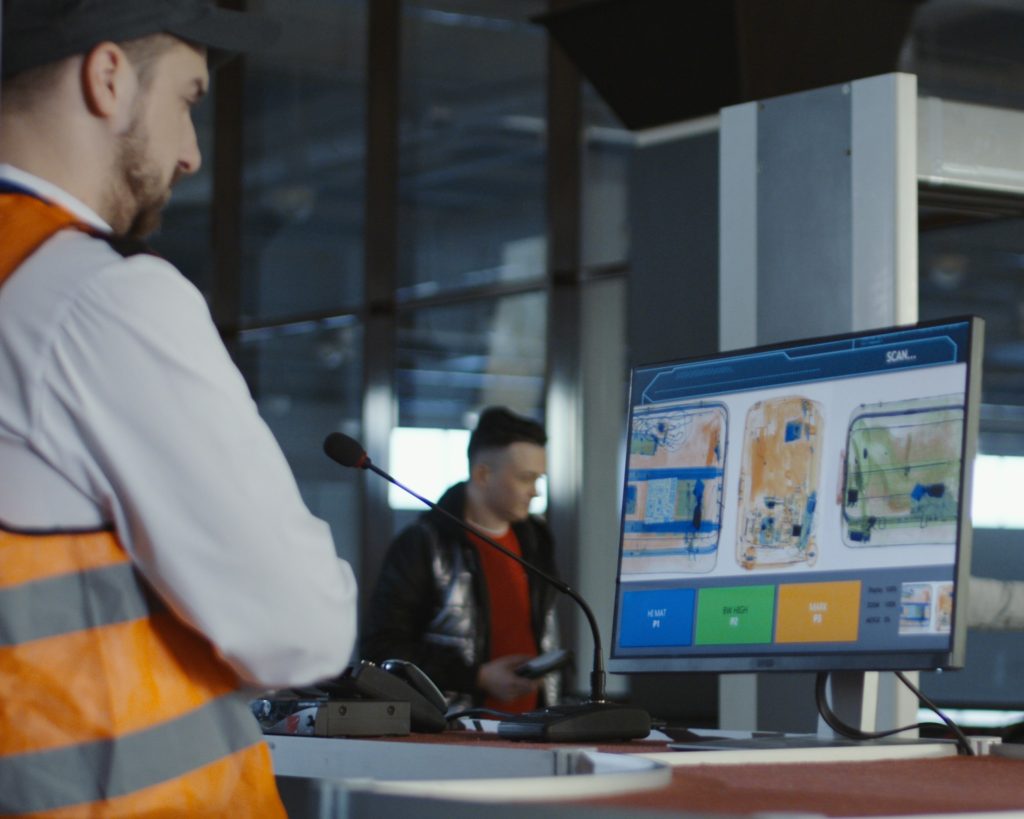
14.05.26, LONDON, Connected Places Catapult, the UK’s innovation agency for transport, construction and data infrastructure, has today announced the opening of applications for the High Assurance Detection Systems (HADeS) 2026 programme.
Building on the success of the HADeS innovation call in 2025, the programme – which is led by the Catapult on behalf of the Department for Transport (DfT) - is seeking new technologies to improve alarm resolution, and any operating concept that can further develop UK airports' checkpoint security screening capability.
The programme will make a total of up to £500k available to innovators through DfT’s Grant Funding Agreement with the Catapult. Alongside the funding, successful applicants will get access to specialists from the Catapult and DfT, as well as a wider network of experts in the field via the Aviation Security Innovation Programme (ASIP) Cluster.
Funding is available across two tracks, depending on the solution’s maturity level: 1) emerging security solutions where innovators are encouraged to explore the feasibility of an idea; and 2) evolving security solutions where the focus is on demonstrating technology in a test setting.
Track 1 – Emerging security innovations (proof of concept)
Up to £40k funding available per project.
This track focuses on the exploration of whether an idea could work in principle. Applying for this track could involve background research, stakeholder input, early-stage modelling, simple testing or a combination of the above.
Track 2 – Evolving security innovations (pre-demonstrator)
Up to £75k funding available per project
This track focuses on the building and testing of early-stage prototypes in controlled or simulated environments.
For HADeS 2026, the goal is to create alarm resolution solutions that can reduce the instances of primary alarms having to be manually checked. Within this, there are three sub-areas in which this goal is to be achieved. Applications may cover one or more of these sub-areas. These are:
- Threat detection - can all of the required threats be detected? This should reflect an increased range of threat materials which can be detected by cabin baggage screening under the new detection standards being developed by the Technology Alignment Group (TAG).
- Interoperability of the primary and alarm resolution equipment. Do they work as a cohesive screening system? For example, how can data which is available from the primary screening system be more effectively used to inform the alarm resolution process.
- Optimisation of the screening system. For example: reducing the number of alarms, increasing ability to screen more complex containers / concealments, reducing operator burden.
The HADeS 2026 programme follows on from a successful programme in 2025 that saw a cohort of six companies supported to advance their technologies, with most progressing to technology readiness level (TRL) 6 (technology model or prototype demonstration in a relevant environment).
“Security underpins trust and confidence in the entire aviation system - but it shouldn’t come at the cost of passenger experience. The UK has a strong track record of leadership in this space, and HADeS demonstrates how innovation in security technology can simultaneously strengthen protection while streamlining the passenger journey.
“Responding to advanced detection standards opens up opportunities for home grown technologies to scale at home and abroad. Building on the success of the first HADeS 2025 programme, the search is on once again for high-potential innovators with ideas that can keep us safe. Connected Places Catapult is well-placed to support these companies. If you have a solution that could rise to the challenge, I encourage you to apply.”Sameer Savani, Transport Managing Director at Connected Places Catapult
Prospective applicants have until 19 June to apply via the Catapult’s website.