
articles
Meet the academic promoting shared mobility outside cities
Dr Hannah Budnitz is helping rural areas to build solid business cases for car clubs.

“Transport is a big part of who we are; we like to move around,” remarks Dr Hannah Budnitz of the University of Oxford. “People don't want to sit in one place all day.”
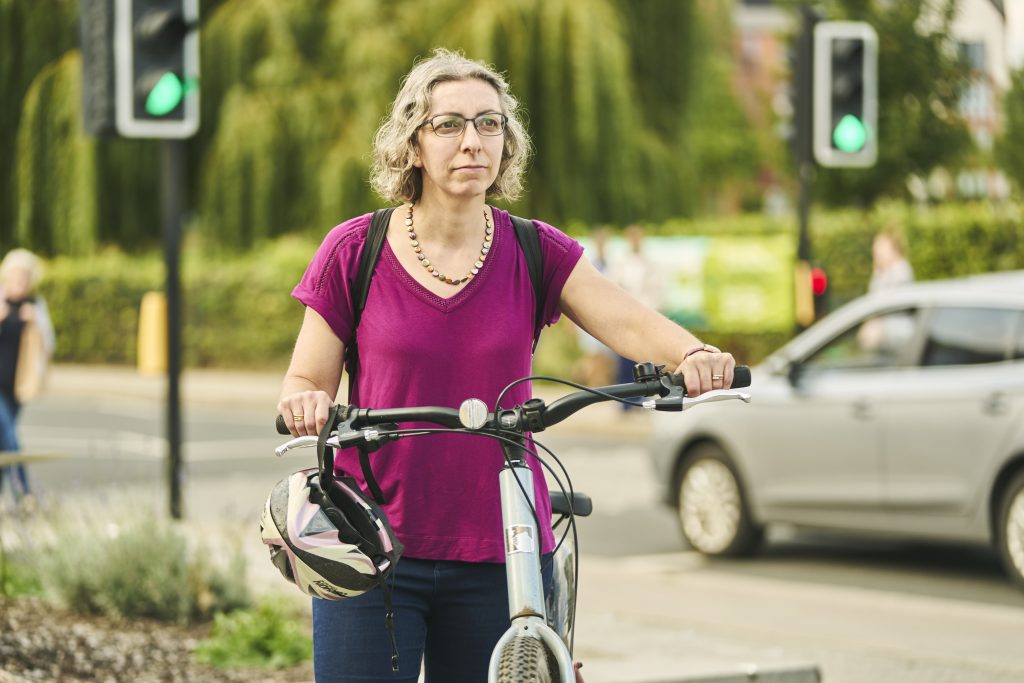
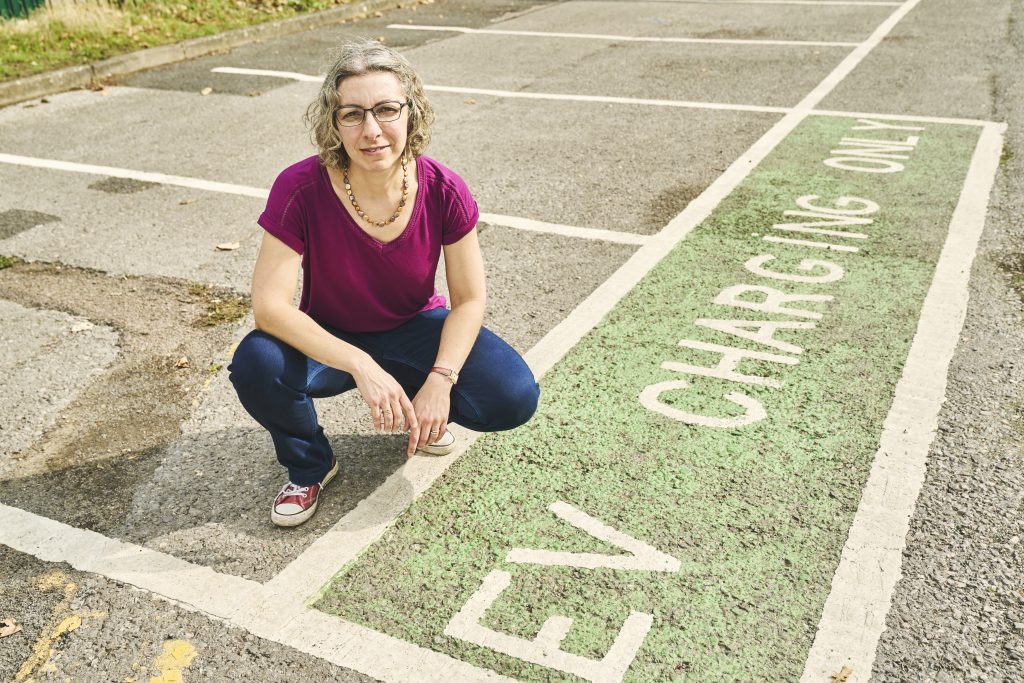
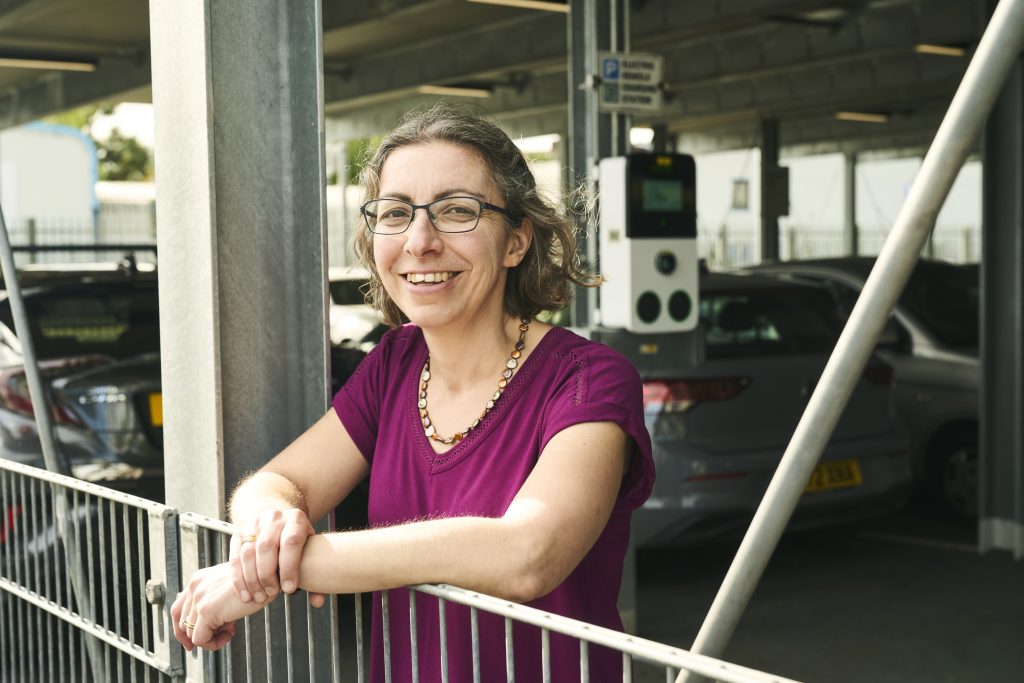
Hannah is a post-doctoral researcher in the Transport Studies Unit at Oxford, and focuses on shared electric mobility (including car clubs and e-scooters) with a particular emphasis on accelerating its roll-out away from cities. “There’s so many places around the country that just don’t have a lot of travel options,” she adds. “It would be amazing if shared mobility was available to more people in peri-urban and rural areas.”
Last year Hannah was accepted onto the Transport Research and Innovation Grants programme – delivered by Connected Places Catapult on behalf of the Department for Transport – to develop a tool known as ‘PLEASEM’, to help local stakeholders developing business cases for electric car clubs to quantify the benefits of emissions reduction and electric vehicle uptake.
Thanks to the programme, she met Susan Ross of the Derwent Valley Car Club who has agreed to partner with Hannah on a research project to see how electric shared mobility in rural areas could be expanded; funded by the Economic and Social Research Council.
“Part of my interest in shared mobility is that it’s something people aren't entirely convinced by – particularly outside dense urban areas,” Hannah explains. “It's a challenge in rural and suburban areas to encourage people to use private vehicles more responsibly, and to create a market where innovations in shared mobility can be tried.
“But if we want to meet our environmental and social goals – in terms of equity around mobility – there needs to be more options in places where public transport may not be viable.”
Hannah has also been closely following the effect of changing work patterns on travel demand, particularly since the pandemic; accelerating trends that had already started to happen. Even when people work from home – or otherwise away from an office – they still make a similar number of trips as those who commute frequently, she says. “If we don't travel for work, we travel for something else, like visiting or helping friends and family.”
From New York to Cambridge and Cardiff
Hannah has been in the transport sector all her career, but “came to academia quite late” after working as a transport planner for 12 years, first for a consultant and then in local government.
She grew up in the small US city of Nashua in New Hampshire, “which, as with many places in America, is very car dependent”, and she noticed that while people did ride bicycles, “they cycled for fun or exercise, but not to actually get anywhere”. School buses are a common sight and widely accepted, “but as you get older, it’s not cool to be on the bus. Getting your driving licence was a big thing..
Hannah read urban studies at Columbia University in New York and became interested in the rights of taxi drivers, interviewed civil activists behind the ‘Strap Hangers Campaign’ to improve conditions on the New York subway, and analysed models predicting the impact of a hurricane storm surge on the metro network.
She came to the UK to spend her third year in Cambridge University’s geography department, and later went on to study a Masters in city and regional planning at Cardiff University.
Her first job was at Arup as a transport planner, involved in parking policy; helping local authorities who were handed responsibility from the police for monitoring vehicles left on the street. “Managing parking is extremely important for many sustainable transport goals.
“The parking work made a big impression on me, and made me realise how much people took for granted the public space outside their home,” she says. “There were lots of passionate public meetings where people were up in arms about what they considered to be ‘their’ parking space when we introduced residents’ parking zones. We said if you have four cars, you're not going to get four permits.
“How you engage with people is so important; it must not feel like you are imposing something on them,” adds Hannah. “My husband once spoke with someone from a town I helped introduce a residents’ zone in and, 10 years later, they said they had come to appreciate it.”
Switching from industry to academia
After five years, Hannah joined Reading Borough Council as a senior transport planner where she developed proposals for a bicycle hire scheme and was lead writer for the authority’s third local transport plan that included redevelopment and bus interchange plans around Reading railway station.
Nine years ago, she switched to academia and took up a doctoral researcher post at the University of Birmingham – taking part in a project called ‘DREAM’ where she explored travel behaviours, digital technologies and resilience of transport networks to extreme weather. That year she also began chairing the Royal Town Planning Institute's transport planners’ network.
In 2019, she moved to the University of Oxford as a postdoctoral research associate to explore public electric vehicle charging provision; later moving on to projects on electric mobility in Bristol and car club trials in Oxfordshire.
Her current project involves both quantitative research to prove the business case for car clubs in rural areas and qualitative research to understand the characteristics and needs of people using, and importantly not using, such services to see what it would take to get them to embrace shared mobility.
“I'm really enjoying being an academic. It's exciting to be able to decide yourself what questions interest you and what you want to be doing.”
Benefiting from the programme
“It’s great to be working with Susan, and I’ve also met several other people interested in my work at TRIG showcases and networking events.” Being on the programme “has allowed me time and space to create a functional tool,” she says. “If it can help local authorities see it’s worth supporting new services, that would be amazing.”
Moving forwards, she would like to see shared electric mobility discussed more fully as a precursor to the possible roll out of autonomous vehicles and is keen that locations on the periphery are not left behind.
“I hope my tool helps communities to build their business case for shared services. Transport is all about people; it's part of who we are.”
Read more about the Transport Research and Innovation Grants programme.