articles
Meet the academic looking for industry impact on net zero
Dawid Hanak is developing new approaches to decarbonisation as a Researcher in Residence with Connected Places Catapult
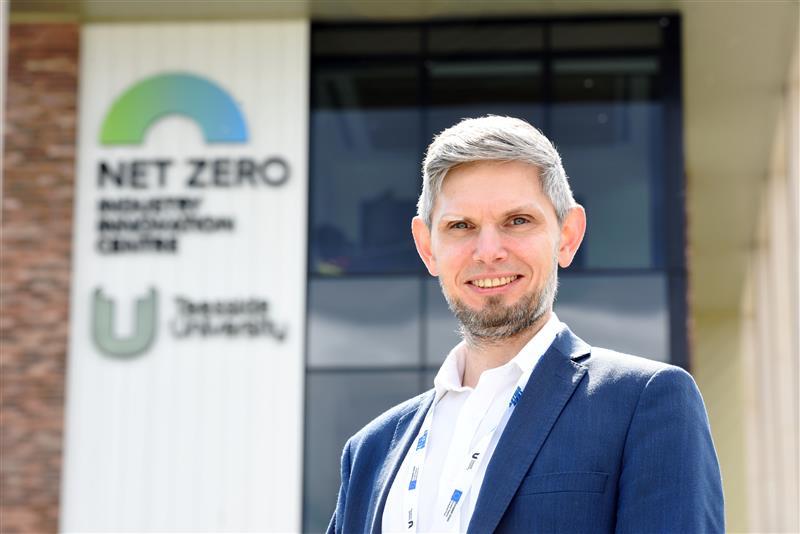
“What's the point in publishing if no one's reading,” remarks Professor Dawid Hanak, reflecting on the efforts of academics researching new ways to take forward sustainability in transport and the built environment.
“It's not about producing papers; it's what you do with those papers later on that’s important,” he adds. “An academic paper is a stepping stone on a journey; the ultimate destination is that an idea is implemented by someone else – and has impact.”
Dawid is a Professor of Decarbonisation at Teesside University’s Net Zero Industry Innovation Centre, and is focused on developing concepts and testing new ideas around carbon capture, the role of hydrogen, and the decarbonisation of buildings. At the same time, he strives to introduce the market to broader innovations developed on site.
He recently completed a Researchers in Residence placement with Connected Places Catapult – working to identify opportunities to decarbonise train stations – and is also an editorial board member for the Clean Energy Journal with Oxford University Press. “We make sure that what is published is relevant, high quality and also adds value to industry,” he says.
Dawid’s advice to academics with new solutions designed to help decarbonise industry is to “get your research out there” by whichever medium is appropriate: academic journal, social media, or in person.
He is also a co-founder of ‘Motivated Academic’ – a community for PhD researchers and early to mid-career academics offering guidance on how best to share their research outputs and expertise. Dawid’s aim is to help more than 1000 people publish and gain visibility for their work.
“We started during the pandemic to share advice and experience with people who may have felt isolated during Covid. The idea is to help provide people with motivation to drive through the challenges we face as researchers, and give something back to the academic community.”
Growing up in Poland
Dawid was born in Poland, and lived in a heavily industrialised region to the south where many of the houses were heated with coal. His father was an electrician in one of the local mines and his mother was an accountant.
He played volleyball – representing his school in a national competition – and excelled at chemistry, maths and geography. Dawid remembers taking an interest in class discussions around the carbon cycle and global warning and, when he was 16, took a summer job in a materials strength testing laboratory.
He would prepare the facilities for clients about to test different samples of cement and asphalt mixtures containing waste from nearby coal fired power stations – and it got him interested in the chemical sector. A chance conversation with the company chief executive who was looking for engineers who speak English led to the offer of a part-time job.
Dawid went on to study sustainable energy engineering at university, with a focus on nuclear power, and was appointed vice president of a clean energy technologies student scientific group. “It was a good time,” he reflects.
“We started talking about sustainable technologies in areas such as steel making, and went on tours to visit combined heating and power plants, and waste energy plants.”Professor Dawid Hanak
“I started to appreciate different technologies, but also the challenges that operators faced when they asked how their plants could be improved.”
Developing a new solution
Dawid went on to study a Masters in power engineering, before gaining a place on an Erasmus academic exchange programme at Cranfield University in the UK which covered the emerging topic of carbon capture.
He continued his studies with a doctorate in process engineering, and secured a role at Cranfield as a research assistant, and later research fellow, lecturer, senior lecturer, and associate professor; spending nearly a decade there.
“I developed a process that integrates carbon capture with energy storage capabilities for renewable energy,” he explains. “Not many energy specialists were thinking about it this way; it was either one or the other. I thought ‘why not have both at the same time?’ Along with colleagues, we are looking at demonstrating it next year.”
In 2023, he moved to Teesside University to join the Net Zero Industry Innovation Centre and focus on carbon capture and storage; where he became a professor of decarbonisation.
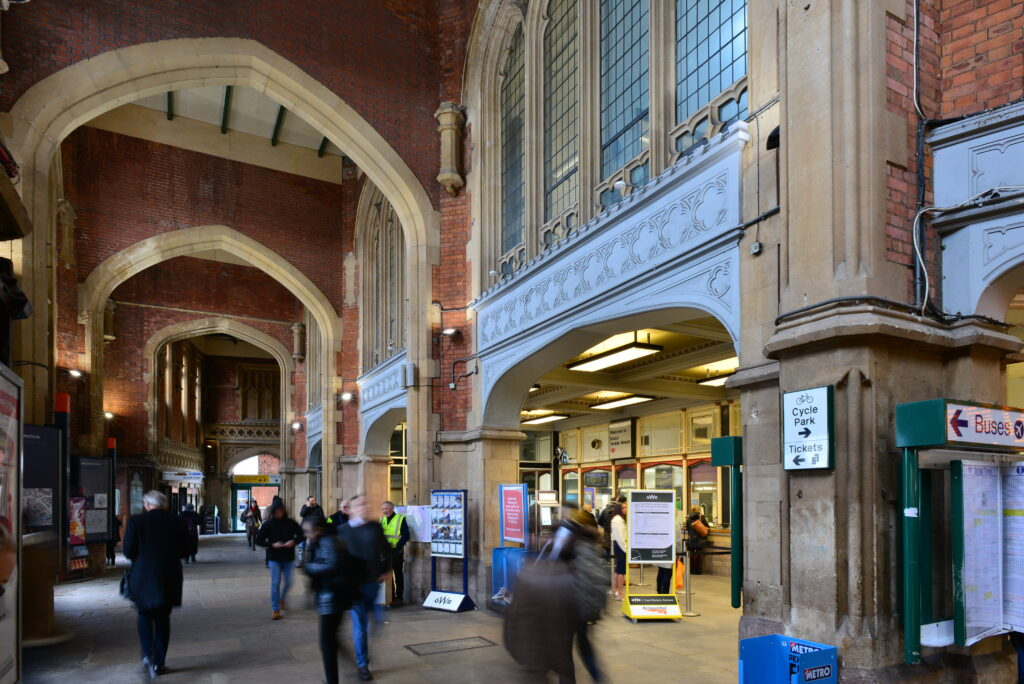
Around the same time, he applied to Connected Places Catapult to join the Researchers in Residence programme, and started a piece of work to decarbonise rail stations as part of the Station Innovation Zone at Bristol Temple Meads.
“A key learning from this project is that when it comes to decarbonisation, how people get to and from a station is something we need to pay attention to,” he says. “But the quickest win is to get rid of using gas in the station and switch to alternative heating options. Another option is incentivising taxi drivers to switch to electric vehicles, or for there to be a zero emission zone within the station environment.
“It's been great to work with Connected Places Catapult. I now see things in a different way, have more interaction with industry, and have improved the way I share information, so people outside the academic community can understand it better.”
Developments that moved the needle
Dawid is currently working on a ‘fuel choice’ project to produce a roadmap for how best to introduce low carbon fuels into the transport sector.
He adds that he appreciates recent Government announcements around the funding of carbon capture schemes and hydrogen innovations “that really move the needle in terms of what we can do for industrial decarbonisation.
“But what we need now is greater interaction between academia and industry; working together on specific funding mechanisms for technology implementation in a specific sector.”
“We've been talking about carbon capture and decarbonisation for the past 20 years, and we only see commercial plants being deployed now,” he adds. “We need to have demonstrations of other technologies as soon as possible, so we can accelerate learning and deployment.”
Dawid says the best thing about being an academic is “the fact that I can explore ideas freely. If a thought comes into my mind, I have the relevant tools and a strong academic and industrial network who can support me in exploring it.
“I'm not an expert in everything, but know who to talk to when I need support.”
Find out about our Researchers in Residence scheme. To be alerted about opportunities at Connected Places Catapult, join our Academic Network