
articles
Goods delivery innovator boosts productivity for cycle couriers
Innovators showcasing their emerging technologies at the Connected Places Summit included start-up firm SLANT, from the Freight Innovation Fund accelerator programme.
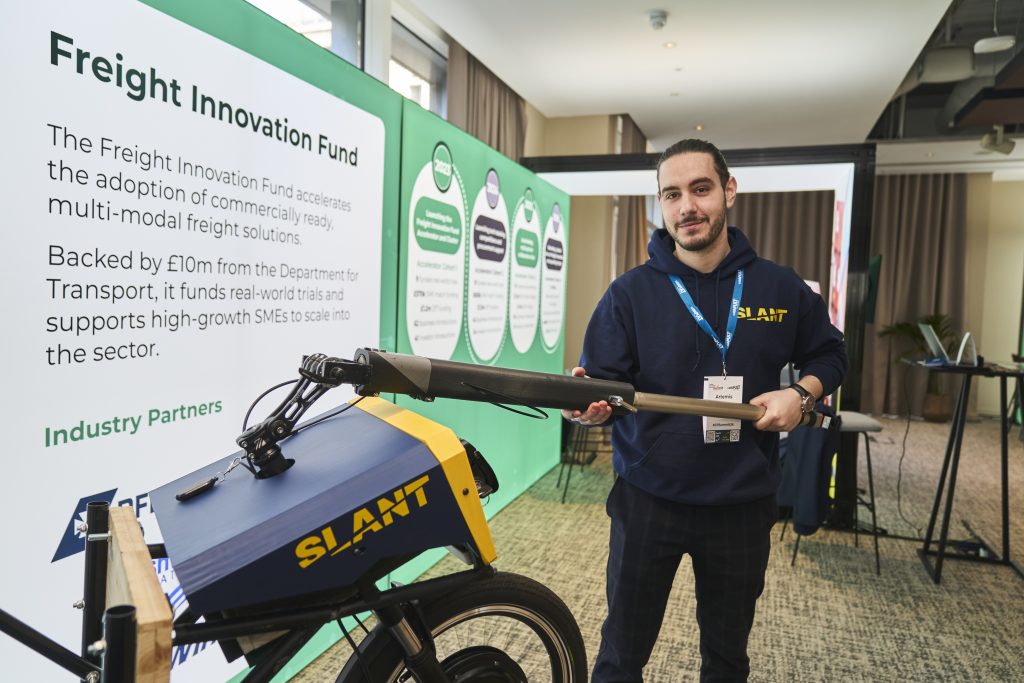
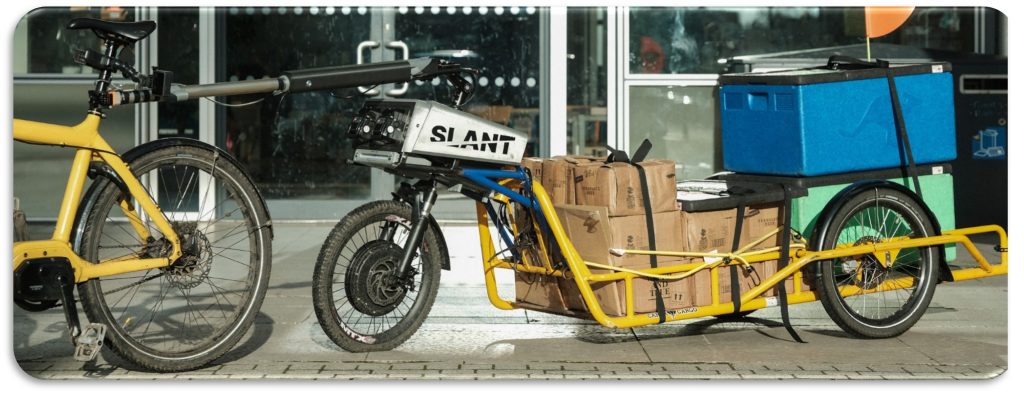
Electric cargo trailers developed by Bristol-based technology company SLANT promise to help cycle couriers carry larger payloads for less effort, and reduce the number of trips needed to deliver goods.
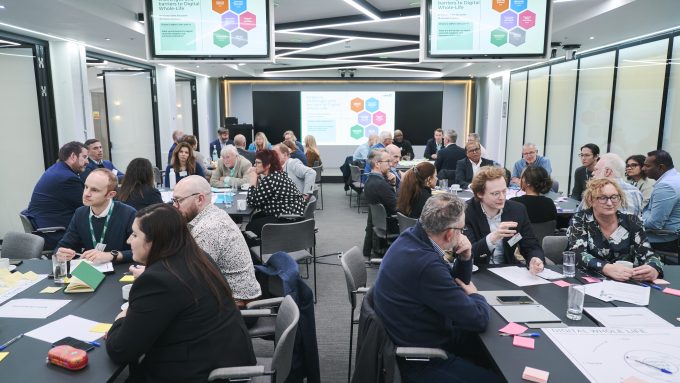
In March, the company showcased its technology to over 1100 delegates at the Connected Places Summit.
SLANT was welcomed on to the Freight Innovation Fund accelerator programme, delivered by the Catapult on behalf of the Department for Transport last year. It received £109,000 to develop its hardware along with a software platform to monitor system performance, and entered into a trial with local courier firm Pedal Collective.
SLANT features in this video profiling some of the innovators supported through the latest round of the Freight Innovation Fund programme.
The system features a smart horizontal drawbar that attaches to a bicycle seat post to link it to a trailer. Sensors detect the pulling force of the rider, and communicate with a battery electric drive unit positioned over the front wheel of a trailer to provide dynamic assistance.
A special coupling mechanism allows the power unit to attach to any type of trailer, so that a wide variety of goods can be towed.
Artemis Fragkopoulos, the Founder of SLANT, explains that a courier riding a conventional cargo bike or tricycle will typically carry around 80kg of goods. Delivering an 800kg pallet of magazines across town would therefore mean 10 round trips.
“But using our cargo trailer, the carrying capacity increases to around 250kg which means only four round trips are needed,” he says. “Based on our calculations and from data gathered from the trial, we found productivity can increase by about 88% in terms of revenue per rider hour.”
Artemis adds that the electric system allows a cycle courier to ride for longer without getting tired. As part of the Freight Innovation Fund trial, it asked a rider to wear a heart rate monitor to show how much effort was needed to pull a conventional versus electric trailer. The new system was found to reduce impact on a person by 4%.
“This might not sound a lot, but couriers could be riding for eight hours a day, five days a week, so any assistance will make a huge difference.
“The Freight Innovation Fund programme has been instrumental in helping us develop our technology with our trial partner.”Artemis Fragkopoulos, Founder of SLANT
The company is now looking to identify potential customers to enter into commercial contracts, and raise private investment to be able to scale. “We are still pre-revenue generating, but hope to be profitable by 2028,” Artemis says.
SLANT came into being after Artemis and fellow students at the University of Bristol worked on a project to develop a cleaner alternative to motorised deliveries in cities, to help combat emissions and traffic congestion.
“Both my co-founder and I are from parts of the world that have been impacted by climate change,” he explains. “My roots are in Cyprus, which now has scorching summers, and my co-founder is from southern India, which has experienced big floods. Climate change has impacted the way we see the world, and what we want to do.”
Artemis says attending the Connected Places Summit proved to be a valuable experience, and led to a meeting with a potential customer to discuss electrifying its delivery trailers. “It was great to meet many people with lots of experience in transportation and logistics, receive feedback on our product and listen to their ideas about how we might develop this further.”
He adds that SLANT’s ambition for the next five years is to identify other markets beyond cycle logistics, and to “become a household name for transporting goods over short distances”.