
articles
Autonomous boat scale-up charts rapid growth
Online Oceans received Catapult support to build autonomous work boats, and is now attracting investment and starting to generate a profit.
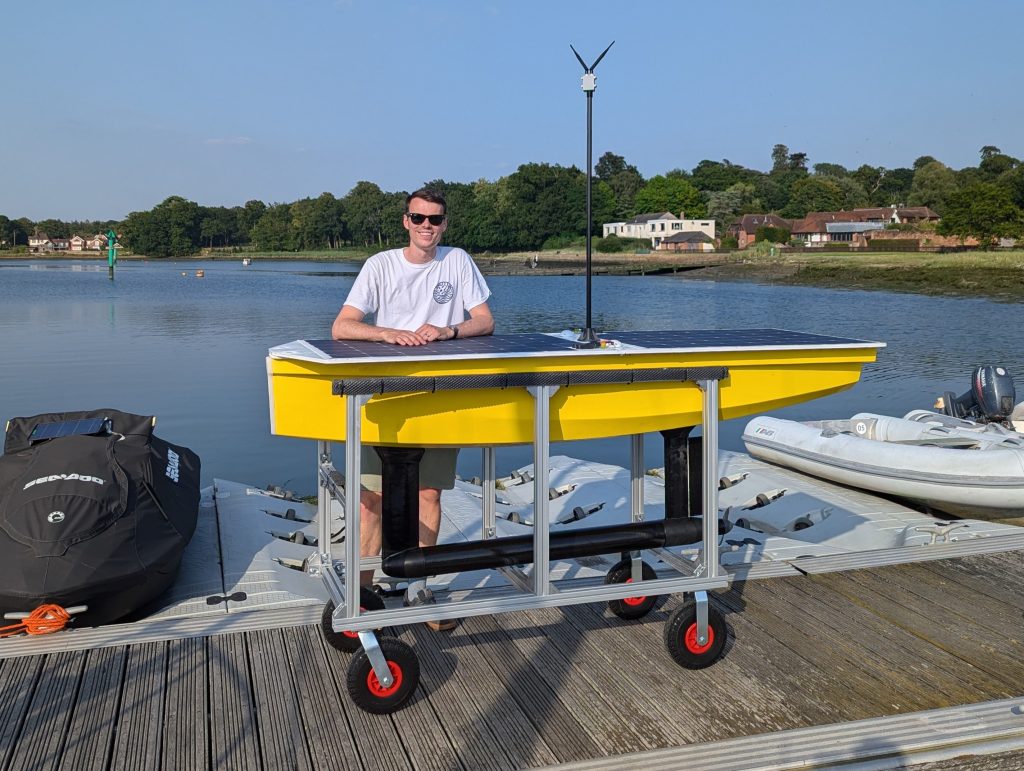
“We want to improve our understanding of the oceans,” says entrepreneur George Morton, whose scale-up company builds small uncrewed boats to deploy sensors at sea – and recently secured £4 million investment to scale its operations.
Online Oceans from Christchurch has sold over 30 boats in America, Portugal, Sweden, the Baltics, and the UK to clients involved in scientific research, commercial shipping and defence.
The company was supported in 2024 through the Transport Research and Innovation Grants (TRIG) programme, which is delivered by Connected Places Catapult for the Department for Transport. The programme helped the company develop its boat and a software platform, make industry connections and better understand the market.
“There's a strong chance the business wouldn't be here if it wasn't for TRIG; it’s ultimately got us to where we are today. We're going to be employing 20 people in the coming months; generating value for the UK economy and using a British supply chain to deliver our boats.”George Morton, Online Oceans
“The programme was the seed that allowed everything to grow,” he adds. “If we hadn't received a £40,000 grant when we did, we probably wouldn't have built a prototype and gone on to sell to customers.”
Small boats for many uses
Sensors on board the company’s boats are typically used to monitor climate change data, wave heights and wind speeds, and can also be used by utility companies to track noise associated with building offshore wind turbines to help protect marine mammals.
Underwater cameras on a boat can monitor the condition of coral reefs, sensors can look out for illegal fishing, and hydrophones can listen for submarines.
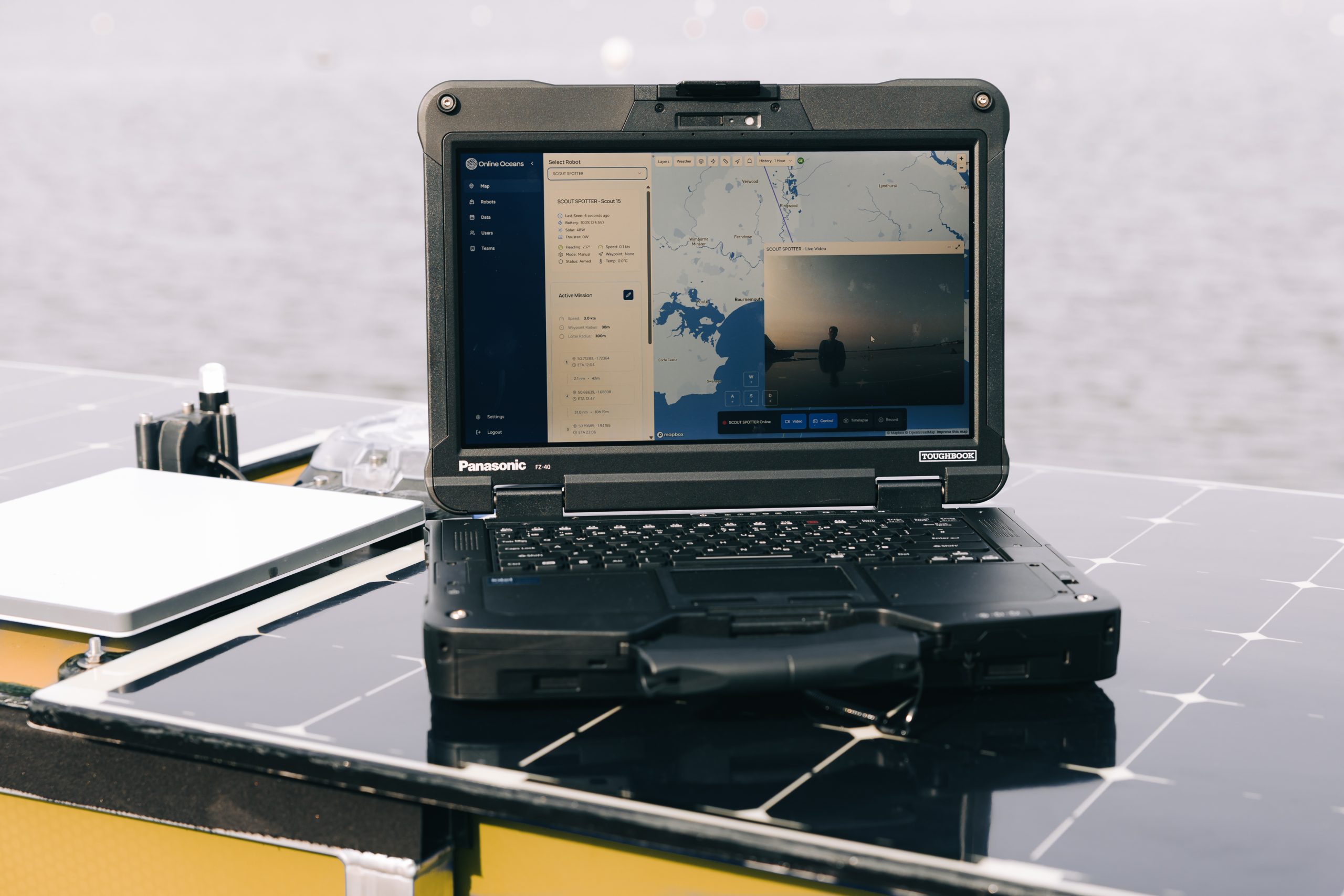
Using fully uncrewed vessels allows a boat to be moved autonomously from the shore, using a software platform called Tether that communicates with satellites.
Batteries on board the electric boats are recharged using solar panels, the vessels can correct themselves if knocked over by a huge wave and can – in theory – maintain their position indefinitely in one location.
The use of driverless boats also removes the need for people to be put in dangerous situations to get sensors into position.
“It can be really hard to place sensors in the ocean; it’s quite an unpleasant place,” explains George. “Traditionally, deploying sensors has meant sending people out on a boat, but that is costly and puts people into a high-risk environment.
“Ours is a very easy platform to use; we can teach anyone how to operate a boat in an hour, which makes it more accessible to a wider audience,” he adds. “We once had a team member at a wedding in Malaysia who was controlling a boat around the English Channel using his phone.”
A rapidly growing business
Online Oceans is on track to record a turnover of £1.5 million this year, and George expects that figure to be “significantly greater” next year. The company recorded a profit over two consecutive months earlier this summer, and is currently involved in a phase of research and development to increase the boat’s robustness and the variety of conditions in which it can operate.
The £4 million investment secured this year is linked to a £1 million raise last year. Taken together, this represents the largest injection of capital in the company’s short history. Funding is allowing Online Oceans to scale production, increase headcount and add new features to its platform.
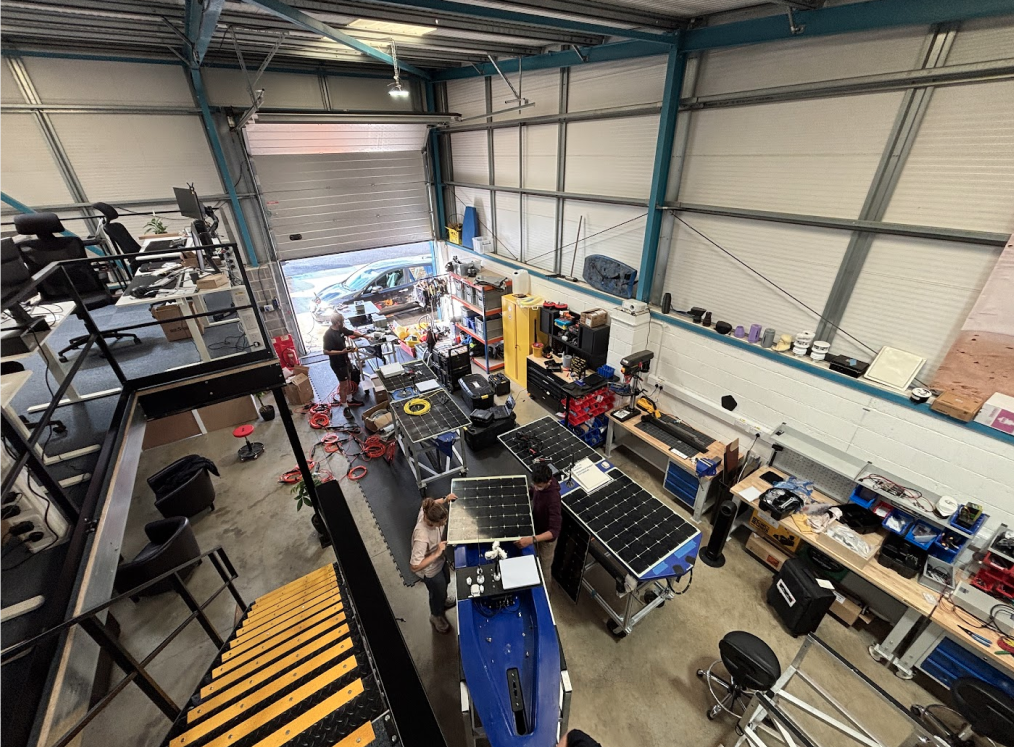
“We're in a position where we could sell significantly more boats if we could make more. The team is now 15 strong and will reach 20 in the coming months. There were only two of us last September; it’s been a fairly rapid period of growth!”
George describes the company’s boats as having an “extremely strong cost-to-performance ratio” and claims its closest competitor in the US sells a similar solution – but at a much higher cost. The reason that's significant, he explains, "is it allows our clients to have a much larger scale of deployment with significantly more boats out there, giving greater coverage”.
Progressing to other programmes
After developing the boat and operating system through TRIG, the company worked on further technologies for its vessels alongside the Offshore Renewable Energy Catapult and the Advanced Research & Invention Agency.
George appreciated the networking opportunities and a chance to liaise with other companies through TRIG, but says the grant funding was definitely the most important factor in the company’s growth.
“We probably spend a similar figure now on development each week to the one we received two years ago through the programme. Looking back, I remember agonising over the cost of every nut and bolt to make sure I used them wisely.”
George recognises how far he and the company he founded have come in a relatively short period of time. He studied chemical engineering at university, worked in oil and gas for seven years and entered a competition to develop a small autonomous boat to cross the Atlantic.
Excited by the new direction his career was taking him in, George joined marine technology company Ocean Infinity to lead on a decarbonisation project for boats, before founding Online Oceans nearly three years ago to build its uncrewed surface vessel known as Scout.
“I did a fair bit of dinghy sailing when I was younger and went on to race yachts, but wouldn't describe myself as a fanatical sailor. I was more interested in problem solving and satisfying my engineering curiosity.
“When I realised there was an opportunity for deploying boats as small sensor platforms that can stay out at sea for long periods, that gave me the confidence to give this a go.”
Find out more about the Transport Research and Innovation Grants programme.