

news
Chief Scientific Adviser celebrates five transport innovators
Exceptional start-up firms participating in the Transport Research and Innovation Grants programme were recognised at the Connected Places Summit.
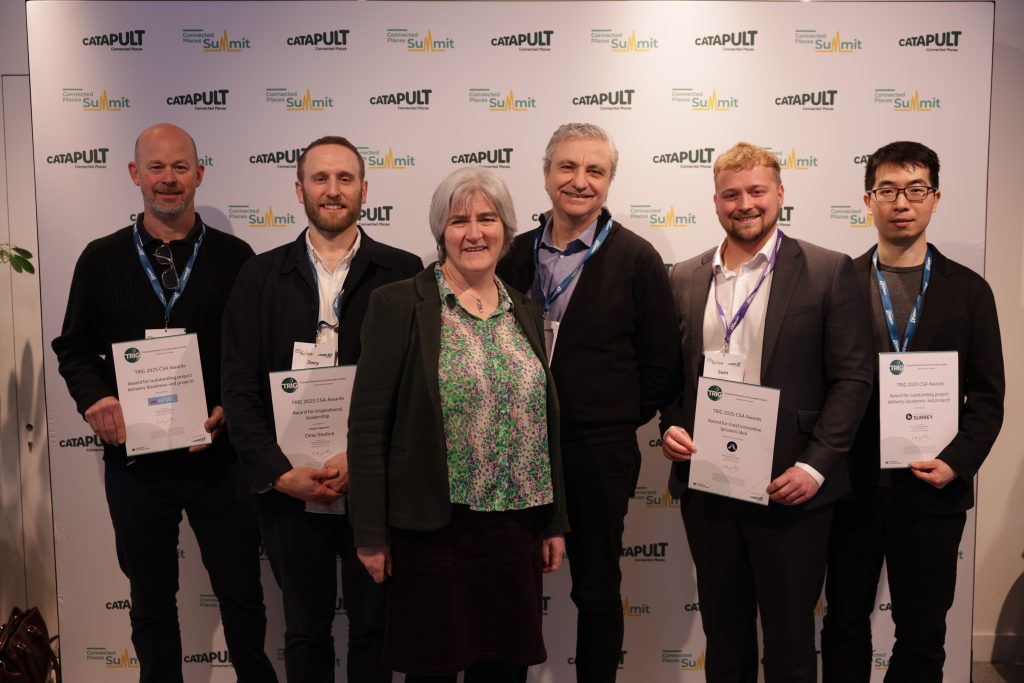
Five awards were presented to specialist transport companies and individuals showing great potential over the last year by the Department for Transport’s new Chief Scientific Adviser, Professor Patricia Thornley.
Each project recognised has been taking part in the Transport Research and Innovation Grants programme, delivered on behalf of the DfT by Connected Places Catapult.
Winners are listed here, along with their challenge area and a brief description of the technologies:
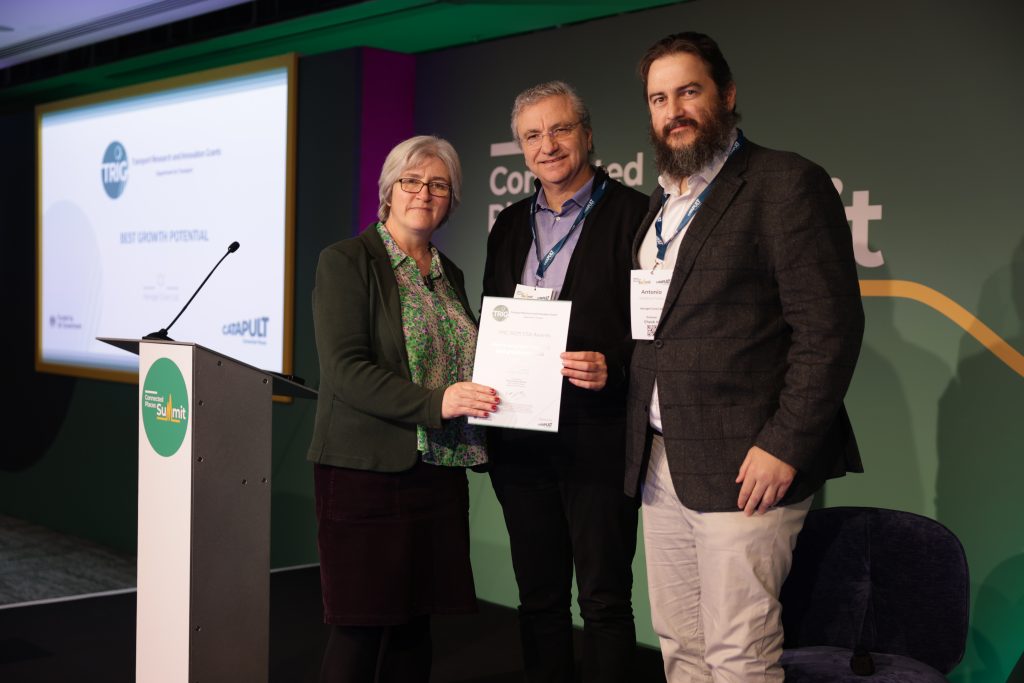
Award for the Project with the Best Growth Potential:
Aerogel Core (Maritime Decarbonisation) – led by Antonio C. Malfense Fierro. Region: South West
Development of an advanced insulation material to support the thermal management of clean fuel systems including ammonia, liquified natural gas and hydrogen in maritime applications.
Award for Inspirational Leadership:
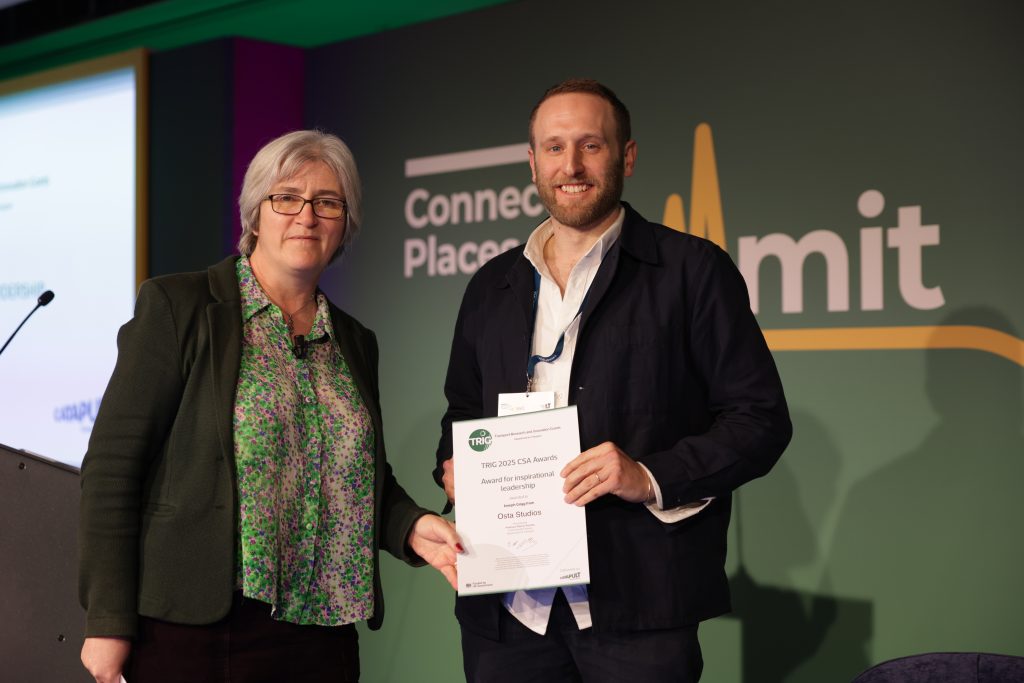
Joseph Grigg, Osta Studios (Freight Innovation) Region: South East
Recognising Joseph’s engagement with fellow TRIG cohort members, and his championing of a smart push-cart called Stride to improve walking logistics for last mile deliveries.
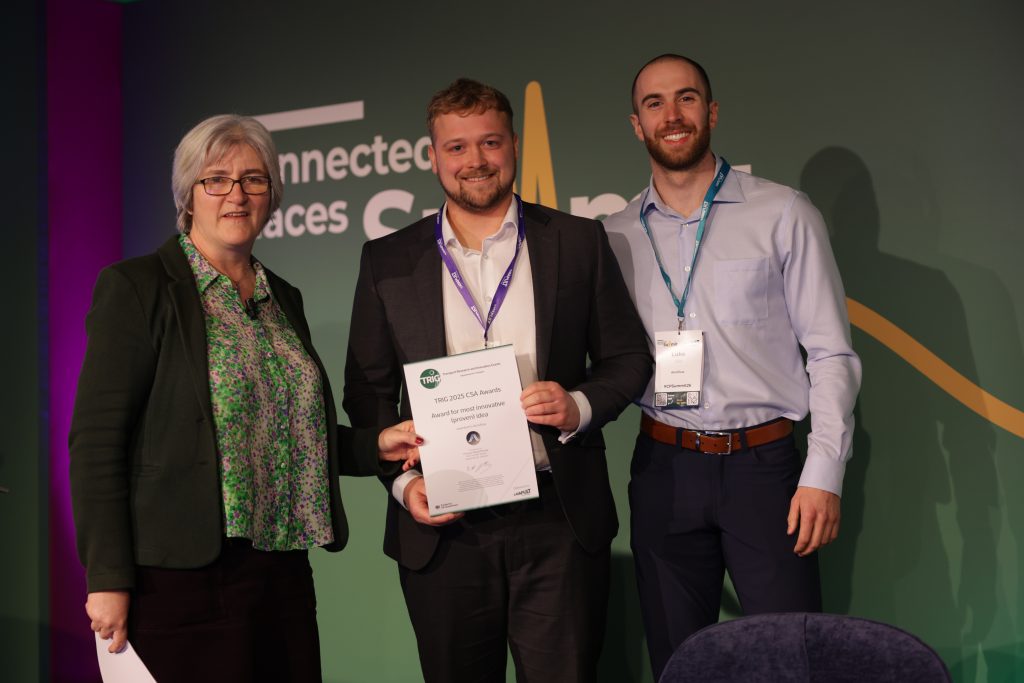
Award for the Most Innovative (Proven) Idea:
Aeroflow (Freight Innovation) – led by Sam Evans. (pictured with Luke Sala) Region: Scotland
Aerodynamic ‘shape shifting’ haulage trailers that reduce in size when carrying less cargo to improve fuel efficiency; reduce the size of rear blind spots and improve stability in cross winds.
Award for Outstanding Project Delivery (business-led project):
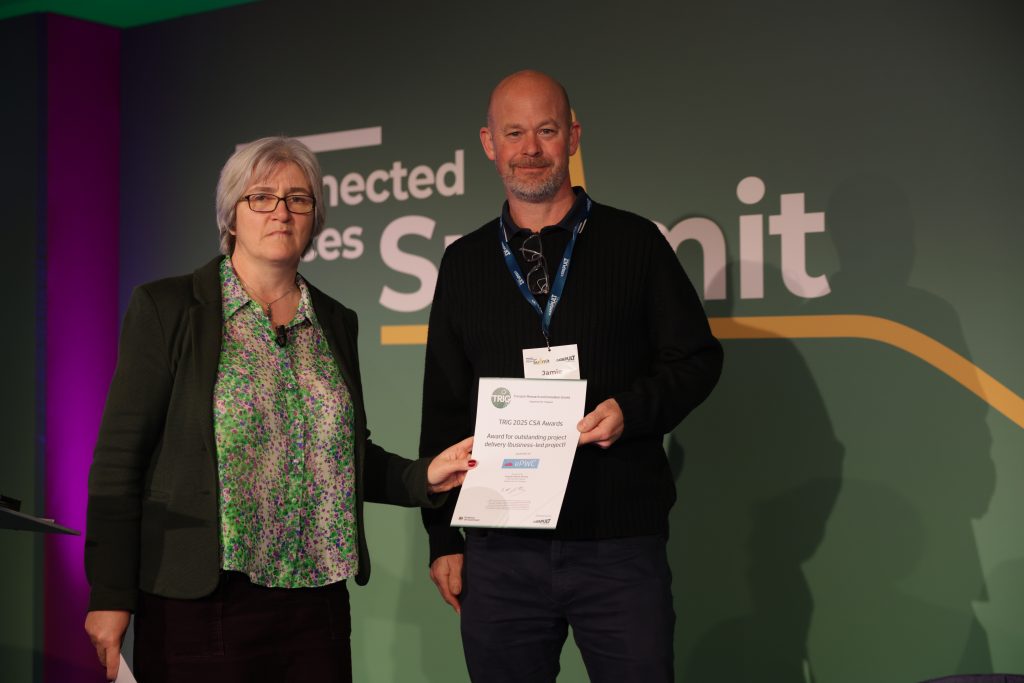
ePWC (Maritime Decarbonisation) – led by Jamie Marley. Region: South West
Development of an electric drivetrain for personal water craft – or jet skis – to enable low noise and zero emission propulsion for a range of harbour authorities including search and rescue.
Award for Outstanding Project Delivery (Academic-led project)
University of Surrey (Open Call) – led by Benyi Cao. Region: South East
For development of a system to reduce potholes, by placing water-filled pipes beneath a road to capture heat in the summer and recirculate it in winter to keep surface temperatures above freezing.
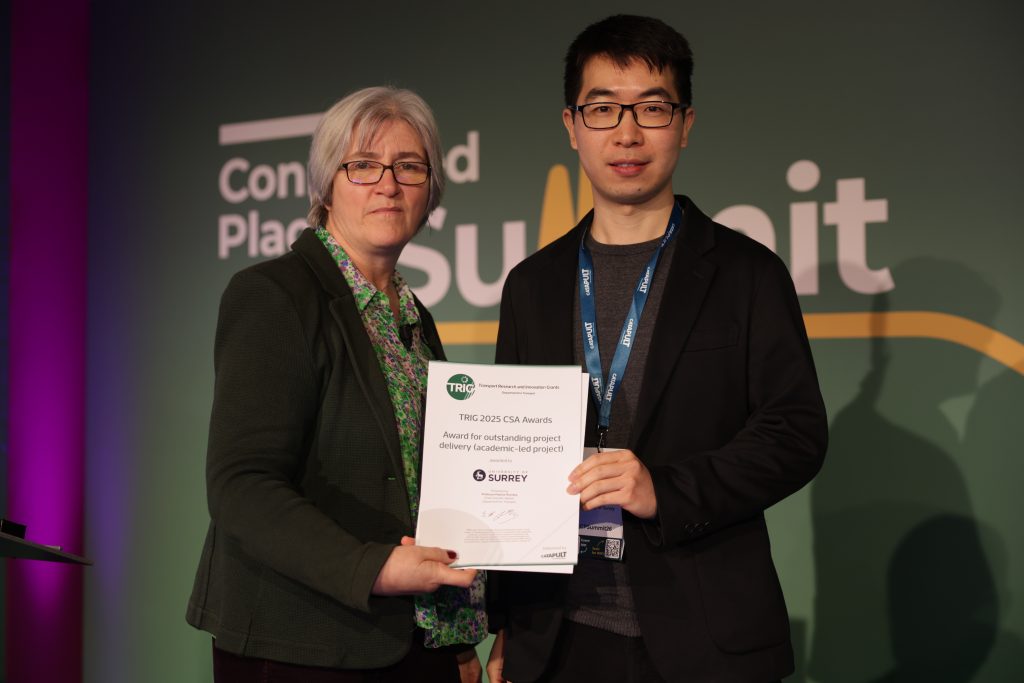
Professor Thornley praised the “fabulous set of people across so many different areas” of transport who are active in the TRIG programme.
Earlier at the Connected Places Summit, she told delegates that the UK has a long way to go to decarbonise our transport sector.
She said there is a lot more to be done when it comes to reducing carbon emissions and reducing airborne pollution.
“We have some absolutely massive challenges to face, and that is why we need all of you in this room.”Professor Patricia Thornley, Chief Scientific Adviser, Department for Transport
Professor Thornley added that new technologies promise to make a huge difference to people’s lives, and urged innovators in the audience with examples of how transport can be made better for users and reduce emissions to “talk to us, and share with us what you are doing”.
Find out more about TRIG and sign up for competition updates.