
articles
West Mids battery company expands its global reach
Batteries powered by salt rather than rare earth minerals are about to be launched by a Catapult-backed West Midlands company; which is growing its operations in Africa.
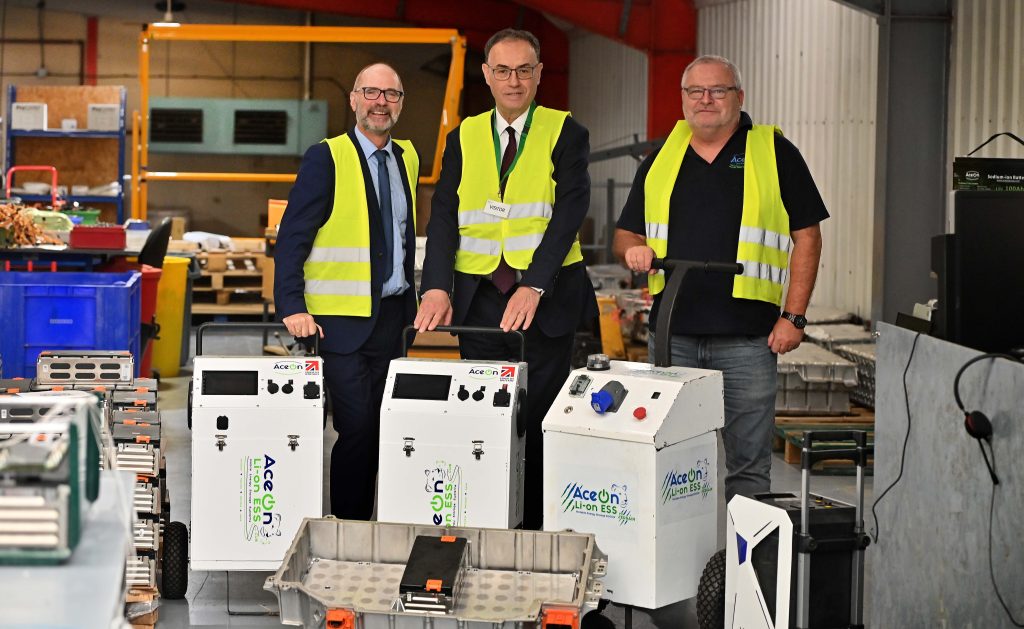
Entrepreneur Mark Thompson’s innovation journey began by pitching a solar powered portable energy generator to investors on the television show Dragons’ Den.
With his company AceOn Group, Mark sold the generators to Africa for residential use, and later pivoted to further clean energy applications – including those in rail and shipping – with the support of Connected Places Catapult and two accelerator programmes: Clean Futures and the Transport Accelerator: Maritime.
AceOn recently established a manufacturing base for batteries and portable energy generators in the Ugandan capital Kampala, and has expanded its UK operations from Telford into Coventry. Within three years, Mark hopes to be leading a £30 million business.
“Our turnover is currently around £4 million, and we have £20 million worth of opportunities in our pipeline,” he says.
Now the company is launching a new range of ‘swappable’ battery packs powered by sodium, rather than lithium, for use by rural communities in Africa.
“Few people have heard of sodium-ion batteries, and we are bringing forward this new technology that could really scale us to another level.”Mark Thompson, CEO, AceOn Group
“Sodium-ion is set to become the biggest battery technology in the next few years, and I want us to be a leader in this field.”
Alumnus of two accelerators
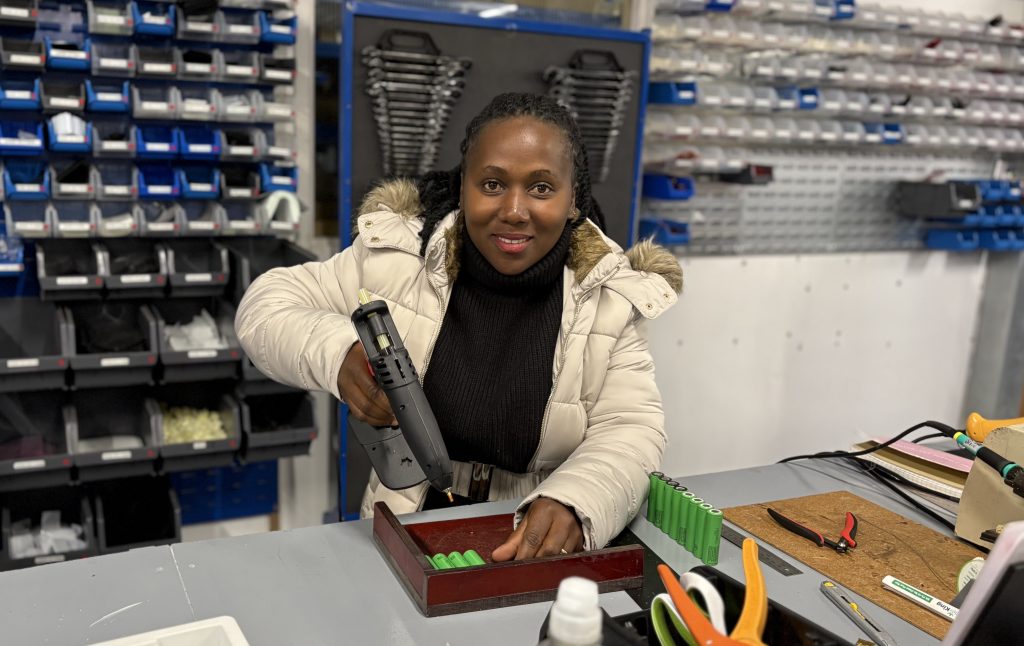
AceOn took part in the first round of the Clean Futures accelerator in 2023 to develop a portable energy storage system using second-life electric car batteries, as an alternative to diesel powered generators. Clean Futures allowed AceOn to further develop and demonstrate its innovation, and gain exposure to market demand from the rail sector.
Last autumn, it was accepted onto the Transport Accelerator: Maritime to develop port-side charging systems and batteries for electric boats.
“Through both programmes, Connected Places Catapult has helped us to demonstrate our latest battery technologies and make valuable connections through networking.”
“Recently, we have been talking to the Port of Tyne around providing them with shore-side power, and Hitachi to help them with a bid for an offshore power application.”
Last November, AceOn was presented with an Outstanding Engineering Innovation Award at Maritime Innovation Week.
Pushing ahead with sodium power
Mark says his latest focus to develop sodium-ion batteries should prove its worth in hot climates such as sub-Saharan Africa.
Sodium-ion batteries are said to have a superior operational temperature range (from -40 to 70 degrees), and be safer to transport compared to lithium-ion batteries. They also make use of salt, which is an abundant natural resource, as opposed to lithium which is a rare earth mineral.
In the UK, sodium-ion batteries could be used in a diverse range of applications: as portable power packs for festivals in rural locations, for offshore power, and for the defence sector, adds Mark.
Second-life car batteries
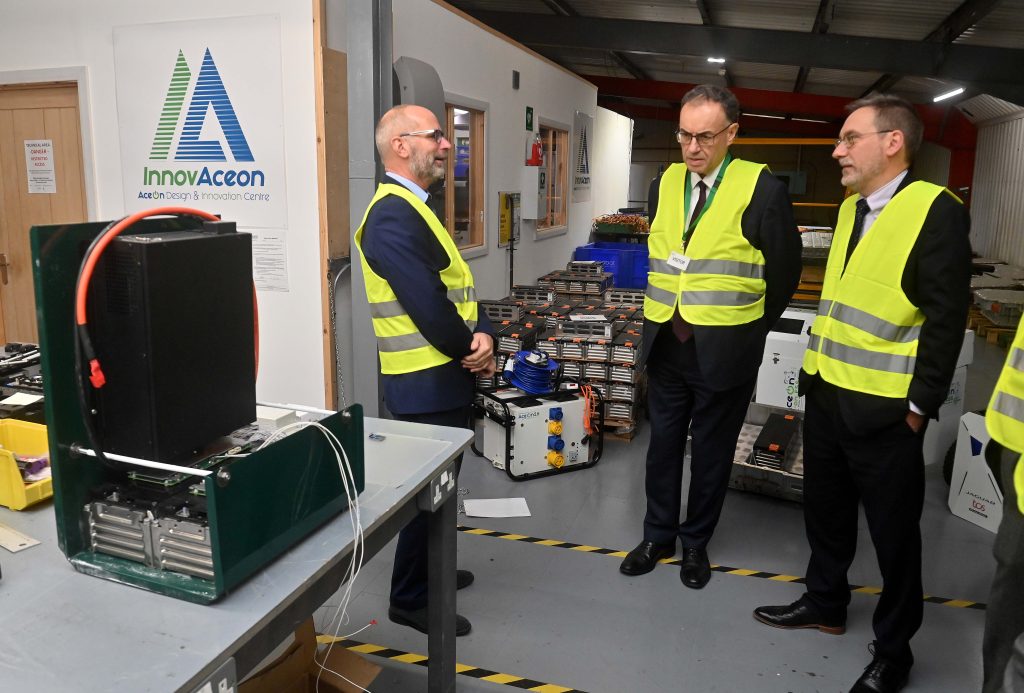
In recent years, the company’s focus has been to develop its portable energy storage system using second-life electric car batteries.
It has worked with the Ukrainian Red Cross to provide energy to emergency response teams for use in residential areas, where power networks have been destroyed during the country’s ongoing conflict.
AceOn has also built a mobile battery trailer for use by the Nigerian Red Cross to provide power to rural communities during emergencies.
It also set up its Ugandan manufacturing base, and is working for the Church of Uganda to provide energy storage for local communities, where demand for electricity often exceeds supply; leading to frequent power cuts.
Sites supported by the company’s energy units include medical centres in remote locations which need reliable refrigeration to store blood, and food manufacturers including cheese producers who need to keep goat’s milk chilled.
Batteries are also being used in Uganda to provide energy for factories and power for cooking, to remove a need to rely on polluting diesel generators.
“Our mission is to ensure everyone has access to electricity,” says Mark, who sits on the Faraday Battery Challenge advisory group which advises Government on developing new battery technology. He also helped to write a Level 3 battery manufacturing technician apprenticeship standard to pass on skills in battery technology to the next generation.
“The market for portable batteries and energy storage as a more sustainable source of power is huge, and continues to grow as fuel prices increase and the planet warms up.”
Find out more about the Clean Futures Accelerator and the Clean Transport Accelerator: Maritime