
articles
Using wearables to protect personal safety on sites
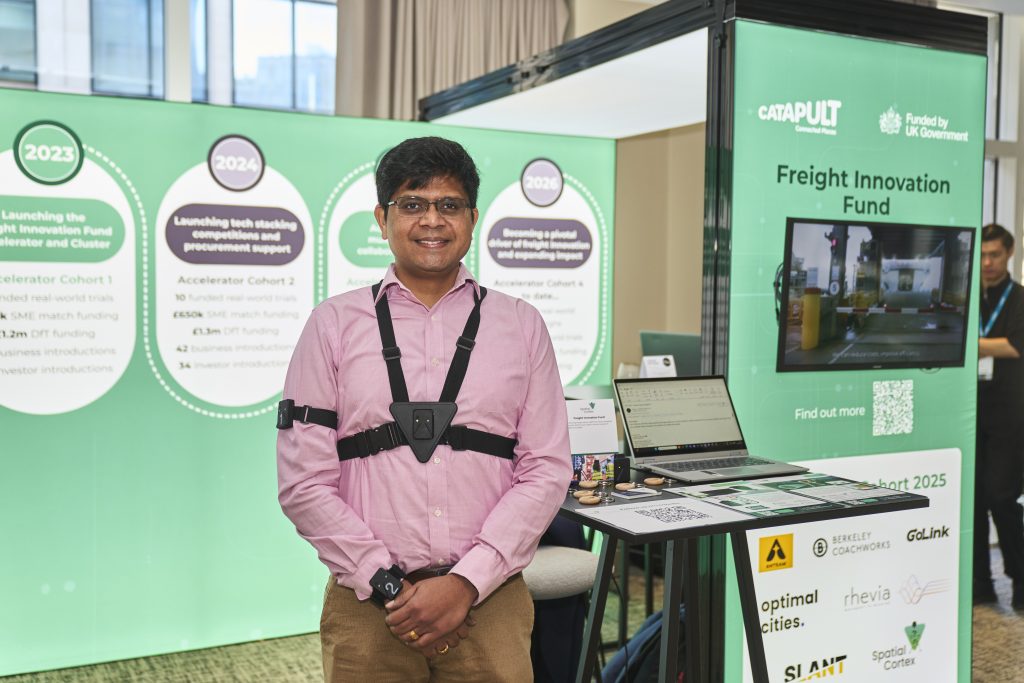
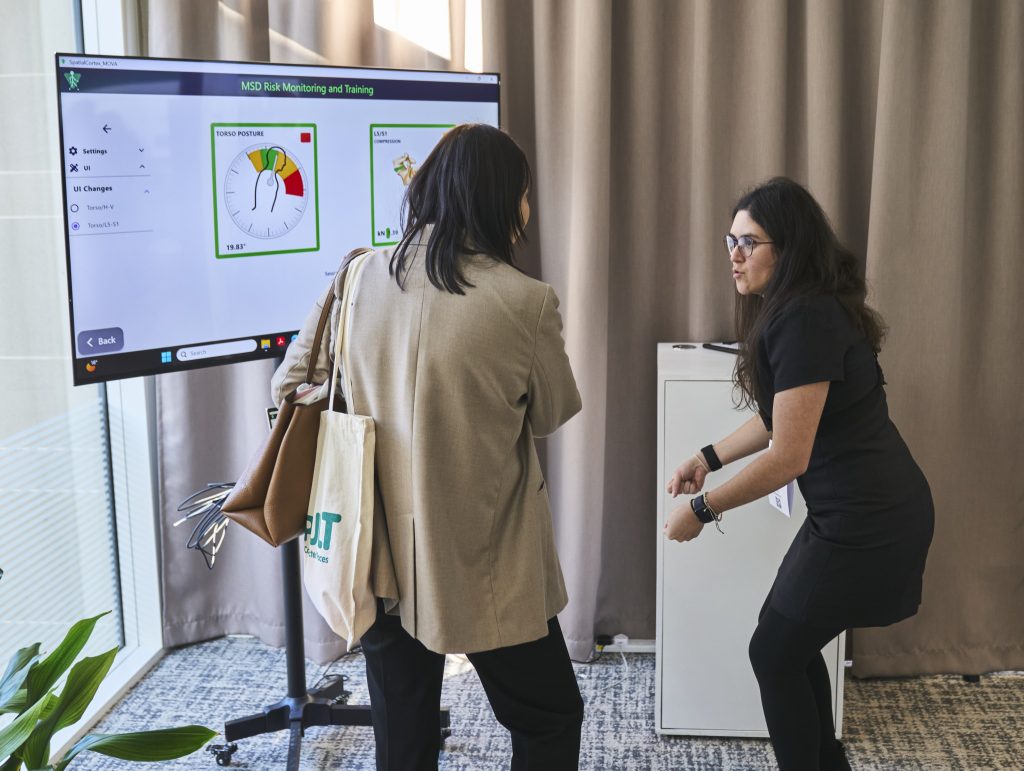
Innovators showcasing their emerging technologies at the Connected Places Summit included start-up firm SpatialCortex, from the Freight Innovation Fund accelerator programme.
Freight logistics, warehousing and transport are all high risk, heavy industries and musculoskeletal disorders feature among the top three causes of staff absences.
Official figures show that manual handling injuries caused by repetitive strain on limbs and incorrect posture account for seven million lost work days a year in Great Britain.
To reduce the risk of musculoskeletal disorders, one technology company, supported by Connected Places Catapult, has developed wearable sensors that alert operatives and their employers if loads are being lifted in a manner that could cause individuals harm.
The system also provides analysis to help workplaces understand and help prevent the risk of manual handling injuries in the first place.
SpatialCortex recently took part in the Freight Innovation Fund accelerator, delivered by the Catapult on behalf of the Department for Transport, and in March showcased its technology to over 1100 delegates at the Connected Places Summit in London.
Up to nine wearable sensors can be strapped to the arms, chest and legs of an operative depending on the nature of the task, to monitor the posture they adopt to lift a load. Data is compared to a simple skeletal model created, that is based on each individual’s height to determine how far they can safely reach before bending.
“If you are trying to lift something while you are bent over, it places a lot of demand on your lower back, which has to be supported by muscles around your vertebrae, which can lead to pain,” explains Kailash Manohara Selvan, the Chief Executive of SpatialCortex.
“Current risk assessments of manual handling tend to be based on visual inspections, so you only get a snapshot of the problem. When colleagues know that they are being observed, you only see their best behaviours,” he adds.
“Our system is fitted to the personal protective equipment they are familiar with, so they forget they are wearing sensors. We can then get a full visibility of how risks evolve throughout a shift, such as when people become tired.”Kailash Manohara Selvan, Chief Executive of SpatialCortex
The system can provide feedback of an operative’s manual handling over the last hour, as well as aggregated data to employers; to help in the development of targeted injury prevention training and ensure that safe systems of working are in place.
Trials take the technology forward
SpatialCortex received £150,000 from the Freight Innovation Fund to develop the technology including a data dashboard, and deliver a trial alongside Portsmouth International Port, the Port of Tyne and logistics firm DHL.
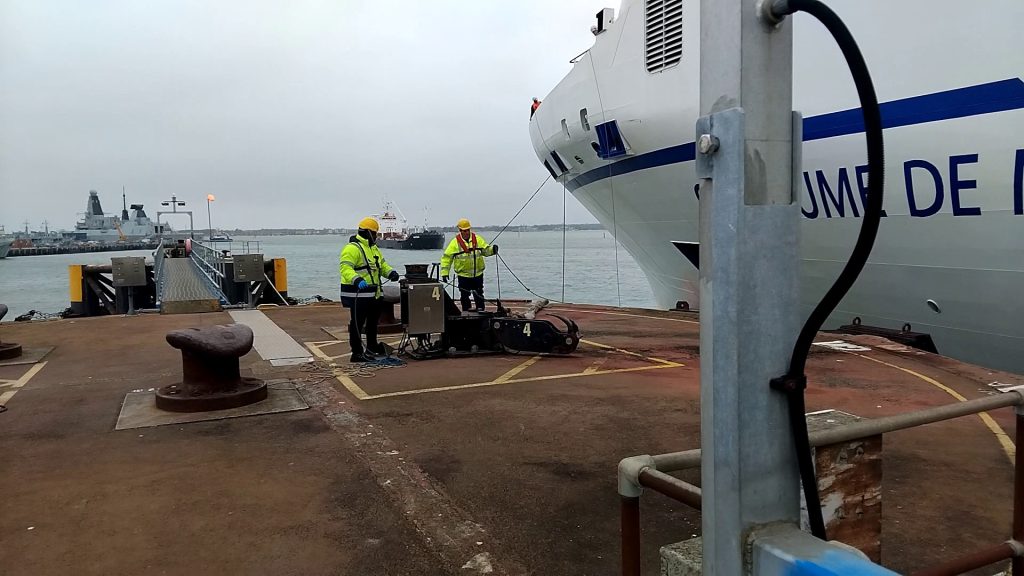
Portsmouth’s trial involved monitoring operatives securing mooring ropes for ships onto bollards on the quayside; and with DHL the trial assessed the packing and unloading of goods in a distribution centre.
Trials with the Port of Tyne focused on manual operations in warehouses and machinery operations such as operating forklift and pallet trucks, which could also involve vibration that can contribute to injury risk.
“Translating trial outcomes to commercial deployment is an immediate next step for us,” says Kailash. “Beyond that, we are looking to work with insurance companies and occupational health and service providers to help scale the technology.
“This accelerator programme gave us a very good opportunity to validate the technology, and show what it can do for the sector.”
SpatialCortex first started working with Connected Places Catapult on the Maritime Accelerator in 2024 – which led to a trial with Serco – when its technology was around a five on the Technology Readiness Level scale. This increased to a nine after completing the Freight Innovation Fund programme.
“The benefit of the programme was not just about the funding, but also about the network relationships, and getting to better understanding the sector. It has been brilliant and very positive,” says Kailash.
He adds that there is likely to be a growing need for wearable technology to monitor posture, given that the UK has an increasingly ageing workforce.
“We're trying to bring more awareness of the problem of musculoskeletal disorders to construction and transport, so that it gets the emphasis that it requires. If we can help to cut the number of injuries by even half a percentage point across the sector within the next three years, I feel we would have made a positive difference.”
Find out more about the Freight Innovation Fund accelerator.