
articles
Autonomous boat builder charts course to success
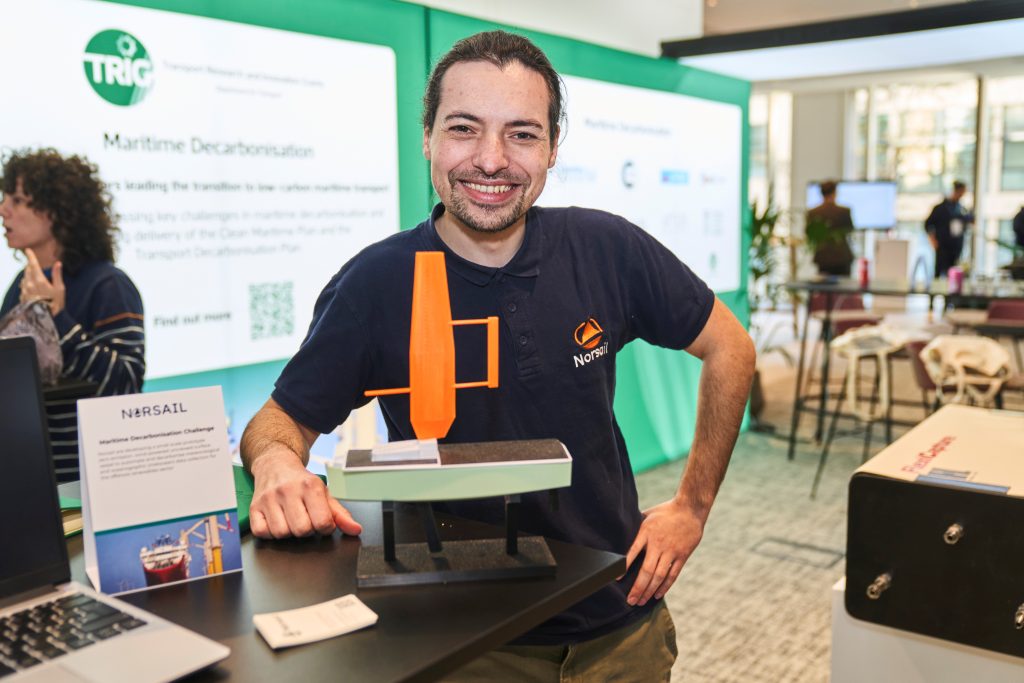
Innovators showcasing their emerging technologies at the Connected Places Summit included start-up firm Norsail, from the Transport Research and Innovation Grants programme.
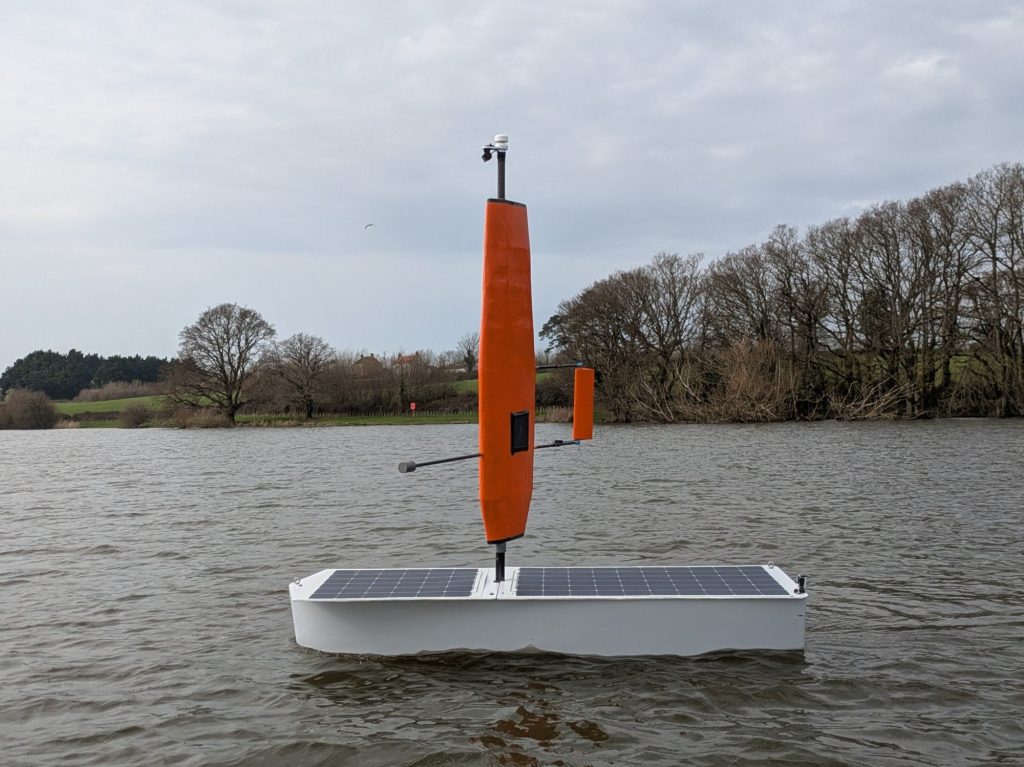
Small autonomous boats powered by renewable energy and developed by a start-up firm in Bristol could soon transform the way marine surveys are conducted.
The firm, Norsail, recently took part in the Transport Research and Innovation Grants (TRIG) programme’s maritime decarbonisation challenge, delivered by Connected Places Catapult on behalf of the Department for Transport. In March, it showcased its technology to over 1100 delegates at the Connected Places Summit in London.
Norsail founder Jordan Less’ard-Springett says the firm’s prototype autonomous boat has been developed to allow survey data to be collected from the oceans, and fed back to the shore in real-time, to support planning applications to build infrastructure such as offshore wind farms. The boat took its maiden voyage on a lake in early March.
“Sensors fitted to the boat can record wind speed and the condition of a seabed to help plan new facilities. They can also document the types of creatures that live there to determine the impact a wind farm might have on the local environment.”Jordan Less’ard-Springett, founder, Norsail
The prototype boat is only 2.4m long, but if trials are successful, it could soon be scaled up to 8m to accommodate a range of survey data devices.
“Our core innovation brings together a free-rotating wing sail, an ultra-low-power autonomy stack, and high-efficiency solar technology to create an uncrewed vessel that can gather meaningful ocean data continuously over months at sea,” Jordan explains.
“The free-rotating wing sail propels the vessel while consuming very little power. A small motor adjusts the angle of the wing’s tail, allowing it to act like a weather vane and automatically align the sail to the optimal wind angle for forward propulsion.”
The boat also features an electric motor for days when there is no wind, and solar panels to power the electrics on board.
Reducing danger and pollution
Jordan first discovered robotic boats during his computer science degree, and spent time with a university in Finland to help develop a three metre autonomous sailing boat.
Years later, after entering the offshore renewables sector, he recognised how that same technology could transform the way ocean data is collected.
“I saw 80 metre vessels with 70 people on board going out collecting data, but I asked if that many crew are needed – risking danger and seasickness – and to be spending tens of thousands of pounds a day and burning tonnes of fuel to just go and gather some wind data. Robot boats could do that!”
Norsail’s boat has been designed to remain at sea for six months, and the company has secured interest from an offshore wind farm operator and a geophysical services provider to support offshore surveys and provide monitoring services.
The firm was accepted on to the TRIG programme and a £38,000 grant was used to develop the autonomy system and support testing of the prototype on the water. An Innovate UK investment covered the building of the vessel including the wing sail.
“As a small company, you need money to make something happen, as well as the chance to demonstrate it before you can think about securing a commercial agreement or a letter of intent that can give investors confidence. TRIG did that.”
The next step is a sea trial to demonstrate that the technology delivers as expected in a real-world environment, and shows cheaper, cleaner and more efficient data capturing capabilities.
“The TRIG programme helped us get the prototype in the water and test it. Our next challenge is demonstrating that the vessel can remain offshore for several months,” says Jordan.
“Connected Places Catapult put us in contact with several larger organisations, and its support has been a stamp of endorsement. We've learnt some interesting angles we are going to explore, and met two people who might collaborate with us on another maritime project.”
Find out more about the Transport Research and Innovation Grants programme.