articles
Meet the innovator scaling a business to make travel more accessible
Jay Shen’s start-up company Transreport provides travel assistance for disabled passengers, and has progressed from rail to aviation, secured investment, and seen significant revenue growth since engaging with Connected Places Catapult.
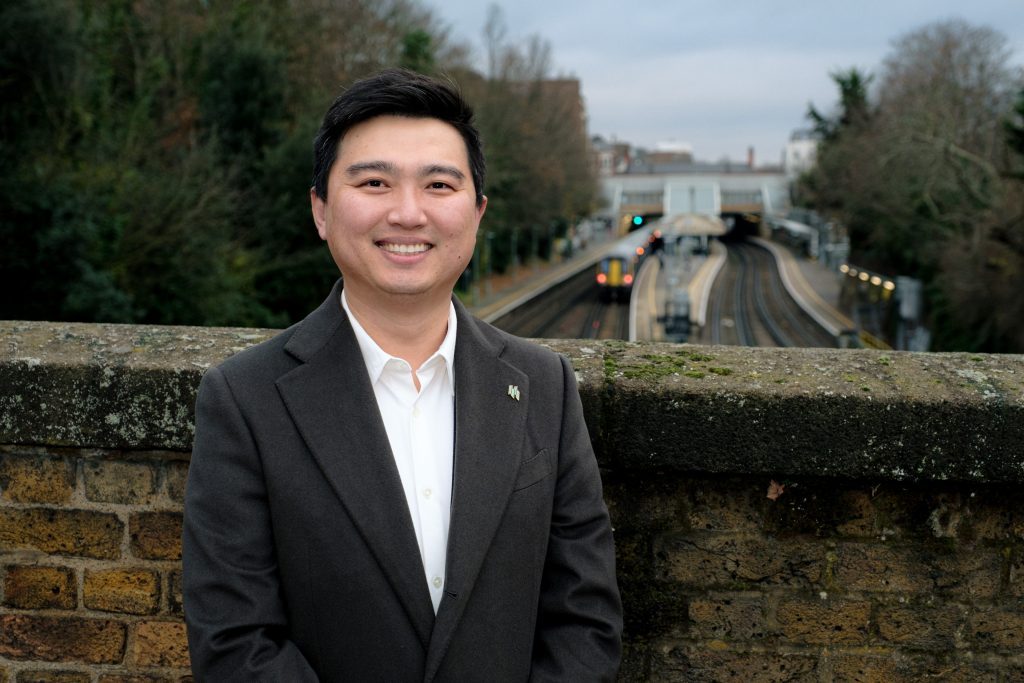
Many entrepreneurs begin their innovation journey driven by a desire to showcase new technology or build a successful business, but for Jay Shen the catalyst was correcting an injustice.
“As a student, I met a wheelchair user who shared his horrific experiences of public transport – and was shocked,” he says. “He told me there were times he couldn’t board a train as staff weren’t available, and once couldn’t get off a train so had to continue for several stops.
“And when trying to disembark a flight one night, everyone left including the flight attendants and captain. The lights went off, and he had to shout down to ground staff maintaining the plane. Those stories made me angry, so I decided to develop technology to help disabled customers.”Jay Shen, Transreport
Over the next decade, Jay built his company Transreport – which now employs 50 staff across the UK, EU, and Japan – and created the product Passenger Assistance, now implemented across the whole GB railway network.
The service is also used by several railway companies in Japan, and Jay is in talks with potential clients in the EU, US and the Middle East. Two years ago, he joined a UK trade delegation to Japan ahead of the G7 Summit, and last year received the King’s Award for Innovation.
Over the last five years, Transreport has taken part in four programmes run by Connected Places Catapult, secured £11m in investment, expanded its railway business internationally, entered the aviation sector, and seen revenues grow by a factor of more than 20 times.
“The Catapult helped us enter a new market and secure a contract with East Midlands Airport, and the coaching we received assisted us in pitching the business and drawing investment,” he says. “Funding and support also gave us credibility when approaching international operators.”
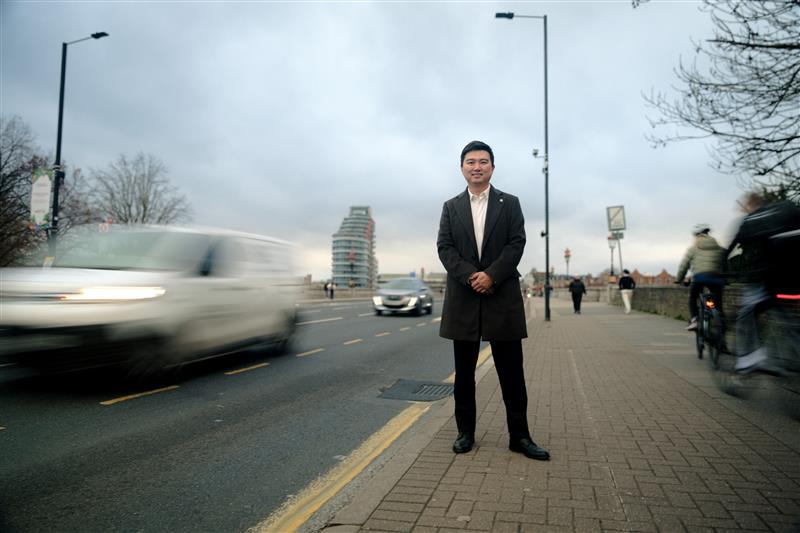
Booking help with confidence
Passenger Assistance is an AI-powered digital platform that allows people with accessibility requirements and older persons to book journeys and communicate their needs, without having to repeat them at each stage of their journey.
Once a passenger signals their needs and preferences, a train or airline operator will know – for instance – that John is a wheelchair user arriving at 4pm, should be pushed gently up a ramp, and is autistic so may become nervous if addressed too loudly.
Staff using the service can see who will require assistance, where and when, and receive further details on how best to support each customer's individual needs. Short term access requirements can also be flagged by users: such as a passenger who has just injured their foot playing football.
“We are the voice of the underserved customer, and think of our technology as the Uber for assistance for passengers and service providers,” says Jay. “Our technology provides reassurance for both parties, and can increase confidence for those who may otherwise not feel able to travel.”
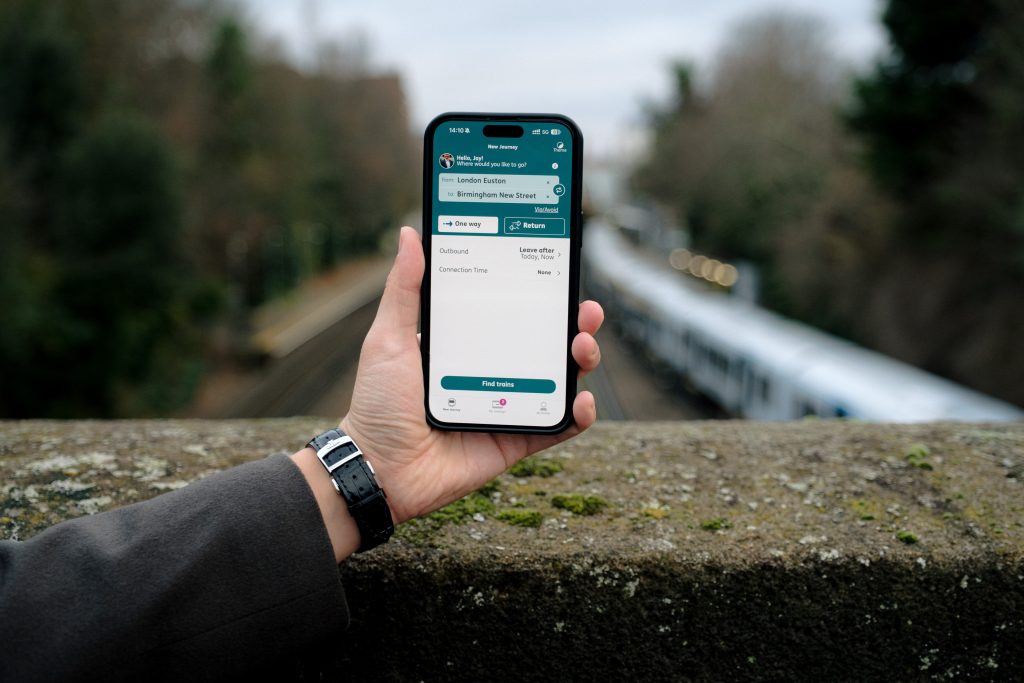
Trials of the new technology
Transreport first developed its software for railways, and started working alongside Innovate UK on its ‘First of a Kind’ innovation programme, before being accepted on to the Intelligent Mobility Accelerator led by Connected Places Catapult (with Wayra UK) in 2022.
It participated in the Future of Air Mobility Accelerator later that year, and the Transport Research and Innovation Grants programme delivered by the Catapult on behalf of the Department for Transport.
Its mobile app and web portal were trialled at East Midlands Airport, and as a direct result of its trial a contract was signed with the airport to introduce the service. Last year, the company took part in an ‘AI in Transport – Enhancing Passenger Experience’ competition delivered by Connected Places Catapult.
Transreport has also been introduced by the Catapult to another SME working on a piece of complementary technology predicting travel delays on the railway, that may play into a further development; and is set to announce a further airport deal soon.
Chasing his dream
Jay grew up in Beijing and came to the UK in 2003 as a teenager to escape the SARS respiratory epidemic. He settled in Manchester and lived with a local family, but couldn’t speak a word of English so communicated using hand gestures.
He watched American sit-com Friends to learn the language; but when he returned to China several years later kept being asked why he spoke with an American accent.
After A-levels, he studied maths at Warwick University and continued on to a Masters in engineering business management. He enrolled on a PhD in sensor technology and an academic career was looming. But he had just launched Transreport, so decided to throw himself behind the venture and withdraw from the course with 18 months to go.
He was nervous about telling his professor, but she was an academic turned entrepreneur herself, so encouraged him to follow his passion.
Jay recalls borrowing money from his parents, selling his car and remortgaging his house to support the business in its early years, when “all of a sudden, I received an e-mail saying I’ve secured funding of £350,000 from Innovate UK. That allowed me to bring the technology to life and trial it with a company”.
He was keen for Passenger Assistance not only to support those born with access needs, but the vast majority of disabled people who acquire their disability later in life, through injury or ageing. “This can happen to any of us,” he notes. “I want to make sure that when I grow old, my daughter doesn’t have to worry about me travelling, and that I can be independent.
“From day one, we have involved disabled people with lived experiences to give feedback on the design of the service, conducting weekly user interviews with the disabled community. Today, we have more than 1,000 disabled people completing surveys, and giving us guidance.”
There have been setbacks: in 2020 it had an agreement with Network Rail to go live with the technology, only for Covid to intervene. “We were running out of money and feared that several years of hard work would be gone. But we survived, and the rail network bounced back.”
Five years ago, the Williams Rail Review namechecked Passenger Assistance, which for Jay represented “a very special, stand-out moment”.
Next step retail and hospitality
Jay is keen to continue helping to reduce travel anxiety for people requiring assistance, and for the service to be recognised by more people as a “one-stop shop” for managing support. He now wants to explore opportunities in retail and hospitality.
He thanks Connected Places Catapult for introducing him to “a vast network of companies, stakeholders and influencers” who are “all moving in a similar direction”.
Jay advises other entrepreneurs to “keep true to yourself, and always remind yourself why you do what you do, to help get through some tough moments.
“Follow your passion, and you will find joy.”
Read about the Future of Air Mobility Accelerator and the Transport Research and Innovation Grants programme.