Charging specialist powers up towards commercialisation
Rapid and reliable charging for electric commercial vehicles is now offered by TUAL, a participant of the Freight Innovation Fund accelerator delivered by Connected Places Catapult.
March 16, 2026
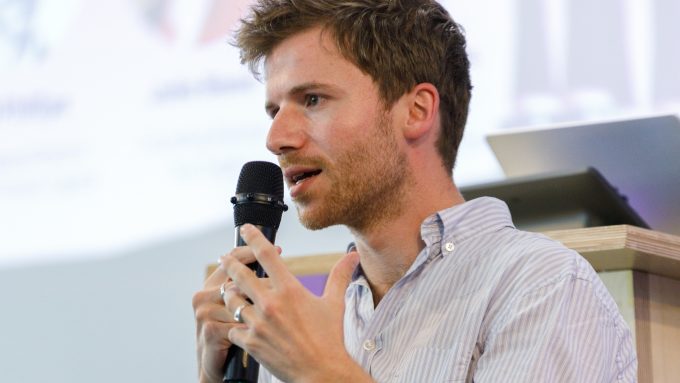
“You have to sell yourself to everybody, and selling is a game,” observes Philip Clarke, the Chief Executive of TUAL – a developer of high-powered electric chargers for commercial vehicles. “It's a bit like playing Mario Kart; you have to keep trying until you power up.”
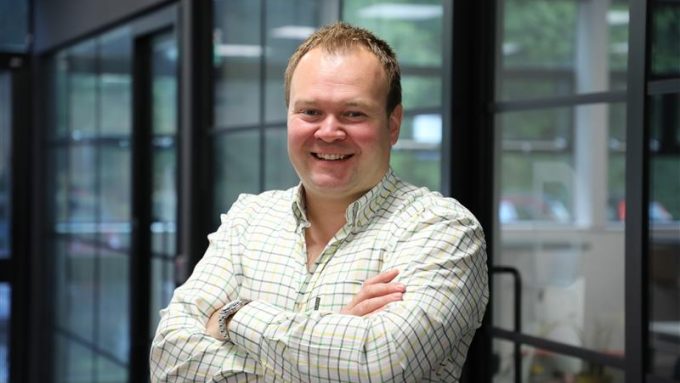
Philip Clarke, Chief Executive of TUAL
In January 2026, TUAL secured £1.5m in venture capital funding from a consortium of three investors to develop an advanced charging system for heavy and lighter goods vehicles, and to commercialise its offer in the UK and Europe.
TUAL was part of the Freight Innovation Fund accelerator’s 2024 cohort, delivered by Connected Places Catapult on behalf of the Department for Transport, and trialled its charging solution with logistics company Wincanton and retailer IKEA.
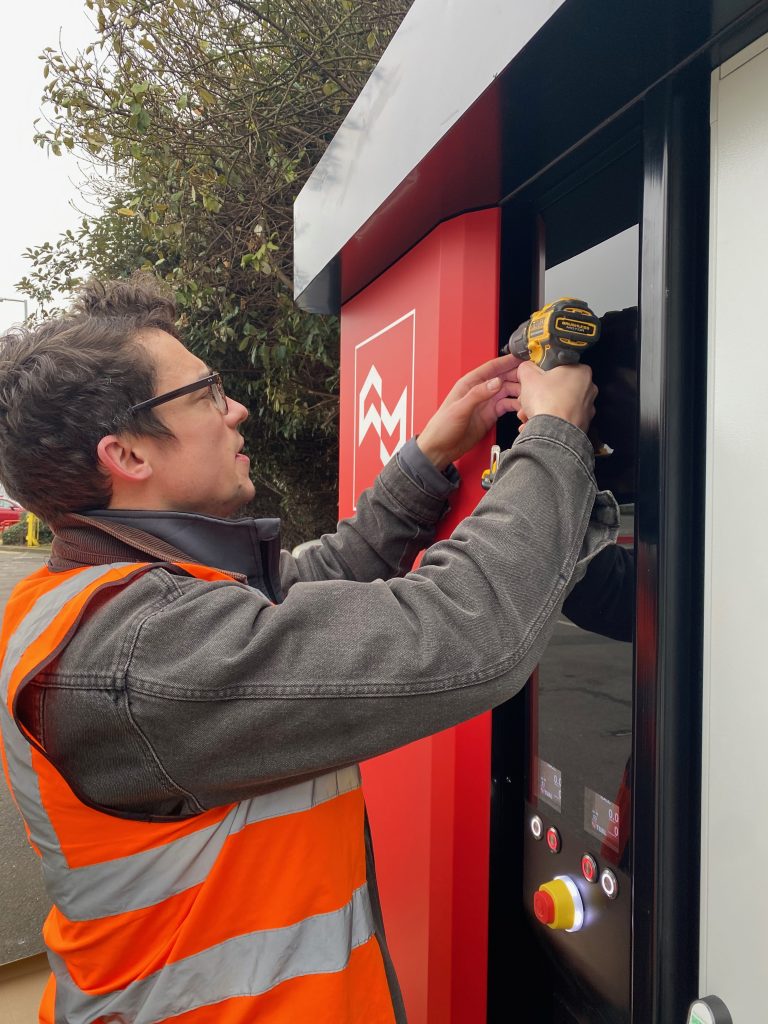
Its ‘PowerUp’ ground units provide high power charging to large electric vehicles in locations that only have low power supply, and a technology called ‘battery buffering’ is used to draw electricity at off-peak times for it to be stored for later use. A separate portable battery system acts as a range extender – allowing drivers to top up their vehicle’s charge on the go.
This summer will see the first installation of the PowerUp ground units, and the company aims to generate close to £10m of revenue before the end of the calendar year.
“We're living through the greatest generational shift in wealth from the oil economy to the electric economy,” says Philip. “There could be large rewards for pioneers in this space who take risks.”
Investor reveals funding strategy
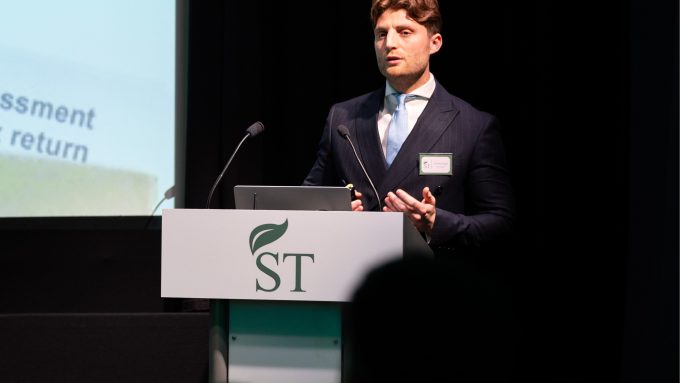
Burhan Pisavadi is from the UK office of lead investor PT1 which – alongside venture capital firms P3A and Ascension – offered TUAL the £1.5m of funding. “No investment is ever made on a single factor; several things need to align,” he notes.
“The first is our strong belief that economies will continue to electrify, and that means vehicles running on batteries. To do that, we need charging infrastructure that is reliable.
Burhan Pisavadi of investor PT1
“Secondly, the product itself must actually solve an identified problem – which it does – but even that's not enough. Investors also need the companies they back to be great, and for the director and colleagues to have enthusiasm and passion for their project.”
Participating in the Freight Innovation Fund accelerator, says Philip, enabled TUAL to “build proven technology on the ground, which was super valuable” as it “made real what we'd been promising. The accelerator also introduced us to a large network of people, and led to conversations with target customers we might otherwise have struggled to get”.
This spring represents an important period for the company, as it acquires the necessary product certification to supply the units and prepares for its initial commercial installation in June of the first of up to 30 units for a multinational utility client.
“We’ve scaled the team to nine people and we’re on a mission. This year is all about proving we can get to market in the UK. If we can do that, I will be talking with Burhan and his team about the next push which will be into Europe.”
Philip Clarke, Chief Executive of TUAL
From an investor’s perspective, Burhan said that accelerators like the Freight Innovation Fund offer assurances that SMEs have demonstrated what they have learnt, shown their product works as it should and that they have been prepared to “do a lot of the heavy lifting” by speaking with customers first.
Pivoting towards a new solution
TUAL started on the Freight Innovation Fund just as the company began to pivot away from building ‘swapable’ power banks carried by electric vehicles, to static chargers on the ground.
“We achieved Technology Readiness Level 6 with the power banks, but couldn't commercialise,” Philip says. “So we took the same intellectual property and built a ground based charging unit for trial with IKEA in Wembley.” At the site, Wincanton was running 19 delivery vans but had an ambition to run 40, “which the grid supply couldn’t support. Our tech showed it was possible”.
The PowerUp charger supplied took 14 minutes to be installed, and required no ground works. The large red box with two charging guns “suddenly became the go-to charger on site”.
Philip and colleagues had previously ‘bootstrapped’ investment in the business themselves, but sought funding because “building hardware is expensive, and you also want investment partners who can help you to scale. We know the UK, but don't know the European market very well and a lot of potential customers there want sophisticated financing solutions, so we sought support around that.”
TUAL was previously part of a Faraday battery challenge programme, and Philip initially spoke to 16 investors – but not one of them was interested in hardware.
“The UK is a difficult place for hard tech businesses to find an investor; I almost gave up hope. Then I met Burhan at a dinner and we followed up later. This was my first venture capital conversation, and it was remarkably straightforward, respectful and human,” he says.
“As an outsider, you think these things are about hard negotiation. But you realise you're planning to sit on the same side of the table for a number of years. Your interests are aligned, and there's no sense of someone trying to outplay you.”
Taking a calculated risk
Burhan adds that venture capital funding is inherently risky. “Nine out of ten companies receiving investment will be written off, or will fail,” he says. “That’s not because of the founders; it's the risks of early stage start-ups and building something from nothing.
“The companies we invest in all have big ambitions. It’s about ‘going hard or going home’. If you want to build a company that could one day sell for a billion pounds, you have to take risks and grow quickly – and that introduces an element of uncertainty.”
Burhan Pisavadi, PT1
Philip says other SMEs seeking to grow and secure funding should remember to “be resilient, and enjoy the ups and downs every day. If you want a straightforward, comfortable existence, get a job where someone else pays you.
“The ambition for me is really clear,” he adds. “If we can establish this technology, prove it makes business sense, and help with electrification, then the world my daughter grows up in will be cleaner. Then we can get on and solve some other problems – there's certainly lots to do.”
Read more about the Freight Innovation Fund accelerator, and find out about our service for Investors. Other investor stories in this series are below.
Alexei Andreev of Autotech Ventures speaks about his financial backing of Gaussion, a fast-growing battery technology firm supported by Connected Places Catapult that raised over £9 million in investment in 2024.
Ed Phillips of Future Planet Capital advises founders to build relationships with investors 12 - 18 months in advance, warning that going to market too late, or lingering too long, can sink fundraising chances.
Harvey Knight of the Sustainable Wealth Group says SMEs need to “shout from the rooftops” about their solutions, to grab the attention of potential financial backers.
One Planet Capital director Anthony Chant reveals what moved him to invest £600,000 in GT Wings, a technology start-up backed by Connected Places Catapult.
Venture capitalist Paul Miller speaks about his firm’s investment in Streetwise Technology, a pedestrian-friendly transport tech start-up, supported by Connected Places Catapult.