

How has Somerset Council used innovation procurement to tackle coastal erosion and flood resilience challenges
Somerset Council has worked with the Innovation Procurement Empowerment Centre (IPEC) to address a challenge around asset management and environmental monitoring. Through the programme, the council successfully procured drone technology to support coastal erosion monitoring and improve flood resilience planning.
The case study demonstrates how innovative procurement can help local authorities access new technologies, address complex place-based challenges and deliver better outcomes for residents.
Could your local authority benefit from a similar approach?
If your local authority is facing a procurement challenge and is looking for innovative solutions, IPEC can help. The IPEC Cohort Programme provides expert support to help councils and local authorities adopt innovative procurement practices and engage with suppliers more effectively.
There is no cost to join the cohort, helping remove barriers and making innovation procurement accessible to local authorities of all sizes.
Download the case study to learn how Somerset Council approached its challenge and the lessons learned through the process.
If you’re a public sector organisation with a coastal erosion or environmental monitoring challenge to solve, we’d love to hear from you. Get in touch at contact@ipec.org.uk by 13 August to express your interest and find out how IPEC could help tackle your challenge.
Data to support the delivery of the City Deal
OVERVIEW
The Greater Cambridge Partnership (GCP) is delivering the City Deal for Cambridge, which supports the delivery of 44,000 new jobs and 33,500 new homes by 2031 by addressing some the key challenges to development and helping to improve the quality of life for residents. Transport is a key challenge, and delays on car journeys can affect bus journeys, making them slow and unreliable. The GCP is making significant investments in transport infrastructure to support travellers in making more sustainable choices, such as travelling by bus, bike or walking.
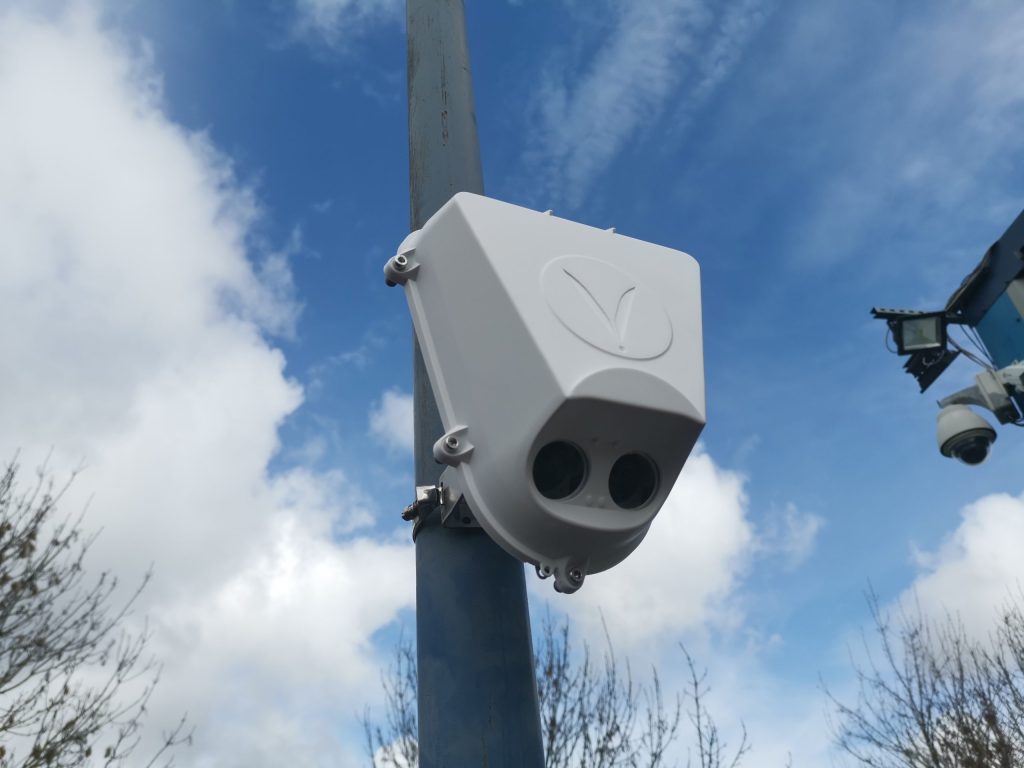
At the heart of this work is the gathering of data. Data gathered by sensors around the city helps us to understand how people move around the city and informs the schemes we develop, the business cases we put together and any modelling that’s needed. It also helps us to monitor and evaluate the impact of our and other local authority traffic schemes and how investments made have shifted behaviours.
CHALLENGES AND SOLUTIONS:
- Quality of Data: The way we had been collecting data wasn’t giving us the granularity we needed, and we were not able to accurately identify the many different classifications of vehicles, and importantly for us, how many travellers were walking or were on wheels (bikes, scooters etc).
- Deploying New Technology: We worked with VivaCity to overcome the challenges of deploying new technology, working with third-party infrastructure providers to enable sensors to be mounted on street lighting, ensuring that vegetation didn’t overhang the sensors and that the count lines were in the right place.
- Bespoke Procurement: The procurement was designed to have two sections – the first was a straight procurement of count data at several specified sites, including which classifications we needed. The second was a framework that would allow us and partners to procure further sensors to add into the network as and when needed, without having to go through a further procurement exercise.
SUCCESSES:
- Innovative Collaboration and Procurement: The project needed a new way to collect data. Three former University of Cambridge students were building a start-up using computer vision sensors powered by machine learning to collect better transport data. We collaborated with them on a small-scale pilot which demonstrated the capabilities and proved out the technology. We then procured two further small trials, one through an open competition and another utilising a government framework, both built on the initial trial but were still early-stage demonstrators.
- Development of New Insights: Following the procurement, we now have access to much more granular data that shows us many more classifications than we had before, including new modes such as electric scooters and pedestrians, which previous legacy equipment weren’t capable do collecting.
- Improved Business Cases: The new data allows us to refine business cases, and the ease of deployment and data analysis has meant that the data culture within our organisation has changed. We’re becoming much more data-driven, with project managers on infrastructure projects deploying sensors to evaluate the impact of investments being made and using that evidence in future requests for funding.
- Benefits for Communities: The data we’re collecting is being shared through our open-data platform, Cambridgeshire Insights, so it can be used by local communities.
KEY TAKEAWAYS:
- Early engagement with the market to help shape a procurement for innovative products is vital.
- Data handling It can be difficult to validate, analyse and draw intelligence and insight from large amounts of data, so we developed a new data platform to facilitate this.
- Collaboration Close collaborative work with an innovation partner is important to help products and services to evolve as needed to help solve any challenges that arise as the work continues.
- Communication of the technology and the benefits is crucial to get buy in from the rest of the organisation.
- Understanding the market. We now have an at-scale deployment which includes 106 sensors. For this deployment, we went through several procurement steps, including soft market testing to understand the market and the technologies that are available. We worked with the market to ensure specifications were right and to realise the risks we should be aware of. We then developed an output/outcome spec which was technology agnostic.
CONCLUSION AND NEXT STEPS:
The procurement of the sensor network provided a platform for our recent work with VivaCity on Smart Signal Control. This new project is looking at how better detection, more granular data and the use of AI could help us to better manage our road network and give priority to more sustainable modes of travel. We’re also exploring with VivaCity other potential uses for their network and data, meaning we’re constantly getting more value out of our initial investment.
Dorset’s Digital Innovation Dynamic Purchasing System
Dorset Council provides local council services in one of the most diverse and rural areas of the country. Committed to using digital innovation to deliver services, encourage productivity, provide higher-skilled jobs and lay the foundations for long-term economic prosperity, Dorset Council has won awards for its 5G RuralDorset project and Dorset Open Networks Ecosystem Project.
Keen to scale and diversify the council’s ecosystem of local, national and international partners across public sector, academia, research and industry, a new Digital Innovation Dynamic Purchasing System was developed to deliver an agile and pacy way to contract with potential delivery partners.
CHALLENGES AND SOLUTIONS:
- Timescales. Public procurement can be a long and complex process, while innovation funding opportunities often come at short notice, bringing challenging timescales. The council needed a way to speed up procurement processes while operating in an open and transparent way and remaining within the law.
- Encouraging engagement. A Dynamic Purchasing System is unlike a traditional framework for the supply of goods, works or services. It is an electronic system companies can apply to join at any time. The bar for entry was set deliberately low to encourage early phase start-ups which often can’t afford the time and expense of accessing traditional procurement frameworks.
- Product development. We learned from our first procurement that having a DPS doesn’t guarantee faster and more agile outcomes. It’s essential to have a slick and well-resourced process sitting behind the online platform.
- Emphasising the benefits. It’s important to be transparent about the scale of opportunities that will be processed through the system. The DPS has a maximum value of £10 million over four years.
SUCCESSES:
- Growing demand. The publication of the DPS generated significant coverage, highlighting Dorset as a location for digital innovation. Some 80 organisations applied to join the DPS in the first 30 days, a higher number than we expected.
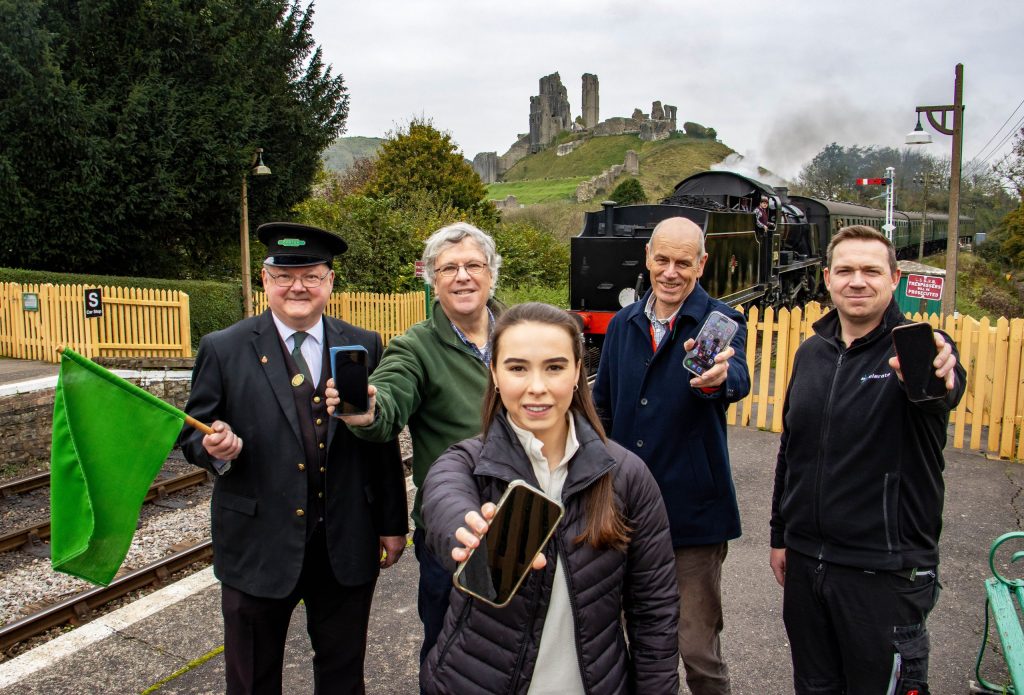
- Streamlining the process. Early procurements through the DPS included equipment to support the Dorset Open Networks Ecosystem project and a technical partner to help create the UK’s first WiFi connected steam train using Low Earth Orbit satellite connectivity. The latter procurement was completed in just 16 days.
- Highlighting the opportunities, The project has allowed the council to develop a valuable database of organisations keen to work in the county and, with their consent, can communicate with them around broader innovation opportunities.
KEY TAKEAWAYS:
- Empowering public authorities. The UK public sector spends £300bn a year buying goods, services and works from the private sector. UK local government procurement alone accounts for £60bn a year. This represents a huge market and a significant lever public authorities can use to create and shape markets both nationally and locally.
- Innovation as a driver for growth. By buying more innovative solutions, the public sector can be a driver of new ideas, providing innovative firms with the foothold they need to succeed, fuelling the scale-up ecosystem and encouraging wider adoption of new tech services.
- Leading by example. The DPS is one reason the council was named a Startup Ecosystem Star for 2024 by the International Chamber of Commerce and Mind the Bridge. Recognising the council’s work in the “Visionary Public Procurement” category, the Judging Committee were “particularly impressed by your organisation’s strategic initiatives and achievements in stimulating innovation and economic growth. Your efforts serve as a model for emerging ecosystems worldwide.”
CONCLUSION AND NEXT STEPS:
Dorset Council looks forward to building on its reputation as a place that supports cutting-edge digital innovation. It shows industry that ours is a county that welcomes and supports innovation, and the investments, jobs and economic growth that can go with it.
Qflow’s Expansion on HS2

ABOUT QFLOW
Qflow is a cutting-edge software solution that leverages machine learning to help developers and construction teams track and manage waste and materials on live construction and renovation sites. Traditionally, this process has been manual, leading to incomplete and low-quality data, wasted time, and increased project costs.
With Qflow, materials and waste are digitally logged through simple photographs eliminating the need for hardware, barcodes, manual data entry, and ensuring complete supply chain independence. This innovation has saved project teams 80% of site administration time and on average £200,000 per project annually. Qflow supports cost and quality control, ESG and environmental reporting, and improves waste compliance by over 70%. It also provides valuable insights that help construction teams reduce carbon emissions in real-time.
Currently, Qflow is used on more than 200 construction sites across the UK and USA, serving major contractors and developers such as HS2, Landsec, GPE, Bouygues, and Berkeley Homes, among others.
Founded in 2018 by a civil engineer and an environmental scientist with backgrounds in construction, Qflow has expanded to a team of 50 professionals, including software engineers, data analysts, and construction experts, all dedicated to building a more sustainable future.
CONTEXT
Skanska Costain STRABAG (SCS) and Qflow initially secured funding through an SBRI grant to support the first year of deploying Qflow’s innovative environmental monitoring technology. Within just six months, Qflow demonstrated significant value on one of the SCS Joint Venture (JV) sections. This success led to developement of a case study that quantified and qualified Qflow’s impact. The findings were presented to HS2 delivery partners at an innovation expo day, impressing stakeholders with the data insights generated from simple on-site photographs.
Following this success, Align and BBVS procured Qflow for their respective sections, and SCS expanded its use to include an additional section. This resulted in a fourfold increase in Qflow’s deployment across the HS2 project and established connections with contractors involved in these Joint Ventures (JV). Qflow continues to support multiple HS2 JVs and has successfully extended its proven value and learnings to the highways, critical infrastructure (such as flood defences), and utilities sectors.
CHALLENGES AND SOLUTIONS
- Innovation Procurement: Traditional construction contracts aren’t designed to procure software subscriptions. Collaborating with the project team and legal, to come to an appropriate contract arrangement was vital to developing a successful procurement approach that protected all parties.
- Empowering with ownership: One of the problems we came across was that the procurement decision wasn’t clearly owned by a single department or team. It meant that the buying of a licence to software such as Qflow sat between multiple parties, which created a delay in the overall procurement. It can be expected to get buy-in from multiple stakeholders, especially for us as the value case spans different use cases across a business. However there still needs to be clear ownership of buying decisions and for the responsible team to be empowered to make this.
- Building a Business Case: Developing a robust business case based on preventing potential risks was challenging. Collaborating with the project team to identify past challenges and their impacts on the project was vital for quantifying the value of Qflow in preventing future risks. The case study demonstrated how Qflow’s technology provided significant insights and data from on-site activities, which helped in risk mitigation and informed decision-making. The tangible results and proactive approach in managing environmental impact solidified the business case for broader deployment.
SUCCESSES:
- Easy and Effective On-Site Deployment and Adoption: Qflow’s technology was straightforward to deploy and quickly adopted by site teams. The ability to capture and analyse environmental data with just a photograph made it a valuable tool for on-site personnel. The use of machine learning to scan waste transfer notes (WTN) and delivery tickets (GRNs) digitises key data automatically, reducing manual effort and increasing efficiency. For instance, Qflow’s deployment on SCS JV’s sites resulted in significant time savings, with over 208 days saved per year and 10,500+ tickets digitised, translating into direct financial savings.
- Resilient and Long-Lasting Engagement: The successful deployment on HS2 sections led to sustained engagement with multiple JVs. Qflow has translated its learnings and value to other sectors, including highways, critical infrastructure, and utilities, showcasing its versatility and broad applicability.
- Robust business case: The compelling data insights and risk mitigation provided by Qflow established a strong business case for its continued and expanded use. By validating delivery data against sustainability certifications such as ISO14001, BES6001, CARES, PEFC, and FSC, Qflow ensures compliance and reduces the administrative burden on assurance teams. The technology’s ability to provide real-time, actionable data proved crucial in maintaining environmental compliance and improving operational efficiency.
PROCUREMENT:
We initially began working with the HS2 innovation team, where Qflow’s potential was trialled through a small pilot with CSJV (Costain Skanska JV) during the Enabling Works phase. This early success provided proof of concept, which led HS2 to offer a part-funded, one-year extension to encourage uptake among the Main Works Joint Ventures. This crucial support allowed further testing and validation of Qflow’s technology, which eventually led to broader deployment.
From there, each JV partner proceeded with their own procurement process. By this point, Qflow had clearly demonstrated value and delivered a return on investment, making the case for direct procurement by the Joint Ventures themselves.
KEY TAKEAWAYS:
- Collaboration with internal and external stakeholders is essential for overcoming innovation barriers in procurement.
- Building a business case on proactive risk management can drive adoption and expansion of innovative technologies.
- Effective market engagement and feedback contribute to successful procurement outcomes and project delivery.
- Versatile and easy-to-deploy technologies can achieve strong and lasting engagement across multiple sectors.
Conclusion:
Qflow’s deployment on the HS2 project highlights the importance of collaboration, flexibility, and innovation in delivering successful projects. By addressing procurement challenges, building a robust business case, and engaging effectively with stakeholders, Qflow expanded its footprint significantly. The technology’s ease of use, strong engagement, and broad applicability underscore its value across various sectors, ensuring continued growth and impact.
LESSONS LEARNT:
One of the problems we came across was that the procurement decision wasn’t clearly owned by a single department or team. It meant that the buying of a licence to software such as Qflow sat between multiple parties, which created a delay in the overall procurement. It can be expected to get buy-in from multiple stakeholders, especially for us as the value case spans different use cases across a business, however there still needs to be clear ownership of buying decisions and for the responsible team to be empowered to make this.Jade Cohen,Co-Founder and CPO at Qflow
Geofencing: innovative technology to improve trackside worker safety

The challenge
Solution
Next steps
How Connected Places Catapult added value

Do you have a case-study to share with us and other councils?
Share your council’s innovative procurement success story and inspire others across the UK to adopt transformative approaches for their communities!
How SBRI helped Belfast City Council transform problem-solving

By leveraging the SBRI framework, the Council collaborated with small businesses to develop creative solutions for local challenges, driving efficiency and delivering impactful results for the community.
Business rates provide more than half of Belfast city council’s annual revenue, used to fund local services. However, with a constantly changing business community, the maintenance of an up-to-date register of businesses in the city to inform the timely and accurate collection of rates income can be challenging.
The small business research initiative
The Small Business Research Initiative (SBRI) is an approach that brings public sector challenges together with ideas from business to create innovative solutions. According to Innovate UK, the SBRI programme has brought more than £1 Billion to the UK economy with over 66% of the contracts awarded to SME’s.
Defining the challenge
In defining the challenge, Belfast focused on what outcomes they wanted to achieve, rather than defining how they wanted to achieve them. For Belfast, these outcomes included:
- expediting the issuing of bills to new properties.
- identifying occupancy status of a non-domestic property in near real time;
- ensuring that all properties required to pay rates have been identified and are valued for rates purposes;
- identifying the function/use of a non-domestic property in near real time;
- identifying the occupant of a non-domestic property in near real time; and
- expediting the issuing of bills to new properties.
Making it happen
Working with Land and Property Services, Belfast City Council applied for £100,000 of funding from the Department for the Economy to bring forward the development of a timely, accurate and cost effective solution which could be implemented to maximise business rate revenue for the city. The council contributed a further £50,000 to the funding.
To reduce risk and allow space for innovative solutions to be developed and validated, the SBRI approach allows for a multi-stage bidding, shortlisting, validation and selection process.
Phase one: the open call
The first step was running an open call that was open to any companies interested in taking part in the competition. To kick this off, the Council developed a structured plan for market engagement which included activities such as running ‘meet and greet’ sessions open to companies interested in taking part in the competition to talk to council officers about it and get prepared. The open call was then released which was publicised in the press with a competition briefing and online application.
Phase two: proof of concept
As a result of the competition, four companies were awarded £5,000 each to help turn their ideas into more substantial proofs of concept over a six-week period. These projects focused on behavioural economics, Internet of Things networks, rule-based analytics and machine learning models. Crucially, none of the firms which responded to the open call had previously considered themselves local government suppliers.
Phase three: prototyping
Two companies — Analytics Engines and NQuiring Minds — were awarded further funding of £55,000 each to turn their concepts into functional prototypes during Phase Two. This phase ran from November 2016 to March 2017.
The companies had the opportunity to trial their new solutions over a two-week period. Using different approaches, they used a range of data sources, such as from Belfast City Council, Land and Property Services and Northern Ireland Water, to enhance the process for identifying rates income from businesses in the city.
Outcomes
During the final two-week evaluation period, the two companies identified an initial £500,000 of previously uncollected business rates. Subsequent use of the winning solution has since revealed still more previously unrealised revenue which is now being used to deliver local services.
In addition to demonstrating to Belfast City Council the value of taking a challenge-based approach to procurement, the SBRI process also gave SMEs a valuable opportunity to innovate and commercialise ideas in a real-world environment.
“Our experience of working with Belfast City Council and Land & Property Services has been invaluable, and having the opportunity to work on a city challenge directly with the service end users has been incredibly rewarding. Access to data and funding allowed us to focus fully on the challenge at hand, including the development of algorithms, which gave new insights and allowed us to propose new ways of doing things. We are now promoting our solution to a range of new markets.”Analytics Engines
Since the completion of this SBRI, Belfast City Council not only moved to procure a rates maximisation solution, but expanded its use of challenge-based procurement through the creation of the Smart Belfast Framework though which they regularly publish information about problems they are looking for the market to solve.
Do you have a case-study to share with us and other councils?
Share your council’s innovative procurement success story and inspire others across the UK to adopt transformative approaches for their communities!
How Belfast is using procurement to unlock economic value

“Over the past decade, Belfast’s economy has become increasingly dynamic, with lots of new businesses either setting up or moving premises every month. That’s obviously good news for the city. But as a result, we’ve had great difficulty in accurately tracking which businesses should be paying rates… We needed to improve our access to up-to-date and real-time information.”Deborah Colville, Belfast City Innovation Manager and Head of the Smart Belfast programme.
A number of new approaches had been tried over the years to address the problem, but they tended to rely on slow and manual processes.
Smart Belfast
Under its Smart Belfast programme, the city launched a competition to encourage innovative companies to address the challenge. The selected companies each received £100,000 through the Northern Ireland Small Business Research Initiative which encourages businesses to bring innovation to public sector challenges.
Data scientists and other experts from the UK’s Connected Places Catapult came on board to better define the challenge and the specific outcomes the city wanted to achieve.
“We discovered that we needed to stop trying to second guess what a solution should look like, and instead focus on developing an excellent challenge definition process,” says Colville. “You need to commit to opening up your people and your data to give these businesses the chance to fully understand the complexity of the problem.”
After an open call, proof of concept and prototyping rounds, two companies – Analytics Engines and NQuiring Minds–were selected to tap into a range of data sources to help identify a solution to the challenge.
“We opened up 24 data sets across a whole range of other organisations, like Northern Ireland Water and Land and Property Services. We also provided our own council data sets such as waste collection, so we could find out if services had been accessed at particular premises,” she explains.
Half a million pounds identified
In the prototype phase the two companies identified an initial £500,000 of previously uncollected business rates, and since then, additional opportunities to collect revenue have been uncovered.
“The project really demonstrated the power of data science in helping the city to better understand a rapidly changing economy. Even ten years ago, cities could perhaps have relied on traditional methods to track such change. In the modern world this is no longer an option.”
“We’re now further developing the model to help us understand other aspects of the city, its economy and the ecology of its property market,” Colville says. “From there, we’re beginning to feed into wider city planning and decision-making, not just rates collection.”
Smart Belfast Framework
Challenge-based procurement is an integral component of the Smart Belfast Framework, first released in 2017, which established a permanent city innovation team driving innovative procurement approaches alongside traditional procurement, within the council.
“A key learning for us is the relationship between public innovation and public procurement. Right from the beginning we’ve been very aware that the public sector’s traditional approach to procurement can sometimes present a barrier to innovation, which by its nature can be difficult to predict in terms of success. So it’s very important that we work with our procurement experts in council to find ways to address these tensions.”
Since the launch of the Framework, the council’s City Innovation Team has delivered a diverse portfolio of 47 projects, leveraging funding worth over £10 million and working with over 200 SMEs and stakeholders. Projects have used a range of technology including IoT, AI, machine vision cameras, chatbots, VR and AR, satellite imagery and data analytics to tackle challenges in areas such as urban mobility, healthy living, air quality, tourism, economic development and the Covid pandemic.
The framework is also driving the development of a £120 million digital programme across the region as part of the Belfast Region City Deal, with investment in wireless infrastructure, healthy neighbourhoods, green energy and integrated mobility projects.
Removing barriers to innovation
Belfast is building on its learning to design ever more ambitious challenge fund programmes for wider societal challenges related to decarbonisation, mobility, citizen engagement and health. It is due to receive £55 million as part of the Belfast Region City Deal to support these funds in 2022.
Belfast’s innovation focus now is on its new Smart District and Innovation District – seeking to introduce digital innovation into the city and economy’s ongoing development and management from street level upwards. Essentially, it’s about the procurement of innovation.
“Procurement can be a very black and white way of looking at something in terms of customer and supplier relationship,” says Colville. “We’ve realised the best procurement should encourage a collaborative focus on outcomes – not solutionism. We’re working to harness the city’s strengths, its creativity, research and academic excellence for the long-term benefit of all our citizens.”
Connected Places Catapult launched our Challenging Procurement programme to engage with experts and representative bodies from across the public procurement ecosystem to challenge the myths surrounding public procurement, share pioneering practice, set out new pathways and outline best practice for the procurement of new and innovative solutions by the public sector. Visit our Challenging Procurement hub to learn about the support CPC can provide and discover resources which can help you procure innovation.
Sparking the innovation potential of every place
Harnessing public procurement to signal appetite for new solutions is a common trait among successful hubs of innovation. Building on our experience supporting Belfast and its regional partners, Connected Places Catapult is growing a global network of place innovation pioneers to spark the innovation potential of every place.
Join place leaders from Belfast, Bergen, Glasgow and elsewhere at the upcoming UK Innovation Places Summit to connect with others who are using public procurement and other tools to drive new economic prosperity through innovation in their areas.
Do you have a case-study to share with us and other councils?
Share your council’s innovative procurement success story and inspire others across the UK to adopt transformative approaches for their communities!
EV Charging Programme Barnet

The London Borough of Barnet secured £12 million in grant funding to support four EV projects, covering 50-75% of the project costs. However, the procurement process faced innovation barriers due to the unfamiliarity of EV markets among colleagues. Challenges included tight timelines, complex procurement requirements, and concerns over contract lengths and bid scoring methods.
Challenges and solutions
- Innovation Procurement:
Collaboration with legal, finance, and procurement teams was crucial to overcome challenges in adopting new procurement approaches. Despite initial concerns over document alignment with Barnet’s contract standards, adapting the Oxford Dynamic Purchasing System (DPS) proved flexible, allowing for necessary adjustments to suit Barnet’s requirements. - Complex Requirements:
The requirement for bidders to present four different financial models and contract length of 15 year raised potential concerns about bid participation. To address this, a soft market test was conducted to gather feedback from potential bidders, leading to a consensus about 10-15 years being essential contract lengths for financial viability. Additionally, quality submissions were evaluated before financial aspects to ensure a balanced assessment. - Financial Modelling:
Collaboration with finance officers ensured a robust business case and evaluated financial aspects, enhancing confidence in project recommendations. Flexibility in funding options, including full council funding or shared investment with suppliers, allowed for adaptability based on interest rates and financial viability.
Successes
- Market Engagement:
Collaboration with internal teams and market stakeholders facilitated smooth procurement processes and aligned financial options with market preferences, resulting in successful project outcomes. - Financial Flexibility:
Adapting to changing interest rates and unexpected cost reductions allowed for optimal use of grant funding, leading to the delivery of additional charging points beyond initial estimates. - Senior Buy-In and Recognition:
Senior leadership support and nominations for awards reflected the success and impact of Barnet’s EV charging programme, demonstrating effective procurement and rollout strategies.
Conclusion
The London Borough of Barnet’s EV charging programme showcases the importance of collaboration, flexibility, and market engagement in overcoming challenges and delivering successful projects. By navigating procurement barriers, adapting financial models, and leveraging market feedback, Barnet achieved its goal of expanding EV infrastructure while ensuring cost-effectiveness and sustainability.
Key takeaways
- Collaboration with internal and external stakeholders is essential for overcoming innovation barriers in procurement.
- Flexibility in financial modeling and funding options enables adaptability to market conditions and project requirements.
- Market engagement and feedback contribute to successful procurement outcomes and project delivery.
- Effective leadership support and recognition enhance project visibility and success.
“When conducting a procurement of innovation, clarity in the Invitation to Tender (ITT) documents is paramount. Ensure that requirements are articulated with precision. By providing explicit guidance in the ITT documents, local authorities can minimise the need for extensive clarification questions and reduce the risk of bidders misunderstanding or becoming confused about the project’s requirements.”Paul Bragg, Head of Network and Infrastructure – Street Scene, London Borough of Barnet
Do you have a case-study to share with us and other councils?
Share your council’s innovative procurement success story and inspire others across the UK to adopt transformative approaches for their communities!

