Public Procurement of Innovation: Impacts, Evidence, and Methodological challenges
File type: pdf
File size: 2Mb



Dr. Oishee Kundu
University of Manchester

Prof. Elvira Uyarra
University of Manchester
Public procurement, representing around 12% of GDP in OECD countries, is increasingly recognised as a powerful tool for driving not only innovation but also broader goals like sustainability and economic development.
This research brief synthesises research findings on the impacts of PPI, looking at both theoretical and empirical evidence, as well as methodological challenges in studying its effects.
Public procurement has the potential to shape innovation by:
Studying PPI involves several complexities, including:
Further research should aim to:
Download the full publication below.
Public Procurement of Innovation: Impacts, Evidence, and Methodological challenges
File type: pdf
File size: 2Mb

At a recent panel discussion co-organised by IPEC and Digital Leaders, experts shared valuable insights on overcoming these challenges and driving successful outcomes.
Effective governance is key to fostering innovation. Elizabeth Vega OBE, Group CEO of Informed Solutions, highlighted that governance should be agile and adaptive, supporting decision-making processes that prioritise outcomes over rigid procedures. This approach encourages transparency and collaboration, as demonstrated by her organisation’s practice of keeping key subcontractors visible to the client. “Governance should be an enabler, not a blocker,” she noted, emphasising the importance of flexibility in governance structures.
A crucial element of innovation is creating a culture where diverse perspectives are welcomed. Elizabeth emphasised the importance of an environment where “people feel safe to express their beliefs in a constructive way,” allowing for respectful yet challenging discussions that can lead to real change. She added, “Innovation thrives where there’s psychological safety, enabling people to question the status quo without fear.”
Demonstrating value through case studies is another essential strategy. Elizabeth noted that while a single case study might not cover all bases, multiple case studies can collectively highlight relevant aspects of a solution, reducing perceived risks and showcasing capabilities to potential clients. “It’s not about one perfect case study; it’s about a portfolio that tells the full story,” she explained.
Flora McFarlane, Head of Growth & Partnerships at VivaCity, shared her approach to overcoming challenges by securing early adopters who are eager to innovate, such as Oxfordshire and TfL. These cornerstone clients played a critical role in validating their technology, making it easier for more risk-averse clients to consider adoption. Flora stressed the importance of understanding procurement teams’ needs and constraints, and working closely with them to navigate obstacles. “We had to be patient and persistent, demonstrating our value in every conversation,” she said, highlighting the importance of perseverance in the public sector landscape.
Darren Kelly, Central Government Capture Lead for UK Public Sector at Amazon Web Services (AWS), highlighted the need for early engagement and education to align procurement teams with the specific solutions being considered. He pointed out, “The procurement manager is an expert in the procurement process and not necessarily an expert on what they’re buying,” underscoring the value of clear communication and collaboration early in the procurement cycle. Darren also stressed, “If you engage early, you get to shape the conversation. It’s all about building trust and educating the buyer about your solution.”
The new Procurement Act 2023 offers opportunities for more flexible frameworks, which could greatly benefit both suppliers and buyers. Darren noted that open frameworks extending up to eight years can provide the flexibility needed to accommodate evolving technologies like AI and cloud services, allowing for new suppliers to be added as needs change. “These longer frameworks allow for a dynamic marketplace that can evolve with technology, rather than being locked into outdated solutions,” he commented.
Legal insights from Jenny Beresford-Jones and Shailee Howard from Mills & Reeve, added another layer of strategic advice. Jenny stressed the importance of staying updated with legal changes to gain a strategic advantage, while Shailee highlighted the value of not just meeting legal requirements but strategically planning engagement with the procurement process to maximise opportunities for innovation. Shailee noted, “Understanding the legal landscape isn’t just about compliance; it’s about leveraging the rules to create better opportunities.”
The discussion also touched on the delicate balance between innovation and alignment with organisational goals. Elizabeth suggested techniques such as empowering individuals to speak up, building skills alongside implementing solutions, and maintaining regular touchpoints to monitor cultural and emotional alignment, not just compliance metrics. She summed up by saying, “It’s about ensuring that innovation aligns not just with the letter of the law but with the spirit of the organisation’s mission.”
In summary, the panellists underscored the importance of building long-term relationships, understanding the unique dynamics of public sector procurement, and consistently demonstrating value through transparent and flexible approaches. As Rikesh Shah, Head of IPEC, summed up, the key to success lies in understanding the service owner’s problems, building lasting relationships, and focusing on creating long-term value over many years through innovation.
IPEC is currently partnering with four local authorities, addressing some of the key industry challenges and helping them find solutions through innovative procurement strategies. We are keen to hear from local authorities about some of the challenges they are currently facing as they look ahead into the next year. Reach out to us at ipec@cp.catapult.org.uk
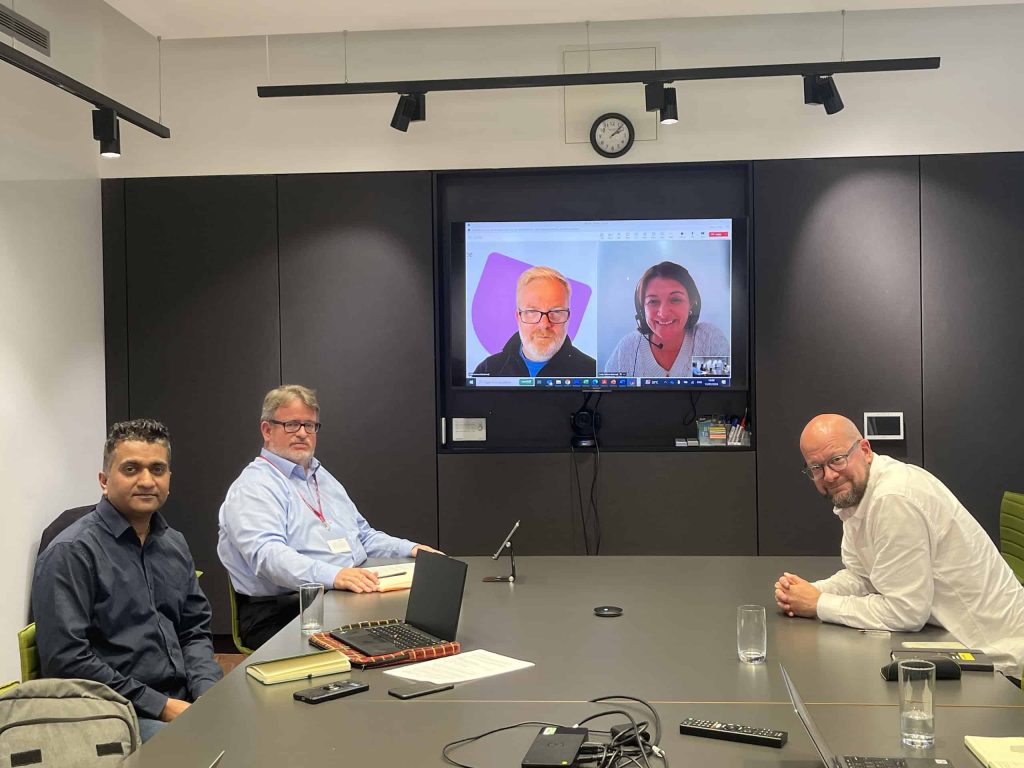
I recently had the opportunity to participate in a roundtable on July 17th, where leaders from local government and the digital transformation sector came together to discuss the challenges and opportunities of driving innovation through procurement.
The roundtable featured perspectives from the Ministry of Housing, Communities and Local Government (MHCLG), the Greater London Authority, Scottish Local Government, and the Innovation Procurement Empowerment Centre (IPEC). Each brought unique insights on digital transformation and public sector innovation.
It was agreed that local authorities face significant challenges, such as addressing climate emergencies, navigating health and social care issues, managing financial pressures, and meeting the demand for more citizen-centric approaches. These challenges underscore the need for innovation through partnerships and bringing in external expertise. However, procuring these relationships is fraught with challenge, often held back by a risk-averse culture, limited budgets, and fragmented approaches.
Contrary to its intended role in safeguarding public funds, procurement processes were highlighted as obstacles to innovation. According to research, only 23% of tenders receive more than one bid (Tussell), and just 5% of suppliers (CBI) found it easy to innovate within the public sector. An independent study commissioned by IPEC revealed that only 14% of respondents viewed public procurement as an enabler for innovation. While these statistics paint a challenging picture, they also highlight opportunities for the public sector to reshape markets through innovative procurement, especially as technology advances and barriers to entry decrease.
The roundtable identified key challenges for local governments in fostering innovation:
The roundtable concluded with a consensus on the need for a culture of experimentation and leveraging advanced technologies, such as AI, to transform services. However, this change will require a fundamental shift in how local authorities approach innovation and partnerships with the private sector, facilitated by significantly improved procurement practices.
From the discussion, I took away seven tips for digital leaders in local government:
I hope these strategies and tips can help local government leaders drive meaningful innovation and create more efficient, citizen-centric public services. One thing is clear: leadership will be essential to making it happen.

This week, we had the privilege of interviewing Daniel Clarke, Head of Innovation and Technology at Greater Cambridge Partnership, delving into topics on innovation, procurement, and how these strategies are applied in Cambridge.
What is a Greater Cambridge Partnership, what is your role in it, and what challenges is it trying to address?
The Greater Cambridge Partnership (GCP) is a collaboration between local councils, businesses, and academia in the Greater Cambridge area. The GCP aims to improve transport infrastructure, support economic growth, and enhance quality of life. I am part of the team which is delivering the City Deal for the area – set up to ensure that infrastructure needed to deliver the 33,500 houses set out in the current local plan, supporting 44,000 new jobs.
Congestion is one of the biggest issues facing us along with infrastructure constraints. Significant investment is being made to improve the transport system, such as building new cycle and busways as well as new travel hubs.
I am the Head of Innovation and technology and lead the Smart Cambridge Programme, exploring how data and emerging technology can make a difference to the wider programme. We pilot and trial new technologies and have taken innovation out of this stage and scaled across the area.
Can you tell us more about the Smart Cambridge Programme and how you developed and scaled it to address city challenges?
The focus of the Smart Programme has primarily been on deploying technologies that support the transport programme – helping people to get around Greater Cambridge. To do this we have built collaborative partnerships across the public and private sector.
We encourage companies to use Cambridge as a test-bed for new technologies that align with the problems we are trying to solve. A good example of this is VivaCity who trialled their first smart traffic monitoring sensors in Cambridge on our existing infrastructure. Having seen how the technology performed we have worked with them on several pieces of work. We then wanted to scale these across the city and to allow partners to easily buy sensors to add into the network and to share data. We did this through open-market procurement that would purchase the core network and developed a framework to allow the network to grow. The success is evident as we now have a network of 96 sensors. On the back of this network, we recently completed a trial of the VivaCity smart signals product.
The data from the network is integral to the wider GCP programme supporting business case development and the monitoring and evaluation of big schemes to understand the impact on local communities.
We also partner with companies on funding bids and are currently the lead partner in Connector – an autonomous bus pilot which will allow us to explore how this technology can support our ambitions to expand the public transport system. Funding bids often bring procurement challenges, particularly if the funding is allocated to the Local Authority. Generally to develop bids, we need to work with partners, often we need to procure these partners post-bid so are unable to name them in the bid document and any procurement once the grant has been secured comes at risk, as the original partner may not be successful.
We work collaboratively with academia to access cutting-edge research.
Working closely with the University of Cambridge we have built a data platform for the processing of real time data, and travel screens which have been deployed as a research project. We have also been involved in some early-stage digital twin work. At the beginning, this work tends to be unfunded or is funded through academic grants. The issue is when we want to scale the work up and invest GCP funds, procurement tends to be a barrier.
How have you used procurement to support Innovation?
We have used procurement to drive innovation. In the early days of the programme, we procured a start up to build a multi-modal, multi-operator app that had a number of innovative features. We specifically designed the procurement to support innovation in the market. Instead of specifying the exact functionality of the journey planner, we focussed on desired outcomes and made sure that the procurement was accessible for star- ups by amending our contractual terms and conditions lowering the insurance thresholds and adapting our approach to IP . This approach allowed suppliers the flexibility to propose innovative solutions that meet the end goals.
We are also currently working on a business case for Mobility as a Service and are looking to partner with another local authority who has already deployed this. Integral to these discussions are procurement colleagues who will help us to work through how we procure the solution to scale from one Local Authority area into ours.
How are you supporting Innovation in Cambridge?
We are keen to support innovation and launched our Innovation Prospectus last year, which is a call for collaboration to innovative businesses and academia to come and use Cambridge as a test bed. So, if you have an interesting innovation that can help us to solve some of the city challenges we face do please get in touch. The prospectus can be found here – Innovation Prospectus.
Finally, what have you been able to achieve to date through the Smart Cambridge Programme?
The pilots delivered by the GCP have demonstrated how Innovation has supported our ambitions to support travellers make more sustainable journeys and to keep the road network flowing.
The Vivacity Smart Signals pilot saw an improvement in traffic flows and the ability to prioritise for sustainable modes, the Starling pilot saw a 36% reduction in average pedestrian waiting times, the multi modal travel app had 2000 regular users and the network of Vivacity sensors has significantly improved our ability to develop business cases and evaluate the impact of major infrastructure schemes.
As pilots are scaled into business as usual deployments we anticipate that we will see significant benefits for local communities, supporting greater integration in the transport system, supporting more sustainable journeys and improving quality of life for residents.
A recent panel discussion explored the transformative potential of the upcoming Procurement Act 2023 for public sector procurement, featuring:
Carol Williams expressed the optimistic perspective: “Don’t underestimate local government. If we can collectively release those shackles, local government will fly.”
For a deeper dive into these insights, watch the full panel discussion in this post.
If you have used innovative ways and challenged the norm in bringing new value into your organisation, please connect and share your experiences and case studies with us via ipec@cp.catapult.org.uk , which are then to be promoted to a wider public to facilitate collective learning.

We are thrilled to introduce our second “In-Conversation With” interview in the series! The initiative aims to celebrate transformational leaders across UK local authorities by sharing their expertise, success stories, and advice on implementing innovative procurement practices.
This week, we had the privilege of interviewing Colin Wood, Innovation Lead at Dorset Council, delving into topics on innovation, procurement, and how these strategies are applied in Dorset.
What is your role at Dorset Council, and what does a typical day look like for you?
I’m currently Innovation Lead. I work with others to position Dorset Council as an open, confident, forward-looking place where innovation can flourish. It’s all about maximising government and industry investment for the benefit of our people and communities.
What are the strategic goals of Dorset Council in the area of innovation?
I’m currently Innovation Lead. I work with others to position Dorset Council as an open, confident, forward-looking place where innovation can flourish. It’s all about maximising government and industry investment for the benefit of our people and communities.
We believe digital innovation presents opportunities to transform local public services plus become a real driver of our economy.
Rural Dorset is incredibly beautiful which makes it a popular holiday destination. But a tourism-based economy with seasonal, low skilled and often part time jobs is always going to be fragile.
The council’s economic strategies focus on fostering innovative sectors such as marine, agritech, defence and security that typically offer year round, higher value, skilled employment and clean growth. Interesting jobs like these provide our young people with opportunities if they want to stay local and brings in talent from elsewhere.
Building a place with an ecosystem renowned for providing innovative solutions to many of the nation’s grand challenges helps attract inward investment from government and industry. The council’s role is to provide places and spaces such as the Defence BattleLab where collaboration, co-creation and innovation can thrive.
Building an area with a reputation as a forward-looking centre of innovation can help us tell a different story about rural Dorset – a place where you can enjoy brilliant quality of life and a job that makes a real difference for the UK.
The wider social benefits of this new economy include increased social mobility, money recirculating through local supply chains, upskilling of workforces and reductions in carbon emissions.
There are also opportunities for innovation partners to support the council in meeting future challenges, whether that’s different ways to deliver social care or meeting its net zero targets.
Could you tell us about the 5G RuralDorset project, focusing on the value it unlocks for residents and businesses?
5G RuralDorset is where our digital innovation journey started. We set out to understand how next generation connectivity including 5G could help people lead safer and more prosperous lives in rural communities, even in environments as sensitive as our UNESCO-designated world heritage coastline.
The £9 million research and development project focused on themes such as public safety, economic growth, food production and solving environmental challenges. Highlights included the largest ever 5G agri and aquaculture trials, plus the world’s first standalone 700MHz 5G network along Dorset’s Jurassic Coast. This frequency range can cover longer distances over water than higher frequencies, avoiding the need for masts at sensitive locations.

We understand you’ve developed a remarkable tool called the Digital Innovation Dynamic Purchasing System (DPS), aimed at fulfilling Dorset Council’s strategic objectives. Could you provide further details about this tool and the accomplishments it has achieved so far?
Through projects like 5G RuralDorset we have developed relationships with local, national and international partners across public sector, academia, research and industry. The new Digital Innovation Dynamic Purchasing System (DPS) is one tool designed to help the council scale and diversify this ecosystem to achieve its strategic aims.
On a day-to-day level the DPS helps us identify organisations looking to work or partner with the council on digital innovation initiatives. We then publish opportunities to work with/supply to the council and its digital innovation partners.
Companies can apply to join the DPS at any time, and we have set the bar deliberately low to help early phase start-ups which can’t afford the time and expense of accessing traditional procurement frameworks.
We had 80 companies apply in the first 30 days and we have just published our first requirement. I hope the DPS can be an agile, open and transparent way to help achieve our innovation objectives.
Could you elaborate on your collaboration with JET? Additionally, why do you place such importance on innovation from start-ups?
JET Connectivity came to us as a single person start up with a fantastic idea to bring wireless connectivity to maritime environments.
Using government funding the council and its partners supported JET to launch the world’s first 5G buoy at sea in Lulworth Cove. Sensors on the buoy relayed real time sea state information to digital safety signs at popular coastal locations.
JET now employs 30 people and is a great example of the innovation we are trying to foster using our assets in Dorset. We see a very bright future for companies like JET in our region as the UK transitions to a cleaner, greener future.
What’s on the horizon in terms of innovation within Dorset Council?
We’re already involved in a couple of very interesting research projects with government and industry.
Our £7m Dorset Open Networks Ecosystem project is carrying out advanced research and development into how cutting-edge technology can transform the roll-out of mobile networks in rural areas. It’s looking at how alternative equipment can provide enhanced performance and power savings while working with a wider range of suppliers could also make the UK’s telecoms networks more secure, competitive and resilient.
And as part of a project called the Rural Connectivity Accelerator we worked with a coalition led by the Satellite Applications Catapult to identify potential pilots to help overcome barriers to mobile connectivity in rural and agricultural areas. We are waiting to see if any of the ideas will be funded and are keeping our fingers crossed for Dorset!
If you could go back in time, and give yourself one piece of advice when you first joined Dorset Council, what would it be?
This is my 24th year with councils in Dorset. Following a career in journalism I took a communications role with a Dorset council back in 2000. One of my first projects was to build the council’s first intranet and public website. People said it would never catch on!
That communications background has helped me over the years. I guess I would tell myself: “Be kind, take people with you and tell everyone what you have done. That story telling is as important as what you actually do.”
If you are interested in showcasing your journeys to innovation through procurement in our in-conversation interviews, please reach out via ipec@cp.catapult.org.uk

This announcement initiates a critical six-month preparation phase, urging contracting authorities and suppliers, including SMEs and VCSEs, to expedite the refinement of their operational processes and engage in requisite training to seamlessly adapt to the forthcoming changes. In support of this preparation effort, IPEC has curated a comprehensive fact sheet with key training opportunities and resources currently available.
For assistance in selecting the most suitable learning options for your team, the Cabinet Office has prepared a Learning and Development brochure outlining all available support.
We trust this factsheet proves helpful in your preparations for the forthcoming Procurement Act changes. For any inquiries or guidance, please feel free to reach out to us at ipec@cp.catapult.org.uk
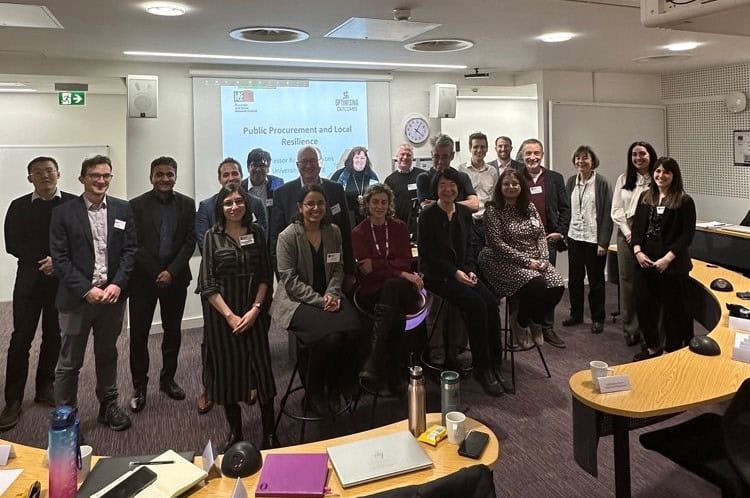
This brought together academics from leading universities across the UK – Manchester, Birmingham, Bath, Cardiff, Stirling, Nottingham, Oxford, Lancaster – and Autonomous University of Madrid. 30 speakers, researchers and policy leads convened to share evidence and ideas to boost the impact of innovation procurement.
The Innovation Procurement Empowerment Centre (IPEC) is a major initiative of Connected Places Catapult and a key plank of our work is to develop research capacity in this critical area. We have entered a long-term partnership with the Universities of Birmingham City-REDI and the Manchester Institute of Innovation Research (University of Manchester), gathering evidence to build the case for doing procurement differently. It will generate tools for policy development and support public and private sectors in implementing innovation through procurement, driving investment and better outcomes.
The Public Procurement as a Catalyst for Innovation workshop explored the impacts, measurement, and best practices of innovation procurement. Key themes that emerged include:
Participants left energised to build on the momentum and partnerships from the workshop to position public procurement as a key catalyst for innovation and public good. Key next steps include improving data infrastructure, developing case studies and practical guidance, and fostering communities of practice to accelerate learning and adoption of innovation procurement practices.

We are thrilled to introduce a new initiative at IPEC – “In-Conversation With” interviews! The initiative aims to celebrate transformational leaders in various parts of UK local government by sharing their expertise, success journeys, and advice on implementing new practices in innovation procurement.
This week we had the opportunity to interview Liz St-Louis, Director of Smart Cities and Enabling Services at Sunderland City Council, delving into topics about innovation, procurement and how it works for Sunderland.
What is your role at the Sunderland City Council? What does an average day entail?
In the context of this area of work my role is Director of Smart Cities and I manage our Smart City programme and our 20-year joint venture partnership with Boldyn Networks. In a nutshell, I drive forward city-wide investment in next generation digital infrastructure and digital and data solutions that are making a transformational difference across a city landscape.
What are some of the biggest challenges facing the Council?
Demand pressures, specifically with regards Adults and Children’s Social Care and Housing and the challenges this places on overall resources.
We know you have partnered with Boldyn Networks on procurement of innovative solutions. Can you please tell us more about your partnership? How does it help to make Sunderland more innovative? How do you apply procurement here?
We went to market to procure a 20-year strategic Smart City joint venture partner to help us develop our smart city landscape. It’s a contractual joint venture, joint risk/joint reward. We have jointly developed a network of networks and a raft of digital and data solutions that sit on those networks. We have developed a robust supply chain and can provide services to anyone in Sunderland. It is effectively a legal framework where we can procure any network infrastructure or any digital or data solutions that sit on those networks, subject to agreed value for money principles.
Our mechanisms for contracting are all set-out within our underpinning project agreement and we have connectivity services agreements governing all of our buy-back services. It makes us very agile and able to respond very quickly to challenges and opportunities. Bodyn Networks also have an extensive global footprint which means we have a much greater reach which aids innovation.
What’s the value for residents and businesses when thinking about smart cities?
Everything we do within the smart city programme is about delivering economic or social good. It’s about how digital makes Sunderland a great place to live work and play. We also strive hard to ensure we leave no one and nowhere behind on our smart city journey.
Why 5G and IoT is important to Sunderland City Council?
Advanced wireless infrastructure creates so many opportunities in every aspect of life and business. It provides a huge advantage for a city, economically and socially and we want to be at the forefront of that advantage.
What have you been able to achieve in this space to date? Can you please share a few examples?
What in your experience are the biggest challenges for local governments in procuring innovation to solve council challenges? What is your advice?
It can be the pace of public sector procurement and the difficulties experienced, particularly by SME’s in responding to tenders, being accepted on frameworks etc. It is also very much the repetitiveness of the process. That’s why the partnership with Boldyn Networks and the associated procurement framework is so important to us in delivering our smart city ambitions.
What is one advice you would have given yourself if you could nearly 15 years ago when you just joined SCC?
Think carefully about your ambitions, seek innovative ways of how to deliver those ambitions and put the thought and effort in at the beginning to create the right enabling mechanisms to then deliver at pace.
If you are interested in showcasing your journeys to innovation through procurement in our in-conversation interviews, please reach out via ipec@cp.catapult.org.uk
In this session with Nick Talbot, thought leaders and experts in local governance came together to share their unique case studies and insights on fostering collaboration and driving innovation in public procurement.
After watching this webinar you will go away with knowledge of:

