
articles
Tyre recycling firm builds on industry partnership to make asphalt production greener
Millions of used vehicle tyres from Britain end up being scrapped overseas. Now a materials recycling firm from Scotland is working with Connected Places Catapult to put waste rubber to better use.
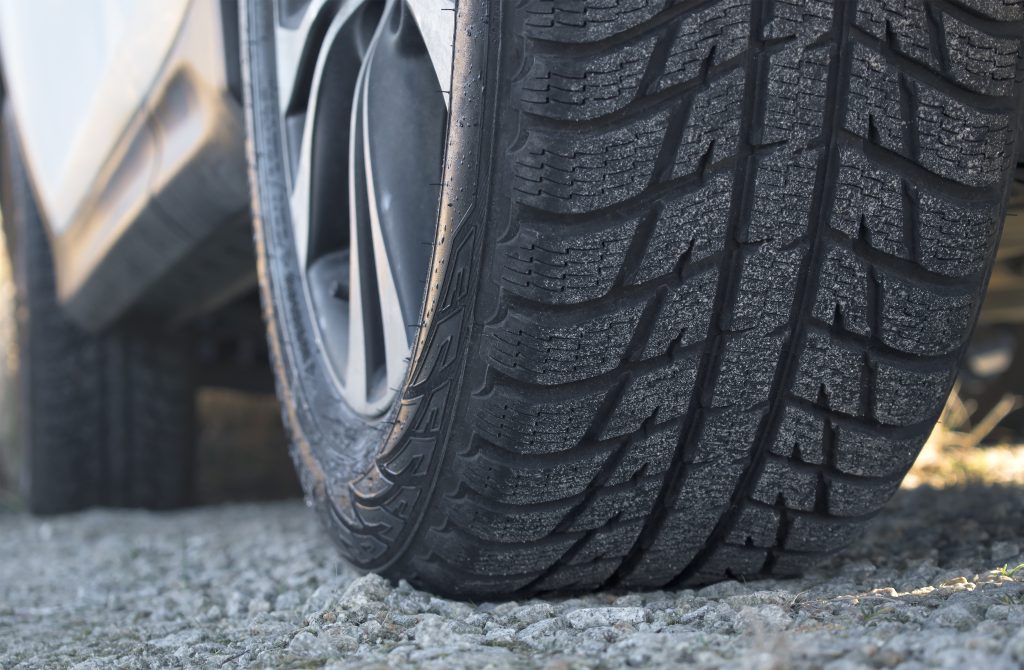
After 35 years in the tyre industry, Richard Hutchins is well aware that old tyres have limited appeal – and the problem of what to do with them only continues to get worse.
“It’s not right that three quarters of our used tyres are exported to places like India to be burnt, buried or broken down,” he says. “We've got to change the mindset.”
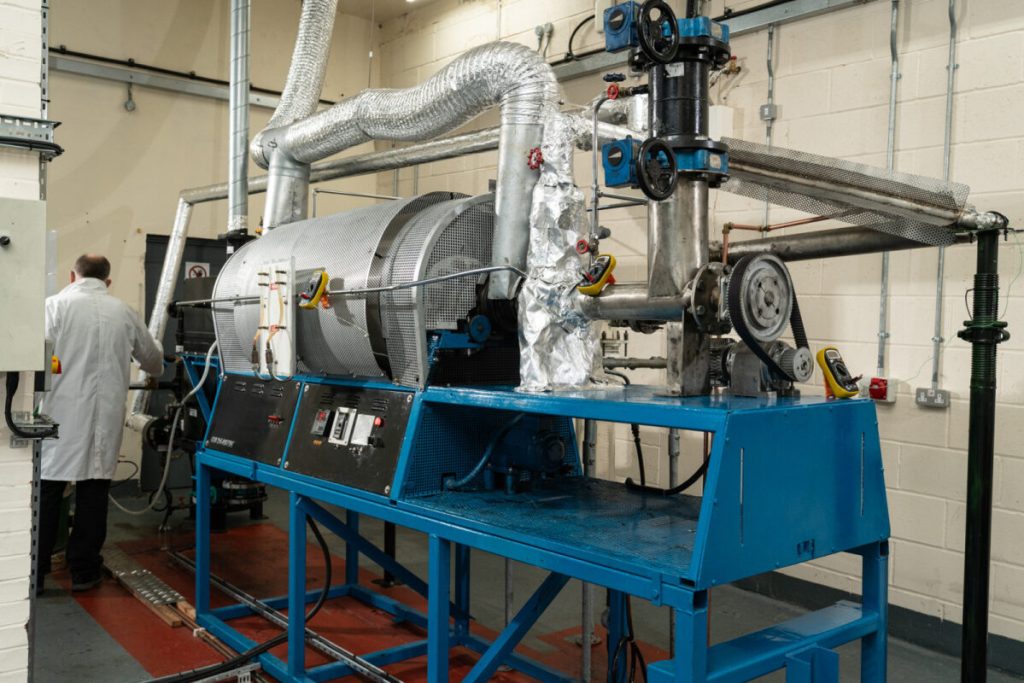
Richard founded PRG Scotland three years ago, initially to recover oil from worn rubber tyres for use in fuel. It developed a process called ‘continuous reductive distillation’ where heat is used to extract different chemical properties from tyres cut up into manageable chunks.
But he later found that a dry deposit derived from the distillation process – known as ‘carbon black’ – could also be used in road construction and repair.
“We were cleaning the machine one day and discovered deposits of residue that looked and smelt like bitumen, so wondered if we could extract it for use as a form of bitumen to produce asphalt for highway surfacing.”Richard Hutchins, founder, PRG Scotland
“Three weeks later, I received an e-mail from Connected Places Catapult saying that National Highways was looking for ideas for new materials to be developed through the Accelerating Low Carbon Innovation programme. It landed just at the right time as the idea was fresh in my mind, so we decided to explore it.”
Making an impact
PRG Scotland collaborated with Robert Gordon University, and their proposed research plan was accepted onto the programme. VINCI Construction became their mentors and teamed them up with Jean Lefebvre UK (part of the VINCI Group) to look at developing the technology to replace up to 10% of conventional bitumen used in asphalt with ‘Waste tyre derived carbon black’.
Working with the team at Jean Lefebvre UK resulted in a bitumen – when used in asphalt – that showed improvements in performance and a lower carbon footprint. Waste tyre derived carbon black has footprint of 4.5kg of carbon dioxide equivalent per tonne, whereas fossil fuel derived bitumen has 530kg of CO₂ per tonne.
Richard explains that the UK imports 1.2m tonnes of bitumen and exports 300,000 tonnes of waste tyres every year. Processing that volume of tyres could achieve 120,000 tonnes of carbon black – or the 10% that can be blended into conventional bitumen needed for the country’s asphalt need, he says.
In addition, those 300,000 tonnes of tyres might generate 130,000 tonnes of fuel to power bitumen and asphalt manufacturing plants, and recover 45,000 tonnes of steel present in expired vehicle tyres – helping to boost rates of recycling for the circular economy, and saving over 100,000 tonnes of carbon dioxide each year.
“Connected Places Catapult and National Highways did a really good job of linking small companies like us with tier one suppliers. We came to an open day in London and spoke to a representative from Eurovia who said they were interested, and asked to be our mentor.”
The Catapult also brought PRG Scotland together IPG Energy, a company from the Clean Futures Accelerator, which has created a process of burning materials in a cleaner way to produce electricity, for powering PRG’s continuous reductive distillation unit.
Following the accelerator, PRG Scotland was invited by highway contractor Amey to take part in a ‘live lab’ trial with the Association of Directors of Environment, Economy, Planning & Transport to explore further opportunities.
“We went from being a nobody knocking on doors, trying to get an opening and shouting as loudly as we could, to being in front of people who can make decisions,” he says. “Connected Places Catapult and the accelerator programme allowed us to get noticed. We were put in touch with the right people at the right time.”
Scottish trial and city plants
This spring, asphalt containing carbon black from waste tyres will be trialled by North Lanarkshire Council to fill potholes on local roads. A prototype distillation unit capable of processing 8kg an hour of waste tyre carbon black is planned to continue the material development in a live road trial, to be carried out by Eurovia.
PRG Scotland is also seeking £550,000 of funding to build the prototype continuous reductive distillation unit, in association with the Manufacturing Technology Centre in Coventry.
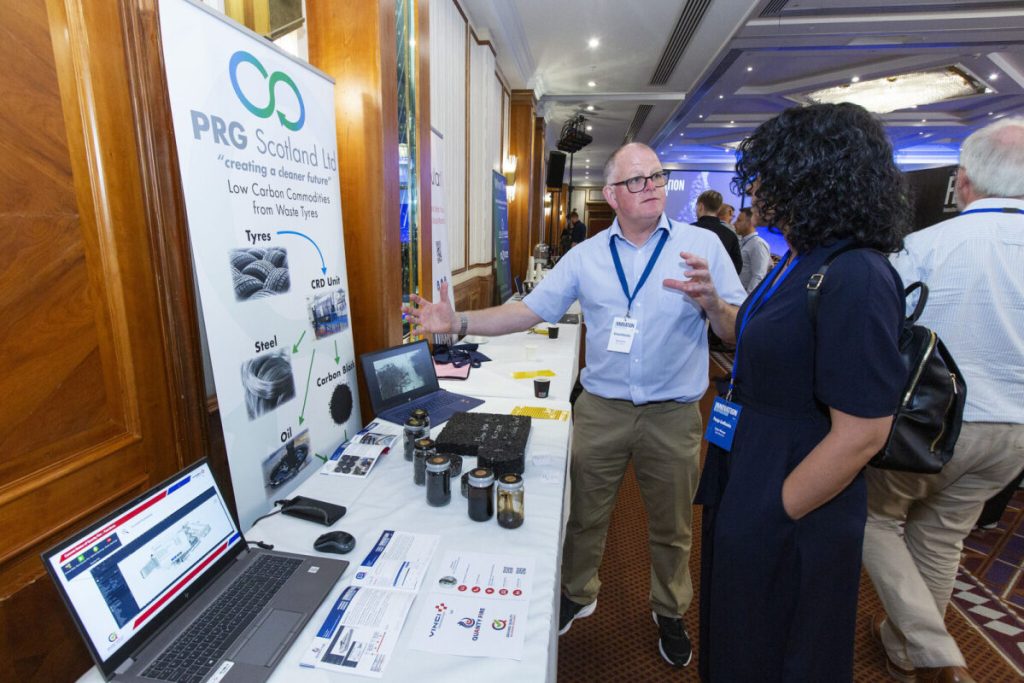
Longer term, the company aims to build as many as 18 waste tyre processing facilities alongside asphalt plants serving major conurbations. “Cities like Birmingham produce two to three million waste tyres every year,” Richard explains.
“If we can build processing plants next to asphalt plants, the waste tyres wearing down in a city can help to repair the roads in that city; reducing the number of trucks on the road.”
Richard has been invited to the PIARC World Road Congress in France this spring to discuss the new technology, its applications and benefits. “Using carbon black will help reduce the volume of bitumen required, therefore lowering its carbon footprint. But more importantly, it gives an outlet to get rid of waste tyres and improve the resilience of roads. Rather than sending all these waste tyres abroad, they should be seen as an asset.”
An alternative to shredding
Extracting oils from waste tyres is preferable to shredding rubber for use in roads, Richard explains. Shredding not only consumes a large amount of energy, but when shredded tyres used in roads break down, they can release microplastics that run off the road in rainfall and end up polluting watercourses.
Since completing the National Highways Accelerating Low Carbon Innovation programme, the company’s solution has progressed from Technology Readiness Level two (formulation of concept) to four (basic validation in a laboratory). Richard is hopeful that a successful trial of the pothole repair material using carbon black could soon translate to a motorway application.
“Using waste materials as a source for road construction will assist the UK in becoming net zero by 2040,” Richard adds. “Until now, there has been no real sustainable route to recycling tyres. Some companies shred them and place them as a matting in equestrian centres, but this is a niche application.
“Everyone contributes to the problem of waste tyres. If you own a car, you contribute; but even if you don’t, the vehicles delivering goods to your door do. We've got to do something about this.”
Philip Reid, Head of Innovation & Transformation for Eurovia in the UK – which is also part of the VINCI Group – says of the development: “Our technical experts at Jean Lefebvre UK have been really pleased to be able to continue to provide technical support to PRG Scotland through this project, building on the great research work that we’ve already done with them with National Highways’ previous support.
“This trial, supported by Connected Places Catapult, couldn’t align much better with our company’s innovation focus; not only does it allow us to move towards a fully recycled road surface, something we really want to see, it also has the potential to give the UK a consistent source of bitumen, something that is often a challenge.
“Early indications are that it also improves the longevity of the road materials, reducing the whole lifecycle impact of the highway. It really is a win, win for the UK highway industry and it is great to be part of trying to bring these improvements to reality.”
Philip adds: “The challenge of our time is how do we make our roads last longer in the face of heavier loading and a greater climate variation whilst reducing the environmental impact and reducing the burden on the UK taxpayer. It is a hard problem to solve, but we’ll only solve it through innovation projects like this.”
National Highways’ Principal Innovation Advisor, Melissa Giusti said: “Small and medium-sized enterprises play a crucial role in helping us tackle the industry’s biggest challenges. By collaborating with SMEs, we can bring forward bold new ideas, accelerate low‑carbon technologies and unlock innovation that makes our roads greener, more resilient and more efficient. Their agility and creativity are essential to driving the future of sustainable highways.”
Read more about the work of SMEs involved in the Accelerating Low Carbon Innovation programme and find out more about the Clean Futures Accelerator.