
articles
Investor predicts brighter future for scale-ups seeking finance
Enthusiasm to invest is returning to transport and construction, says Alex Bateman of Ambition Capital, who is supporting a new scale-up accelerator delivered by Connected Places Catapult.

“We saw some really big fundraising rounds during the pandemic, and there are some cautious signs that show investment may be returning to those sorts of levels,” says Alex Bateman, the Managing Partner of Ambition Capital, which deploys growth capital to high potential businesses.
Alex is particularly encouraged by a resurgence of interest in providing financial backing to scale-ups working to develop cleaner technologies for the mobility and infrastructure sectors.
“The wind came out of the sails of the climate tech space in the last couple of years; particularly with regards to later-stage funding.
"But the situation is starting to improve as a variety of innovative sources of funding come to market; some of which are Government-led initiatives, but largely provided by the private sector,” he says.
Alex adds that small companies who tend to do well with investment have, in his view, taken part in well-run accelerators, such as those offered by the Catapult. “Accelerators can be invaluable to founders growing their businesses.
“Furthermore, I always encourage good, Government-backed initiatives which do things that perhaps the free market doesn’t quite cover fully.”
He also says that not every scale-up will become a unicorn, but “that shouldn't be the end goal for most of them. “I want to see businesses grow, flourish and prove their commercial worth; they don't all have to reach a billion pound valuation. But many certainly deserve to do better than they are right now.”
What investors are looking for
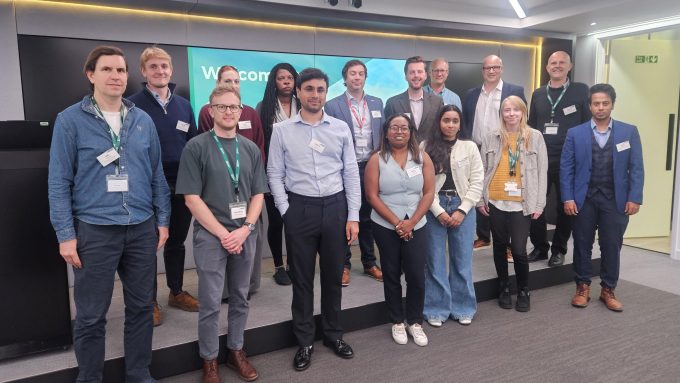
Alex (pictured) says investors are actively looking to back companies with strong and proven management teams and a clear product-market fit, and ideally those showing clear growth signals.
He adds that transport and construction businesses are struggling to raise capital due to market uncertainty, supply chain issues and a shift in focus away from sectors that require large upfront investment.
Common mistakes made by founders include “over ambition without proof of delivery”, he says, and “not clearly articulating how their solution addresses a real pain point”.

He notes that successful scale-ups tend to have a strong founding team, validated demand and a clear route to profitability or scale, and adds that evidence of growth that excites investors includes repeatable revenue and strong customer engagement.
Advice for scale-ups seeking investment
Alex explains that scale-up founders need to be prepared to devote a lot of time to securing investment. “Fundraising has to be treated as a full-time job; you cannot just stay in the proverbial lab every day, and juggling operational and fundraising commitments can undoubtedly be tough.
“Founders have to keep their game-face on the whole time; while also importantly being mindful of avoiding burnout.
“It is hard to keep the momentum going and follow up on opportunities," he adds. “A common piece of feedback I hear among peers is founders saying they ‘will get back’ to investors showing an interest – perhaps driven by the feeling that they are not ready to raise capital. But they should have those conversations and not push back, even if they are busy.”
Scale-Up Support Programme
Alex is a specialist advisor to the new Scale-Up Support Programme: Transport and Construction, delivered by the Catapult on behalf of Innovate UK. The programme aims to align firms seeking finance with investors, and address a need for more support for those looking to grow.
“Start-ups are popular and get lots of free PR,” he says. “But scale-ups represent a neglected corner of the market. They account for around 80% of small firms, but do not get much airtime. They don't fall into an easily understood bracket; the challenge they face is that they are often misunderstood.”
He adds that most people have a somewhat clear idea of what a start-up is, but don't necessarily know what signifies a scale-up company – and one reason why this new programme feels a little different.
Alex suggests that scale-ups tend to be companies looking to expand their geographical footprint to several locations, and are likely to be profitable – but not very profitable.
He got involved with the accelerator after being invited by the Catapult to a networking lunch hosted by the UK Business Angels Association, which showcased several scale-up companies to investors.
“I was keen to join that event, because I know the scale-up space well, but I wanted to understand the particular challenges and investment asks of the programme’s selected scale-up companies sitting as they do within the transport, mobility, construction and logistics sectors, which do differ from those of start-ups.
“Scale-ups tend to ask for more money than most investors are willing to commit for businesses at a relatively early stage,” he adds. “These companies have started to grind out some sales, and maybe even some profit. They should be able to get funded, but generally haven't managed to.
“So, the idea here is to try and find slightly more specialist investors who could hopefully engage in better conversations with scale-ups.”
He says the Catapult’s programme will provide “rounded training, networking and preparation for investment” that founders may lack. “It can be a lonely journey for founders. But put them in a room with several other scale-ups dealing with the same struggles day-to-day, and they might feel a bit more supported.”
Find out more about the Scale-Up Support Programme: Transport and Construction and our service to Investors.