
articles
Engine builder for boats charts new waters with energy management system
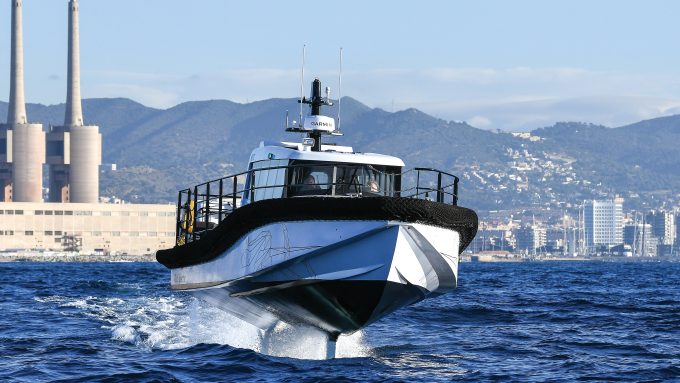
Maritime tech scale-up Ecomar Propulsion widened its focus from designing motors for boats to managing their energy needs after joining the Freight Innovation Fund Accelerator, and aims to become a £100m company within five years.
“I'm obsessed with ships and boats, but after developing technology for one specific use I suddenly found something new that could be applied everywhere,” says entrepreneur Eugene Bari of Ecomar Propulsion. “It's like Teflon: invented for spaceships and suddenly it’s in your frying pan.”
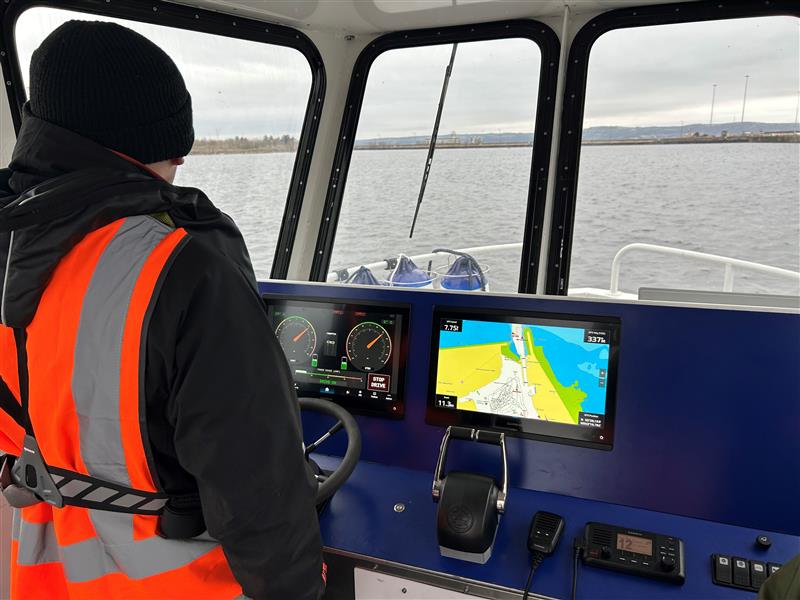
The company took part in the Freight Innovation Fund Accelerator – delivered by Connected Places Catapult on behalf of the Department for Transport in 2024 – to develop a zero emission, hydrogen and battery hybrid workboat. Over nine months, it successfully trialled the boat with Forth Ports in Scotland.
But it became clear that “what the client wanted was more than we thought”, Eugene says. While the workboat proved a useful addition to port operations, “the trial demonstrated that the batteries weren’t providing enough power for their needs”.
As a result, Ecomar upgraded the batteries, and began creating an onboard ‘Intelligent Control System’ for hybrid powered marine vessels to improve their energy performance.
Set to launch in 2026, the system identifies the most efficient and appropriate energy source to use at a particular moment – such as batteries, hydrogen or ethanol – depending on the expected weather, strength of waves, remaining fuel and the distance to shore.
“We are moving from hardware to software, which is not something I expected,” Eugene reflects.
“The Freight Innovation Fund helped lead us into new areas and provided us with a change of focus. Engagement with the Catapult allowed us to identify problems we didn't know, and better understand client demand, so we could create solutions appropriate for the people we met.”Eugene Bari of Ecomar Propulsion
Development of the energy system
Ecomar’s new Intelligent Control System also aims to address an occasional disconnect between energy demand and supply, Eugene explains.
Currently, if a ship needs to take on additional charge or fill with a new fuel such as hydrogen or methanol, the captain might not know which port has enough fuel and at what cost.
The company is developing Software as a Service that complements its existing hardware to address this concern. Subscribers to the new service will be able to identify which locations have available fuel and at what price. Ports and energy providers can then respond to demand by efficiently delivering and producing energy where and when it is needed.

Energy producers will be able to ramp up production with a higher degree of certainty, and predict the likely demand from ships for refuelling – known in the industry as ‘bunkering’ – on a given day and increase their supply accordingly.
Eugene adds that the company no longer specifically looks at just maritime applications, as its system could have land-based applications too, including by heavy goods vehicles or in factories.
Two thirds of the Ecomar’s income is from overseas clients. The company has started working in Sri Lanka for a combination of private clients and local authorities to build solar powered battery storage facilities to provide energy for boats. An approach has also been received for similar work in Tanzania. Each deal could be worth around £2m.
It is also providing advanced design advice for hydrogen and integrated battery control systems to Chinese shipyards building bulk carriers to transport minerals and grain. Scaling up that offer could lead to £100m of work, Eugene estimates.
Ambitions to scale the business
Eugene founded Ecomar Propulsion with £25,000 in 2018. The aim was to create zero emission electric and hybrid hydrogen propulsion systems for boats, which have since ranged from 6m long pleasure craft to 110m long cargo carriers.
The business has been in profit for six of the last seven years, and now turns over between £2m and £3m a year. Eugene’s vision is to scale up the company from a headcount of 15 to around 250 people, with several new manufacturing facilities in the UK; and branch out into construction and other transport sectors that require renewable power.
In 2021, the company took part in the Transport Research and Innovation Grants (TRIG) programme, followed by the Maritime Accelerator the following year; both delivered for Government by Connected Places Catapult.
“TRIG helped us to develop the technology and get us to a position where we could work on bigger systems, and the Maritime Accelerator got us in touch with the Royal Navy and Serco and helped us to develop crew transfer vessels.”
He adds that the Freight Innovation Fund trial has helped to validate the case for investing in zero emission boats, and allowed Ecomar to understand customer challenges and how best to address them with new solutions.
“The level of engagement from Connected Places Catapult has been great, and has helped the company to become more mature, identify issues and grow,” he says.
Read a Meet the Innovator profile of Eugene Bari from 2023. Find out more about the Freight Innovation Fund Accelerator, the Transport Research and Innovation Grants programme and the Transport Accelerator: Maritime.