
articles
Capital focuses on creating places from under used land
Transport for London's property arm is aiming to boost the capital's economy by up to £1 billion by the end of the decade by developing more land for housing around transport assets.

Despite being a transport authority, Transport for London owns 5,500 acres of land in the capital; equivalent to around 3,500 football pitches, or an area roughly covered by the borough of Camden.
Putting more of that mostly brownfield land to better use is the remit of TfL’s property arm Places for London, which is releasing sites to allow thousands of new residential dwellings to be developed to address an acute shortage of affordable housing.
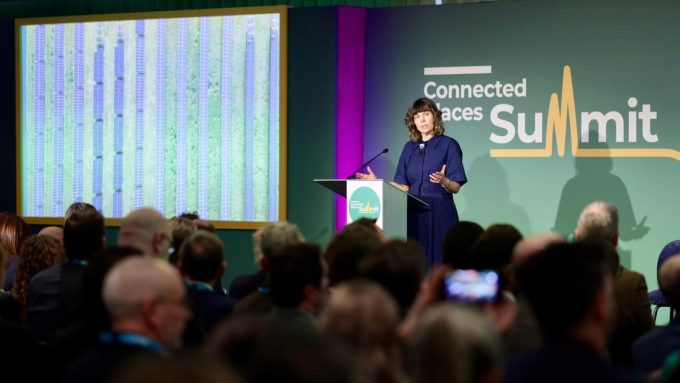
“Only 5,547 homes were built in London over the course of 2025 against a target of 88,000, according to data from consultant Molior,” says Graeme Craig, the Chief Executive of Places for London. “We want to help address that.
“We also aim to capitalise on increasing political support for bringing forward high quality, mid density, low carbon and affordable development – and especially next to railway stations.
“Two years ago, we calculated the economic, environmental and social value created as a result of our activities – and it stood at £440m. As our business plan grows, we aim to achieve £1 billion.”

London, like many world cities, has a great need to build more housing, better quality homes and more reasonably priced accommodation. Places also need more investment in infrastructure in order to sustain long-term growth, Graeme adds.
“Under-developed land tends to be held in the public sector, and historically public companies haven't had the resources, skills or experience to invest in bringing forward large new opportunities.
“It is beholden on us to understand how we can free up more of that land for development, and maximise its potential.”Graeme Craig, Chief Executive of Places for London
Making use of digital tools
Looking ahead, Places for London is keen to use digital tools to track the social, economic and environmental impacts of creating well designed housing developments in the capital.
It is launching a new digital approach and strategy to provide a “helicopter view” of London’s development. Heatmaps will show locations where London faces infrastructure challenges – such as areas where more investment may be needed in electric vehicle charging points, buildings to house the emergency services, and even new public transport lines.
Graeme adds that AI could also become a useful tool to interrogate data in order to help identify specific locations where infrastructure investment is needed to support the delivery of homes, jobs and growth. “We Increasingly need to take a city-wide perspective, rather than focus on individual sites,” he says.
“We are also keen to ask what the transport network may need to look like by 2040 to support new housing development, and to help Transport for London think about its needs in 15 to 30 years.”
Extending influence to other cities
As the name suggests, Places for London is a business focused on improving public realm in the capital. But Graeme says there is a significant and growing interest in its approach to placemaking from other cities. “The questions are increasingly how we can get the economies of scale to maximise opportunities – and how we can best work with and learn from other places.
“There are very few cities in the Western Hemisphere that have the scale of development activity that we’re now embarking on within Places for London,” he adds.
Graeme also says that developing more of Transport for London’s land also promises to help strengthen local supply chains and create lasting value for local businesses. “Relationships are being built with delivery partners who share our ambitions to unlock innovative solutions, and open doors for London’s small businesses,” he says.
“We are about city making, and thinking about portfolios of development rather than individual sites. There's a critical mass we need to build. Increasingly, we will also be looking to predict how the investment decisions we make could have a positive impact in future.”
This article is part of a sponsorship agreement.