articles

Allye Energy: providing batteries out in the field

Second life batteries are being repurposed for use on construction sites by a Catapult-backed SME with ambitious growth targets.

Operating multiple electric vehicle chargers or generators on remote sites – and keeping battery powered construction machines running – can prove challenging if energy grid connections are limited, or not available.

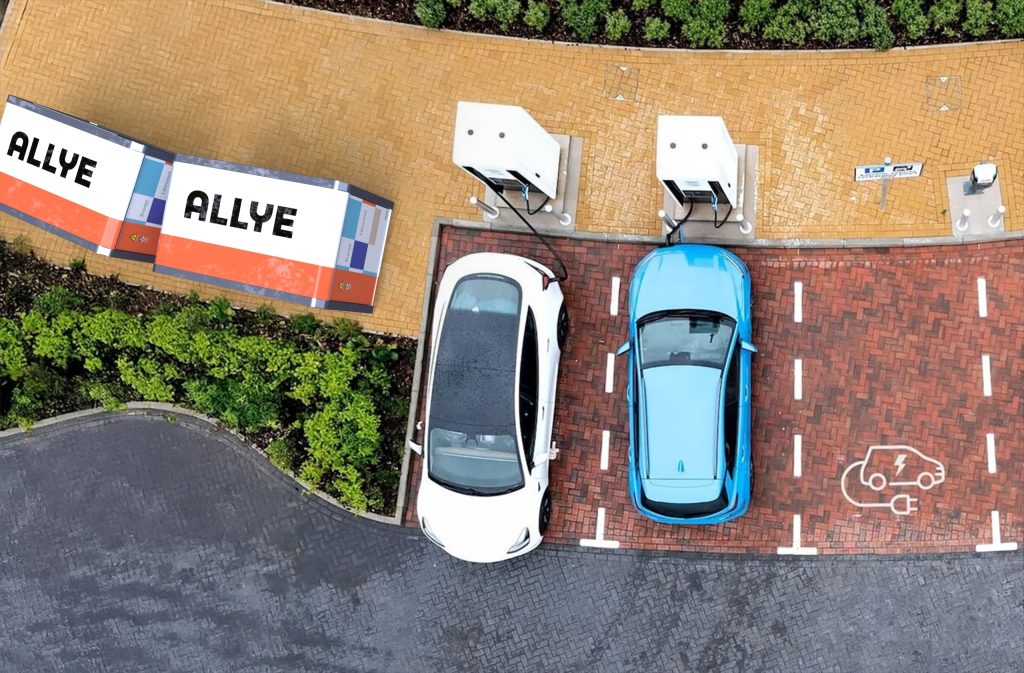
To bring power to where it’s needed and provide energy storage on site, battery specialist Allye Energy delivers portable units made from second life electric vehicle batteries to locations with multiple power demands.

Last year, the company was supported by Connected Places Catapult on a visit to India to see how its technology – alongside AI to optimise energy flows – could help communities overcome grid constraints, and deliver electricity to businesses and users of electric micro mobility vehicles.

“India represents one of our biggest potential markets, because the country is increasingly electrifying but suffers rolling blackouts,” says Allye Energy programme manager Bryn Jones.

“Thanks to the Catapult, we were introduced to the grid operator in Calcutta, demonstrated our battery storage system and had some useful conversations that informed our thinking.”
Bryn Jones, Allye Energy programme manager

This spring, Allye Energy secured £1.86 million funding from a consortium of investors to scale operations and recruit more engineers. Its revenues to date are £3 million, and the company is aiming for £50 million by the end of the decade.

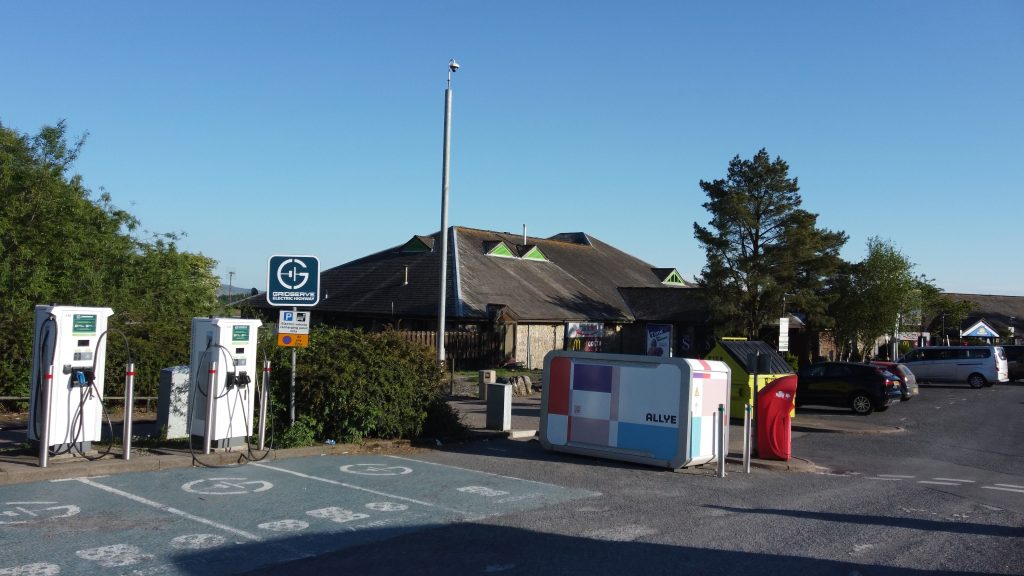
More than 20 energy storage units have been installed in the UK and Ireland for clients including Roadchef, which uses units to provide a reliable source of power for its Killington Lake service station on the M6 in Cumbria, to address resiliency needs.

Other clients include film production companies shooting movies in the field, where a temporary but secure connection to the grid is essential to maintain, explains Bryn, “a small village with huge demands for lights, sound equipment, hair and make-up trailers and a catering truck”.

The company now supplies its mobile batteries for major tier one contractors at Lower Thames Crossing, to deliver power to remote sites and allow electric construction machines to run for longer without having to be driven off site to recharge.

“Construction is our next big sector, to support major projects in charging plant in locations where it may not be sensible to make a big grid connection,” says Bryn.

“The grid as it stands is not entirely fit for purpose and this is true around the world. There is a need for something in the short to medium term to support the grid, and allow for a rapid increase in energy consumption.”

Bryn says second life electric vehicle batteries are ideal for repurposing as small energy installations as they are often recycled prematurely.

“Two big market drivers are the large number of industries that are grid constrained, and the fact that the lead time between wanting power and getting it to site can be years.”

“Large grid connections can be very expensive, whereas our battery storage system can provide for short term demand.”

Bryn says Connected Places Catapult’s input helped “guide our strategy, research and focus” and the trip to India allowed the firm to receive feedback from potential customers to understand how their pain points can be resolved using technology.

“Rather than develop product features that might not be needed, we were able to ask customers what is useful to them,” he adds.

Find out more about how Connected Places Catapult supports SMEs.

UKREiiF is the UK’s Real Estate Investment and Infrastructure Forum.

This year’s event brought together 16,000+ delegates, 1,250 speakers, 150 exhibitors, and thousands more across fringe events, including government, investors, developers, and innovators from almost every UK region.

Connected Places Catapult hosted our own Pavilion: a space for UK cities, regions, clusters and freeports to connect, collaborate, and tackle regional challenges. Our programme shone a spotlight on local growth and investment, construction, transport, social value, heritage, and emerging technologies.

0:04 – 0:51

Everybody’s starting to talk about how we’re actually going to spend that £725 billion that was in the infrastructure strategy. They’re talking about the rail that they’re going to build, they’re talking about the houses that they’re going to build, and they’re talking about how they can make innovation part of that and benefit the UK in terms of jobs and growth. The demand and the desire by regions and places for business growth is growing exponentially. We’re seeing that regions really want businesses to create the conditions to help them grow, to help them accelerate and help them innovate, get new buyers, and that’s really exciting to see. The most interesting is the knowledge sessions that I’ve been into and the way they’ve been talking about transport, not just as an economic opportunity for the UK as a whole and the infrastructure that we have to deliver, but the real social value that they deliver into our communities.

0:51 – 1:25

So we absolutely have to get transport infrastructure right for the health, the well being, the inclusion of all our communities, towns and cities. Investors are telling me they’ve got capital ready to flow. Infrastructure developers are really struggling to generate the confidence from those capital investors to invest into their pipelines. What’s clear to me when I get back to the office, I’m really going to double down on bringing those two sides of the equation together so we can genuinely make infrastructure happen. Business growth is the heart of what many people are trying to do and they’re looking for ways of really accelerating businesses into their places, and we’re at the heart of those plans.

1:26 – 1:31

For me, what I’m taking away is how we connect the SMEs that we support to that infrastructure spend that’s coming.

Highlights from UKREiiF 2026

Driving growth across the UK and accelerating economic development.

reports

Mobilising local and institutional capital: Community Municipal Investments

Aligning public and private investment to empower communities, drive local growth, and deliver Net Zero ambitions.

Community Municipal Investments (CMIs) are a growing innovation in place-based finance. They enable local authorities to raise finance directly from residents and institutions, providing low-cost finance while engaging communities in the development of place and the Net Zero transition.

Since the first issuance in 2020, sixteen councils have launched 24 offers, raising over £18 million.

This report provides public bodies and investors with insights and examples of how CMIs can be used to diversify local authorities’ funding sources and strengthen trust between councils and communities.

Mobilising local and institutional capital: Community Municipal Investments

File type: pdf

File size: 44.87Mb

Download Report
reports

Driving change in transport

At Connected Places Catapult, we collaborate with the entire transport ecosystem to catalyse change.

The UK’s transport system is a vital artery, connecting our communities and driving economic growth. 

Yet, it faces unprecedented challenges: the urgent demand for sustainability, the need for enhanced efficiency, and the rapid pace of technological change. 

This report explores these critical areas, offering insights into the innovation pathways transforming mobility across our nation.

Packed with case studies of how we’ve delivered on-the-ground innovation projects, including:

  • Projects supporting the decarbonisation of the 1.6 billion tonnes of annual UK freight
  • Awarding £60,000 grants to innovators using AI in transport
  • Unlocking £50m in savings with HS2

Driving change in transport

File type: pdf

File size: 60.93Mb

Download Report
case studies

Unlocking climate resilience through connected digital twins

The Climate Resilience Demonstrator (CReDO) connects data from across the energy, water, gas, and telecoms sectors to create a connected digital twin for system-wide scenario modelling and more effective risk mitigation and decision-making.

Unlocking climate resilience through connected digital twins

File type: pdf

File size: 17.81Mb

Download Report
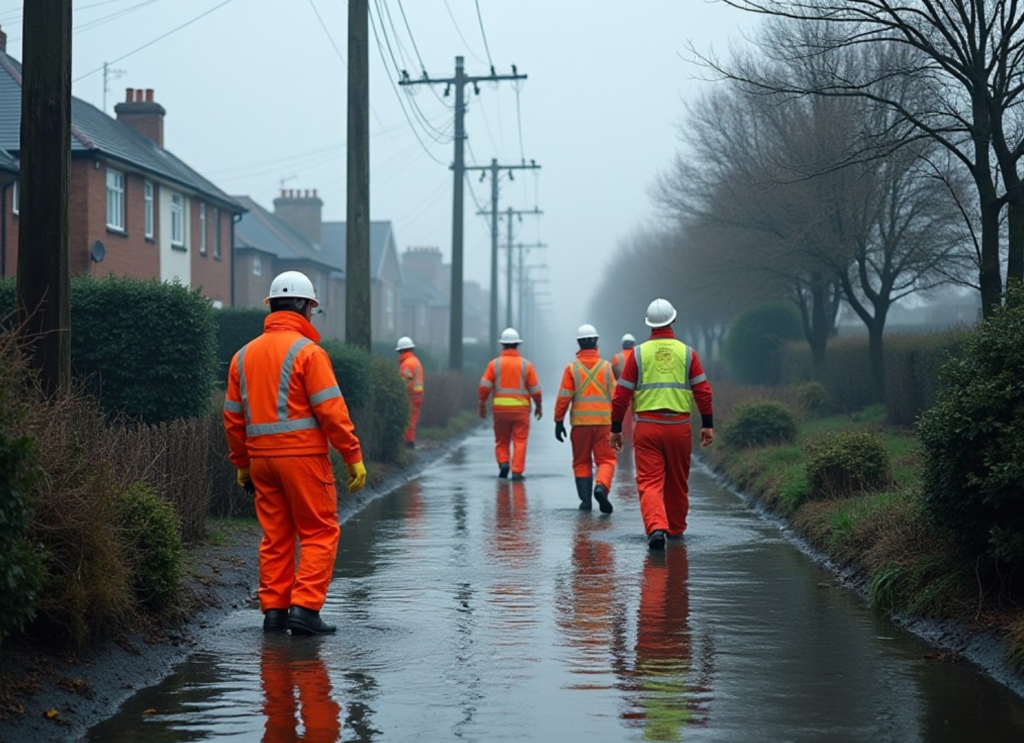
Climate change is amplifying risks to the UK’s critical infrastructure. Extreme rainfall, heatwaves, and storms are no longer rare events – they are becoming the norm.

Flooding and high winds can take down power lines and telecoms, cascading into failures across water supply, transport safety, and emergency response.
Yet our national infrastructure networks – electricity, water, gas, and telecoms – are still managed in siloes. This lack of visibility across interdependent systems leaves operators and policymakers on the back foot, forced to react to crises rather than prevent them.

While digital twin technologies offer powerful solutions, their adoption is held back by barriers to secure, scalable, cross-sector data collaboration. The result is reactive crisis management instead of strategic resilience planning – leading to economic disruption, higher operational costs, and reduced public trust.

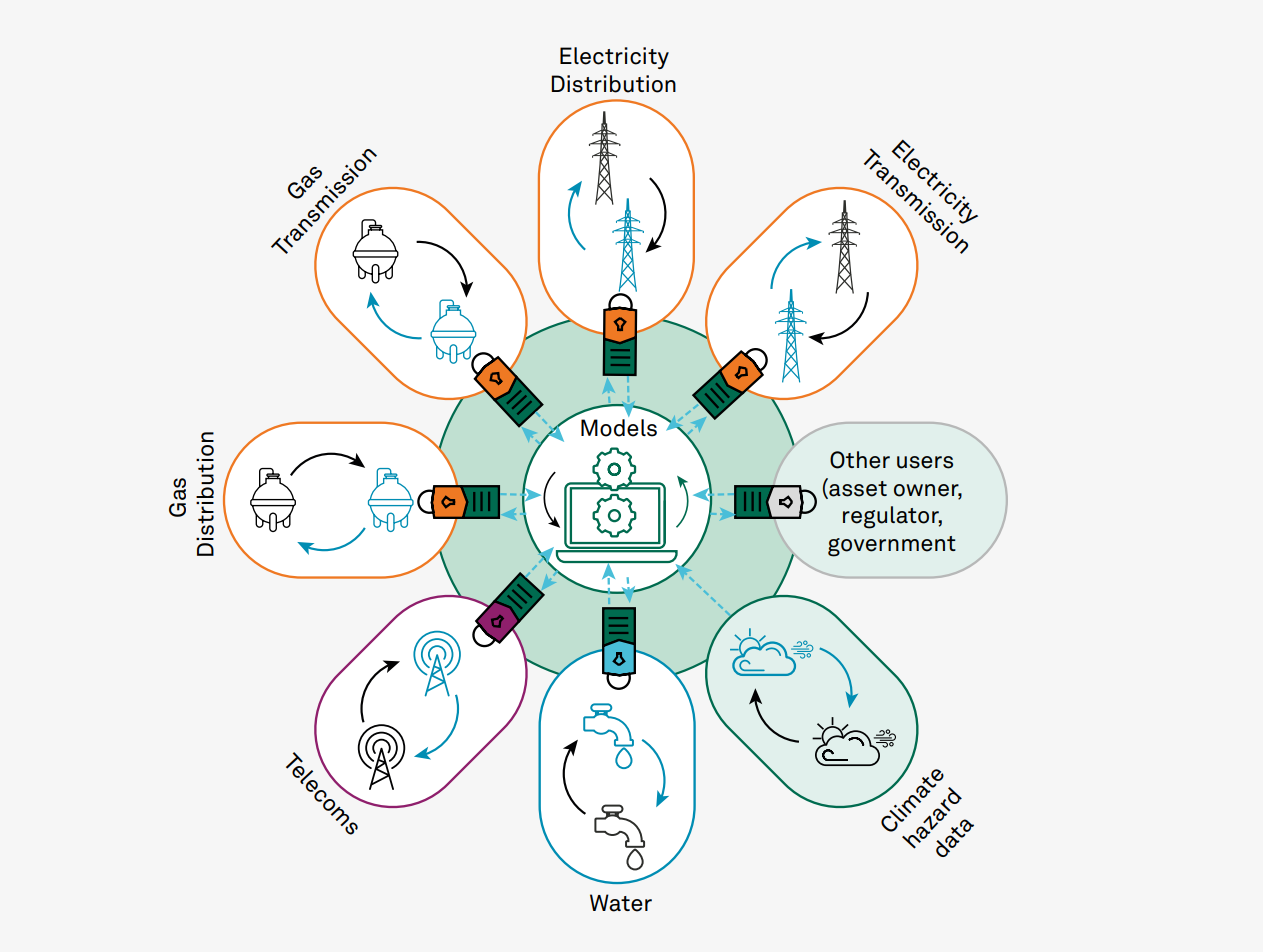
Diagram of infrastructure sectors (gas, electricity, telecoms, water, climate) sharing data with central models hub.
“Incorporating data from other infrastructure networks and utilities within existing systems will significantly enrich our insights, leading to better outcomes. To unlock the full potential of CReDo, we need more asset owners to get involved and collaborate effectively. ”
Richard Buckingham, Climate Change and Carbon Manager at Anglian Water

The challenge

  • Fragmented oversight: UK infrastructure networks are deeply interdependent yet typically managed and modelled in isolation. Critical data and digital assets remain locked within organisational silos, making it difficult to spot vulnerabilities that cut across sectors.
  • Cascading risks: Extreme weather can trigger cascading failures that ripple through multiple sectors. A flood disrupts power supply, which then compromises water and communications, amplifying risks for communities and business continuity.
  • Gaps in resilience: Progress on digital twins is promising, but without secure and scalable cross-sector connectivity, their potential remains unrealised. The result is piecemeal, reactive responses instead of coordinated strategies that build long-term resilience.

The solution

The Climate Resilience Demonstrator (CReDO), and its next evolution Climate Resilience Decision Optimiser, build on long-standing efforts to understand infrastructure interdependencies and cascading risks.

By connecting data from across the energy, water, gas, and telecoms sectors, CReDO creates a connected digital twin for system-wide scenario modelling and more effective risk mitigation and decision-making.

Led by Connected Places Catapult and delivered through partnership with infrastructure providers (including Anglian Water, BT, UK Power Networks, Science
and Technology Facilities Council, Cadent Gas, National Grid, SP Energy Networks, and the University of Edinburgh), CReDO demonstrates the power of collective
intelligence and secure data sharing in shaping a more resilient future.

Download the full case study to discover the impact of CReDo so far, and the exciting next steps.

Unlocking climate resilience through connected digital twins

File type: pdf

File size: 17.81Mb

Download Report
reports

Zero Emission HGVs and Infrastructure: Infrastructure Planning and Delivery

The delivery of public charging and refuelling infrastructure is critical in facilitating long-distance operations and adoption of zero-emission heavy goods vehicles.

This report outlines the delivery process for infrastructure from conception to operation. It answers key questions including; where to best locate a site, what the core components of site design are, how to secure a grid connection and how best to navigate the planning system to achieve development consent.   

The report highlights key barriers, considerations and signposts to the relevant organisations and guidance to inform early-stage development planning and raises awareness for contributing decision makers and stakeholders.  

To discuss this report further, please get in touch: zeroemissionroadfreight@cp.catapult.org.uk

Zero Emission HGVs and Infrastructure: Infrastructure Planning and Delivery

File type: pdf

File size: 94.64Mb

Download Report

Transcript

0:11 – 0:23

Thank you, Erica. Hopefully you can hear me. Thank you to the connected places catapult for putting on the event and also giving me the opportunity to speak to you all this morning.

0:25 – 1:26

I’ve only got 10 minutes, so I’m going to cover off a number of high level issues that are very close to our heart at the Crown Estate, but also my heart personally that go to the issues that I think we’re all facing in the context of being involved with places. But before I do, it’s probably worth acknowledging the fact that there is a lot of noise in the world right now and a lot of noise that creates volatility, that stresses people. We all carry the stress and fatigue of that noise into our daily lives, into the businesses we run, into, our families, and sometimes it’s easy to get lost in that noise. And obviously with that noise comes a lot of different political agendas and a lot of philosophical differences. One of the things I think that is really, really important is to remain grounded.

1:26 – 2:05

Because when it comes to the challenges that we face in the context of places, those challenges are not going away. There is a reality to them, a truth to them, and having been a practitioner in this space for many, many years, an obligation and a responsibility to do our our part in making a difference and addressing those challenges. So there’s three things that I wanted to address this morning. The first one is the contradictions that we face in our day to day work. The need for holistic thinking, inclusive engagement and partnerships, new types of partnerships.

2:05 – 2:41

And then I’ll talk a little bit about what the Crown Estate is doing in this space. A little bit on us to begin with, for those of you that don’t know us, we’re a 16 billion pound organization. We are here for the nation. Our remit comes out of an act of parliament where we are obligated to serve the long term interests of the country, ensuring that our investment is activating for future generations. We have land across the countryside, a lot of urban ownership, and also the seabed around England, Wales and Northern Ireland.

2:41 – 3:34

And so we’re involved in sectors like agriculture, obviously, place making, but also industries like the rollout of renewable energy on the seabed. So turning to the contradictions, the whole system is set up against the economic cycle, which is a 25 to 30 year time horizon cycle. And everything we do is set to the short term. And we face the paradox of being in that world every day, dealing with the pressures of that world and every now and again turning up to a conference like this and talking about some of the long term challenges we face and it doesn’t take away anyone’s commitment to long term change and the need to deal holistically. But we can’t take away from the fact that we’re drawn into the everyday.

3:36 – 4:35

I was talking to a property chief executive a few months ago who was talking about the relationship between the financial return that they need to maintain their share price and the best that he can do with regards to minimizing embodied carbon in their development portfolio. So basically to make a 12% IRR they could get their properties down to 540 kg per meter squared on a new build basis. Not bad in today’s standards. Not good, not bad, but a big problem because when you look at the Paris Protocol, it is nowhere near what it needs to be to hit the trajectory to set ourselves up for a 1.5 degree world. And he said to me, what am I meant to do, Dan?

4:36 – 5:33

I said, I’ve got shareholders, I’ve got investors and eventually if I keep cutting carbon further, I’m not going to get the returns because it’ll cost me too much to achieve it and ultimately my investors will lose hope and ultimately my board will lose hope and eventually I’ll lose hope, my job and I won’t be able to influence everything. And I have some sympathy for that. And I think in some ways we’re all facing similar contradictions in our day to day. What I don’t have sympathy for is the question around whether we are collectively investing enough in dealing with those systems challenges so that in five years from now a 12% IRR doesn’t equal 540 kg per meter squared, it equals 440 kg per meter squared. So we talk about the future, but I don’t think collectively we’re doing enough about the future.

5:34 – 6:39

I was in Cambridge yesterday, we have a major development there and we’re looking at how we set that up for the future. And one of the things that I was confronted by was a presentation by one of the partners that we’re working with talking about the fact that billions of pounds are going into life sciences, clean tech, climate tech, but the spread in life expectancy across Cambridge from the most affluent to the least affluent is 12 years. Yet all that investment in new technologies, new medicines, new place making will make an iota of difference in improving life expectancy. So how do you put a value, how do you put an economic value on life expectancy? And what I’m talking about in Cambridge exists in London, exists in Manchester, it exists everywhere, everywhere in the Modern world, in fact.

6:41 – 8:05

And this is why I think we need to come back to this importance of holistic thinking. Not pretending that we can do more right now, given the constraints we face, but investing more in changing for the future. It’s why we’re so passionate about our partnership with the connected places catapult, drawing on international best practice, drawing on best practice thinking, developing partnerships like we’ve never partnered before. And whilst we invest in delivery today, putting an equal amount of investment into how we solve some of the systems issues in the future, whether that’s embodied carbon in buildings, developing new materials and being part of partnerships and ecosystems that are trying new things where we can afford to try them, grow things at work, fail fast where they don’t work, or if it’s moving all the way along to the social spectrum and putting a value on good education, on vocational education and training, on health and ultimately on life expectancy, these are important matters, these are essential and these partnerships are essential. At the Crown Estate, across our portfolio, we are investing between 3 and 4 billion pounds in placemaking over the next 10 years.

8:05 – 8:42

We’ve announced a 1.5 billion investment over the next 15 years in life sciences and tech. We’re spending a lot on the rollout of renewable energy. We’re involved in places across the country, from the northeast, the southwest, London, the regions, Cambridge, Oxford. And one of the things that we are passionate about, in fact, we’re compelled to do this under our act, but we’re passionate about it, which is what I think is more important, is starting to figure out new ways of solving some of these issues by not doing traditional consultant led community engagement, but actually doing authentic community engagement. Because our brand, if we’re in a place, is going to be there forever.

8:42 – 9:35

Our brand depends on how well we leave the places that we are part of creating behind. We also, in the development world, having grown up in that space, would like to go into places and curate from A to Z, control everything. But ultimately, I think to do this properly, you’ve got to let go and you’ve got to give communities a say in their future. And with devolution now being our future, a good future, putting the hands of the future into local communities, as practitioners, we have to get better at working in partnership, but making sure that from an inclusion perspective, we’re taking everyone with us, not just those that turn up to engagement sessions, but those that need us the most. And I know some of what I’m saying might sound idealistic, but I’ve been around the block a few times I’ve managed a lot of business in my time.

9:35 – 10:23

I’ve taken the hard knocks. And what I can say is the island of business that we operate in the future won’t be the same if we don’t address these issues because our brands will be the ones that are up for question. But ultimately, what’s important to me, and I’m sure is important to you, is putting so much effort working in this space and being part of conferences like this, working with the connected places catapult and all the good work that they’re doing is you’ve already made the decision that you don’t want your legacy to be mediocrity. I certainly don’t want my legacy to be mediocrity, which means that we need to grab the future, take it into our own hands, have the tough conversations, challenge that those are influence and are in power and I certainly am one of those that are an influence and I welcome challenge. Talking about what we’re doing wrong.

10:24 – 10:44

Great question earlier about procurement and how difficult that is for innovation. You know, honest questions, honest challenge so that we can actually start to take on board what changes that we need to make so that in five and ten years from now, we’re not at a conference like this talking about the same challenges in the same way. Thank you very much.

Highlights from UKREiiF 2026

Driving growth across the UK and accelerating economic development.