
Overview
Many coastal authorities are under increasing pressure to monitor flood risk, coastal erosion and environmental change, while balancing limited resources and growing demands.
Following a successful project with Somerset Council to explore how drone technology could improve coastal asset management and environmental monitoring, IPEC is inviting forward-thinking local and combined authorities to explore similar innovation procurement challenges.
Through IPEC, Somerset Council explored how innovative approaches to environmental monitoring could provide faster access to data, support better decision-making, and strengthen the evidence needed to manage risks and prioritise investment. The challenge, approach and key lessons are now captured in a new case study that could help other authorities facing similar challenges.
Why join:
- Access innovation procurement support from Catapult experts
- Access insights from real-world pilot projects
- Tailor procurement solutions to your local and regional challenges
- Explore collaboration opportunities and future participation
- Learn from peers facing similar challenges
This programme could support you with:
- Supplier identification
- Trial strategy
- Trial facilitation
- Procurement and scaling strategy
- Technical support & stakeholder relationship
- Empowerment support
The IPEC cohort is a support programme for councils and local authorities and there is no financial cost to join the cohort. The programme aims to eliminate financial barriers in procurement and make innovative procurement practices accessible to a wide range of public authorities.
If you’re a public sector organisation with a coastal erosion or environmental monitoring challenge to solve, we’d love to hear from you. Get in touch at contact@ipec.org.uk by 13 August to express your interest and find out how IPEC could help tackle your challenge.
Challenge
Climate change is driving more frequent, intense and complex flooding and coastal risks. Yet traditional inspections remain slow, fragmented and resource intensive, unable to keep pace or provide the timely, high quality, auditable evidence needed to prioritise investment, verify outcomes, and ensure compliance. This is a challenge shared by councils nationwide.
Addressing this now reduces service disruption and cost of failure (emergency call-outs, long road closures, reputational risk), improves workforce safety by reducing exposure to confined/unstable sites, and strengthens transparency through traceable evidence for Section 19 investigations and asset registers.
This challenge is centred around conducting environmental monitoring of natural (land, sea and water) and council assets to inform Council services of risk and impacts of progressive mitigation and measures to improve the Council’s approach to land management / nature and flood/coastal council asset inspections and management as well as performance manage through evidence data management solutions.
Working with IPEC
What Working with IPEC Can Do
Partnering with IPEC gives you access to tools, insights, and support to drive innovation in procurement:
- Develop challenge statements that empower suppliers to innovate and collaborate
- Ensure processes are inclusive and welcoming to SMEs and startups
- Learn from what we’ve achieved so far—and apply it locally
- Join workshops that build agile, forward-thinking procurement practices
- Embed innovation procurement into your policy and strategy
- Leverage the Competitive Flexible Procurement process to your advantage
- Bake in both trialling and scaling within a single procurement journey
Open call opens
Open call closes
Cohort selection
Programme start & trials
Programme end
Application process
Eligibility
This opportunity is open to local or combined authorities intending to procure and trial innovative solutions related to coastal erosion and environmental monitoring.
Applications close Friday 13th August
If you are a public sector authority with an innovation challenge that you would like to share, get in touch with contact@ipec.org.uk to express interest see how we can help with your challenge.
Please include details of your local or combined authority, job title, the challenge you are aiming to solve, and your preferred trial dates over the next six months (this financial year).
Supporting documents
Read our case study from the IPEC Cohort involving Somerset Council. In 2025, Somerset Council who identified a procurement challenge for asset management and environmental monitoring, as a result IPEC supported them to procure drone technology to monitor coastal erosion and flood resilience.
Overview
Following a successful innovation procurement process with Westminster City Council, we are now inviting forward thinking local authorities to join the next phase of a strategically important air quality trial. This is a unique opportunity to test a transparently procured and ready to deploy, scalable air filtration system that can potentially reduce harmful pollutants, while gathering valuable, location specific data to inform future regulation and procurement.
Cooking emissions are the third-largest source of PM2.5 pollution in London, accounting for an estimated 59% of total emissions in Westminster alone. That’s more than traffic in some areas! PM2.5 particles are tiny enough to penetrate deep into the lungs and bloodstream, and long-term exposure is linked to heart disease, respiratory issues, and cognitive decline.
The opportunity
Opportunity to join a groundbreaking air quality innovation trial
Following a successful Innovation Procurement and initial trial, we are now seeking to expand the initiative to additional locations and building types. This next phase will support further research and accelerate the scale-up of a promising new technology.
After a rigorous procurement process, Westminster City Council selected an SME to pilot the solution across several restaurants this year. The results have been encouraging.
Why get involved:
- Demonstrated reduction in harmful PM2.5 emissions
- Proactive alignment with DEFRA, WHO, and UKHSA guidance on PM2.5 mitigation
- Enhanced wellbeing for staff and patrons
- Real-time air quality monitoring
- Seamless integration to existing operations with minimal disruption
- Confidence in a rigorous, value-driven, innovation-focused procurement process
To continue advancing this research and raise awareness of the health risks associated with PM2.5, we invite other councils to pledge support by self-funding a single trial site. Each council will be responsible for identifying a suitable location, while the trial will be supported by IPEC to ensure smooth delivery and robust outcomes.
By funding a single trial site, councils can contribute to nationally relevant evidence based research while delivering tangible local health benefits. This need not be a public restaurant—ideal alternatives include schools, colleges, or care homes with catering facilities, where improved air quality can have a meaningful impact.
Estimated costs
Estimated cost:
The council will need to provide funding in the region of £7,000–£10,000, depending on kitchen size. This includes:
- Air filtration system
- Monitoring equipment
- Expert data analysis and reporting
If your council is interested in participating or would like further information, please contact george.wardell@cp.catapult.org.uk.
Application process
If your council is interested in participating or would like further information, please contact
george.wardell@cp.catapult.org.uk

From Challenge to Opportunity: Senior Leaders on Procurement Innovation
The Senior Leaders Casebook is your essential guide to turning procurement into a strategic lever for innovation. Designed for public sector leaders, policy makers, innovators, and procurement professionals, this toolkit features case studies across transport, health, infrastructure, and local government, exploring how senior leaders are breaking through risk-aversion and legacy processes to deliver smarter, faster, and greener solutions.
Who it’s for:
This casebook is designed for senior leaders across government, policy, and public services who want to:
- Build confidence in using procurement to support innovation
- Learn from others tackling complex, real-world challenges
- Understand what’s worked, what hasn’t, and why
- Connect procurement practice with wider strategic aims
Packed with insights from experienced leaders across transport, health, infrastructure, and local government, it shows what’s possible when procurement is used not just as a process, but as a lever for progress.
What you’ll find inside:
- Interviews with eight senior leaders across transport, health, local government, and infrastructure.
- Lessons on managing risk, fostering collaboration, and working across organisational boundaries.
- Examples of using new procurement models to support innovation, including outcome-based contracts and dynamic frameworks.
- Insights on how the new Procurement Act can support more flexible and forward-looking approaches.
Why it matters:
Procurement plays a vital role in shaping public services, but it is often seen as a blocker rather than an enabler of innovation. This toolkit challenges that view, showing how leadership, early engagement, and thoughtful design can unlock better outcomes for citizens and communities.
Download the casebook to explore what’s possible when procurement is used strategically and see how public sector leaders are already making it happen.
Share your story:
The Senior Leaders Casebook is just the start. We’re building a growing community of public sector leaders who are rethinking how procurement can deliver change. If you’ve led or supported an innovative approach to procurement, however big or small, we’d love to hear from you. Peer-to-peer learning is one of the most powerful ways to build confidence, challenge assumptions, and spread what works.
If you would like to share your story please email us at ipec@cp.catapult.org.uk

Unlocking procurement: A practical guide to pre-market engagement
The incoming Procurement Act 2023 prioritises Preliminary Market Engagement (PME) to simplify processes, boost innovation, and enhance supplier diversity. Created by IPEC and Gardiner & Theobald, this guide provides the tools to stay ahead, ensuring your procurement practices align with future-focused policy goals like net-zero transitions and mission-focused outcomes.
Why Read This Guide?
The UK public sector spends over £380 billion annually, yet much of its procurement potential remains untapped as a driver of innovation. This guide demonstrates how Preliminary Market Engagement (PME) can diversify the supplier base by engaging SMEs and new entrants, capture cutting-edge innovations, foster buyer-supplier collaboration for mutual value creation, and mitigate risks by refining procurement requirements early in the process.
Pre-market engagement is the key to finding innovative solutions to pressing challenges. This guide is your essential tool for unlocking the public sector’s potential to deliver transformative outcomes.Rikesh Shah, Head of IPEC
Engaging with supply chains early creates informed clients, inspires innovative thinking, and ensures projects deliver maximum value.John Mead, Partner, Gardiner u0026amp; Theobald
Key Insights You’ll Gain:
- Best Practices for PME: Explore actionable strategies, including tactical and strategic PME approaches, to drive sustainable and innovative public sector outcomes.
- Becoming an Informed Client: Learn how understanding market dynamics and engaging with supply chains early creates smarter, more effective procurement processes.
- Leveraging the Procurement Act 2023: Discover how the Act empowers flexibility and transparency to support innovative outcomes while creating more opportunities for SMEs.
Download the guide now to access practical tools for innovative, impactful results.

Find this information useful?
Download a PDF of this page for quick and easy access anytime!
The art of the possible in public sector procurement
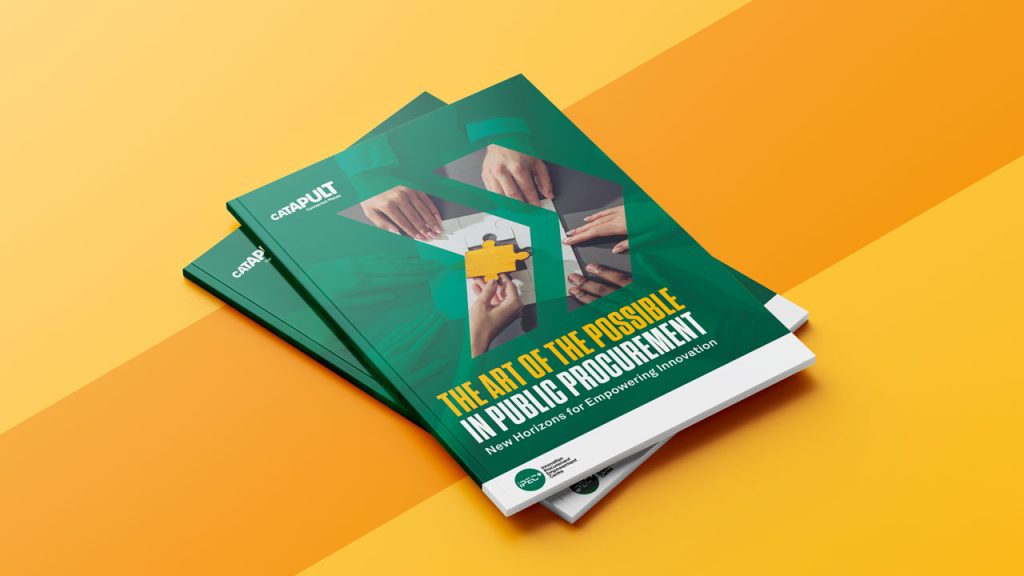
With approximately £300bn a year being spent on UK public procurement, public sector organisations have an indispensable role in fostering innovation and supporting ambitious small businesses.
The aim of this report is to help anyone engaged in making and executing public investment in new products and services fully aware of the potential for change offered by the new legislation.
Unlock transformative power
- Deploy procurement tools that help attract innovative suppliers of all sizes & build new
growth hubs. - Take advantage of the heightened awareness of the rule changes, facilitated by Government supported training, to ignite an innovation culture within your organisation
- Deploy procurement tools that help attract innovative suppliers of all sizes & build new
growth hubs.

Learn how Barnardo’s improved outcomes for children by developing innovative partnerships described as a “learning partnership rather than a traditional commissioner – provider relationship”.
Leverage new rules as enablers
- Encourage engagement with newer and more diverse solutions that embed local priorities in your procurement activities
- Learn how linking procurement with strategic planning can integrate social value, boost local economies and provide better support for startups, small and medium-sized businesses.
- Define challenging goals to energise suppliers and embed innovative thinking in your organisation.

HS2’s Innovation Accelerator assisted SMEs navigate preferred procurement platforms & supply chain frameworks, resulting in 50% securing procurement.
Exploit the competitive flexible procedure
- Achieve greater flexibility by implementing the light touch contract regime.
- Discover “The Competitive Flexible Procedure”, that encourages contract awards to be made based on the “most advantageous tender”
- Aquire funding for multi-staged procurement processes. Flowing from assessment of concepts, through development – to a final contract offer.

Transport for London (TfL) implemented the Innovative Partnership Procedure, demonstrating an effective model for boosting the local economy through innovation in public procurement.
Meet the experts
The report is co-authored by an expert team with experience in innovative legal and procurement processes and was unveiled at a House of Lords reception

Malcolm Harbour CBE
Ex-MEP
West Midlands
Served as MEP for the West Midlands for 3 Parliamentary terms 1999 – 2014. In 2008, he was Rapporteur for the first...


Julian Blake
Specialist public benefit lawyer
Stone King LLP
Julian co-authored “The Art of the Possible in Public Procurement” in 2016, to highlight the need…


Rebecca Rees
Partner / Head of Public Procurement
Trowers & Hamlins.
Rebecca Rees is a partner and Head of Public Procurement at the international law firm, Trowers & Hamlins…

Researchers
Oishee Kundu
Research Associate
University of Bath
Research Associate at the University of Bath, specialises in technology adoption and public procurement’s role in innovation.
Bin Guan
Urbanist
Connected Places Catapult
Bin Guan, an urbanist at Connected Places Catapult, bringsa town planning background and extensive experience…
Ghaith Nassar
Service designer
Connected Places Catapult
Ghaith Nassar is a service designer and researcher with the Human Connected Design team at Connected Places Catapult.
The Art of the Possible is endorsed by

Procurement in the public sector is often seen as a barrier to achieving best value rather than a path towards it. This report provides both the inspiration and the information to enable you to radically revise the way you purchase
Councillor Donald Alexander
Bristol City Council


