HADeS (High Assurance Detection Systems)
Marketing Pack
Congratulations on being part of the High Assurance Detection Systems (HADeS) Programme 2026 programme! Along with the Department for Transport (DfT), we’re delighted to be working with you.
This marketing pack is designed to:
- help you shout about your participation in this programme
- speak confidently about the programme externally
- provide you with useful marketing and PR assets
To refresh your knowledge about the programme, visit the closed open call page:
If you have any questions about the programme, please contact: Alexander Lamle, Innovation and Local Growth Consultant – alex.lamle@cp.catapult.org.uk
Logos and images
You may want to share the fantastic news that you have been selected for this programme on your website, via email or on social media. Please use the assets below to support your announcement.
Logos for website
Banners for email
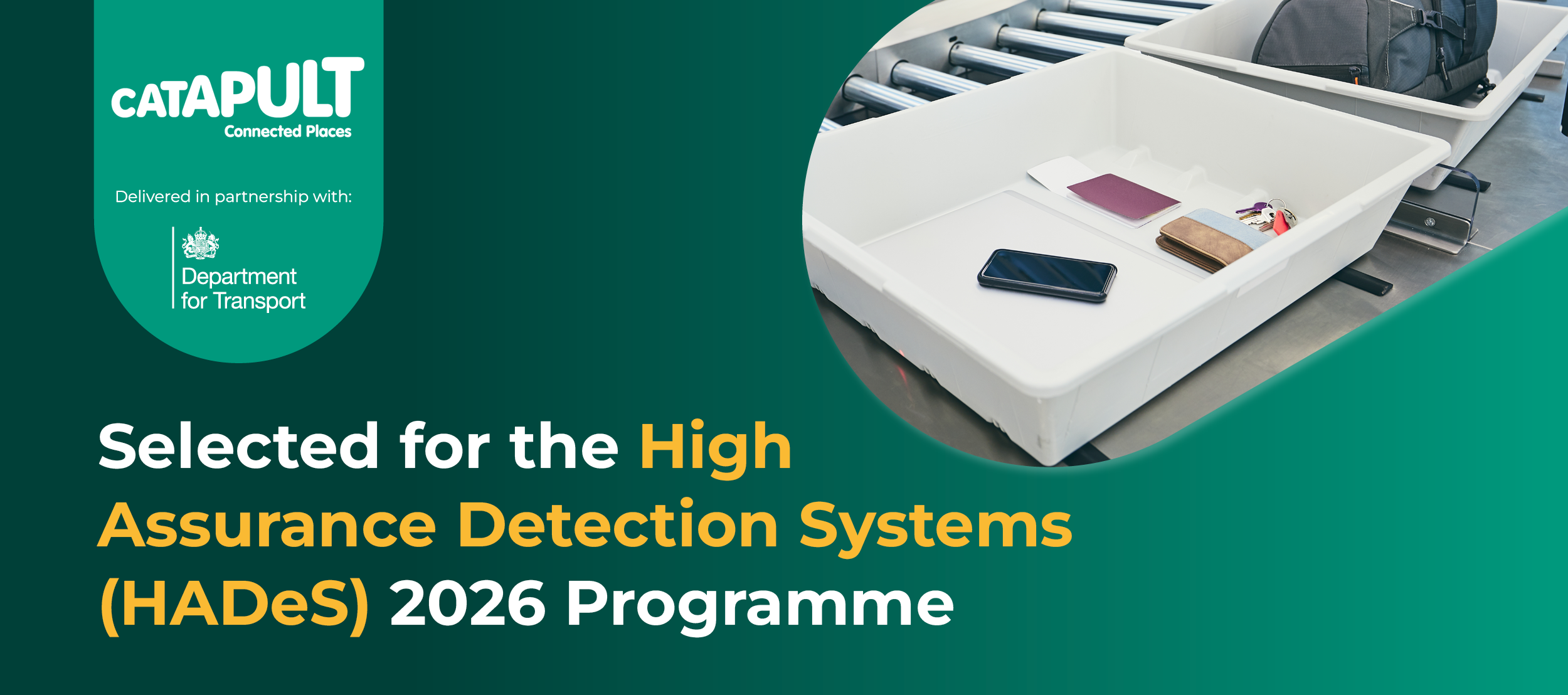
Images for social media
Messaging guidance
Here are some key messages about the programme that can be shared externally, on their own or as a whole:
- The High Assurance Detection Systems (HADeS) Programme is managed by Connected Places Catapult on behalf of the Department for Transport (DfT). The Catapult will convene stakeholders, manage the competition, assist in the selection process and offer customised business support to the grant recipients. DfT will lead the selection process from the technical perspective and provide technical support to the projects.
- For HADeS 2026, the goal is to help DfT to understand whether deployment of new detection standards being developed by the Technology Alignment Group (TAG), and the capability against additional materials that results, for primary screening of cabin baggage and the associated alarm resolution capability is technically feasible and achievable within 3-5 years.
- The High Assurance Detection Systems (HADeS) Programme focuses on enhancing UK airports’ checkpoint security screening capability, focusing on alarm resolution and any operating concept that can enhance the performance of checkpoint systems to screen aviation passengers and their cabin baggage.
Some Do’s and Don’ts
When talking about the High Assurance Detection Systems (HADeS) Programme…
Do:
- Announce your programme selection on LinkedIn once you’ve received confirmation from us that communications can be shared
- Describing your involvement accurately and proportionately.
- Use the wording: “The High Assurance Detection Systems (HADeS) Programme is managed by Connected Places Catapult, on behalf of the Department for Transport (DfT).”
- Talk about expected benefits before or during trial delivery; delivered benefits and outcomes after and focus on evidence and outcomes
- Use programme assets from this toolkit
- Re-share the Catapult’s programme announcements through your own channels
- Notify the Catapult when you receive media interest relating to HADeS or when you’ve received funding, contracts or business growth opportunities outside the programme – we’d love to help share and celebrate your success!
Don’t:
- Misrepresent your involvement
- Jump ahead of programme communications
- Use restricted assets, such as partner logos outside partners you are trialling with
- Use logos of trial partners who have not signed trial plans or approved their inclusion
- Reproduce presentation slides, internal documents or branded materials without authorisation.
- Share confidential information related to other participants –
- Don’t publish commercially sensitive information from workshops, meetings or trial discussions
- Don’t share quotes from emails, calls or meetings unless the relevant individuals have approved them
- Don’t disclose information about other SMEs participating in the programme
- Overstate trial progress – Don’t describe a trial as “completed”, “proven” or “successful” until the relevant work has concluded and evidence supports the claim
FAQs
When can I start promoting my involvement in the programme?
What if I have a media opportunity?

